New York Design November: With ICFF moving to November and independent fairs multiplying, NYC is building an unexpected second design week that may redefine what the city shows and when.
New York design November week officially arrived in 2026 when a light fixture fell on an exhibitor’s head during setup at Collectible’s New York edition in November, sending her to the hospital. It was the kind of operational chaos that could derail a fair before it starts. But the incident, which Collectible described to Dezeen as an isolated occurrence involving an exhibitor’s equipment, barely slowed momentum at what has quietly become the anchor event of New York’s emerging second design season.
Until very recently, this November wave didn’t exist as a coherent calendar moment. The city had its May fixture, NYCxDesign, and scattered November shows. Then, earlier this year, the trade fair ICFF announced it would move from spring to run simultaneously with BDNY, the high-end showcase that has held November dates for years. That single scheduling decision opened a door. By this November, a cluster of independent design fairs and galleries had effectively manufactured a second design week in New York, one with its own aesthetic DNA and emerging identity. No formal organiser coordinated it. No press release announced its birth. Yet the effect was undeniable.
New York Design November: When Collectible Moved to the Upper East Side
For its third New York iteration, Collectible, the Brussels-founded design fair, relocated from WSA, an office tower turned creative hub, to a former movie theatre on the Upper East Side being developed by entities related to WSA. The venue shift signalled intent. A converted cinema carries theatrical weight, the kind of raw-space credibility that attracts serious collectors and experimental makers. The space suited the work on display, even if the installation process was rough.
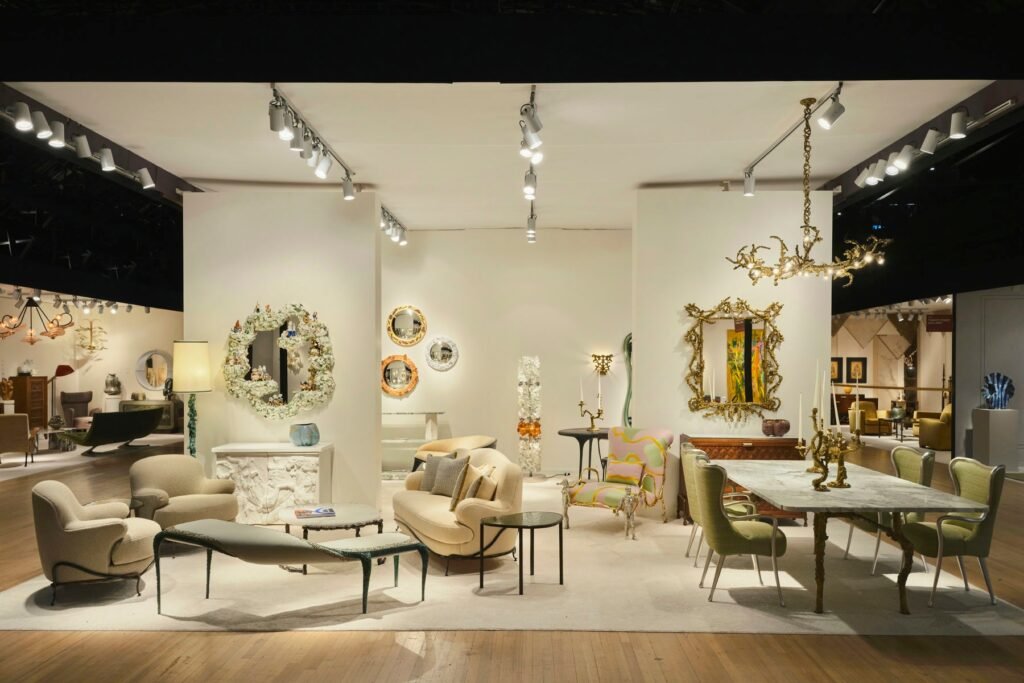
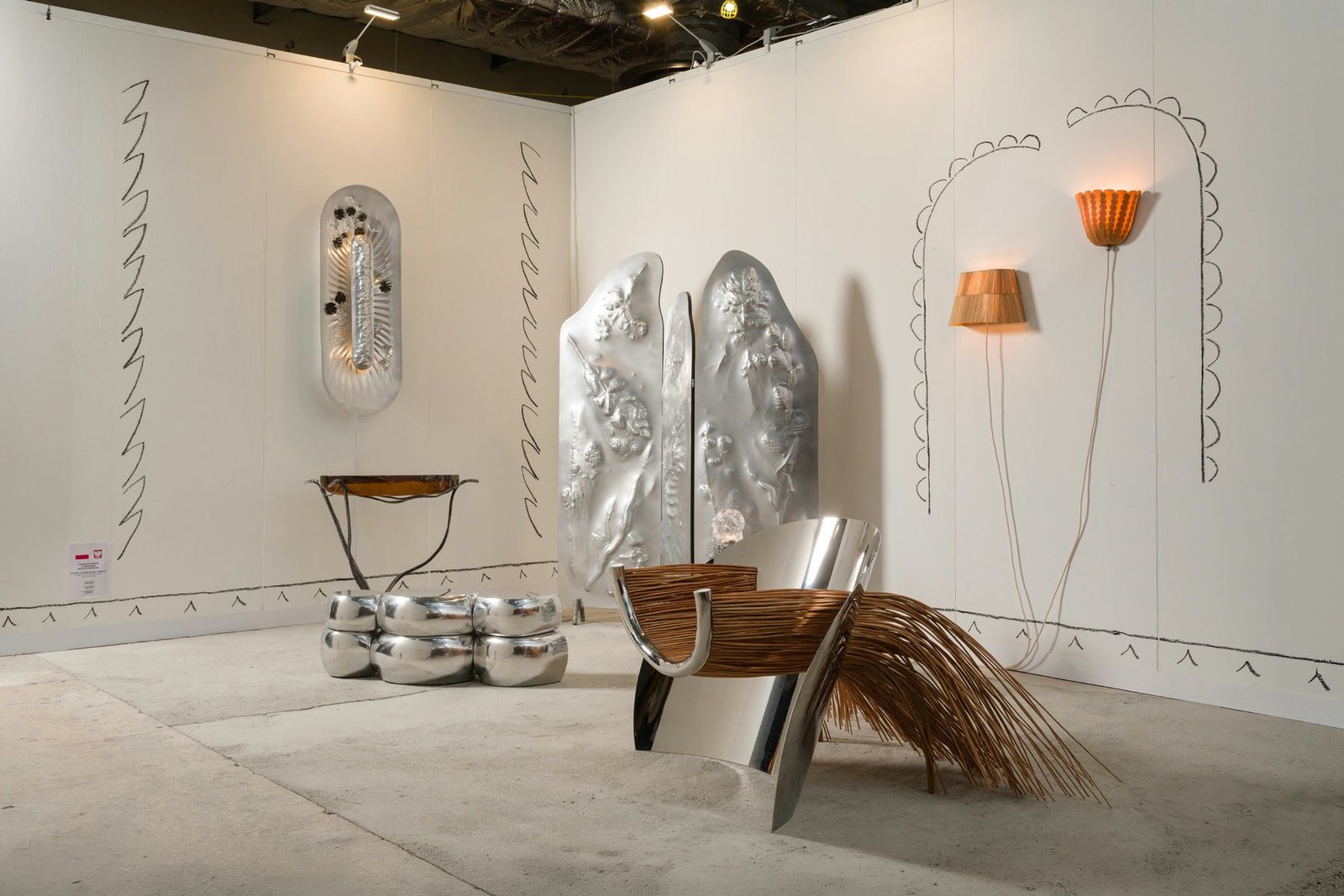
What mattered was what filled it. Philadelphia-based Dudd Haus presented its signature play between concept and restraint, including a milled-aluminium floor lamp by Jordan Maurice and a paravent constructed from telephone cords by Overt Cove. Freaks, an Upstate New York gallery, commanded attention with droopy glass lamps and shades carrying erotic undertones. Iitem studio’s booth paired lacquered furniture with theatrical draping. Objekt Gallery showed a battened screen by Polish studio Wiktoria & Filip Bielicki. These weren’t mass-produced pieces. They were singular, handcrafted objects, each one a statement.
The May-November Split Is Already Reshaping the Market
The parallel emergence of two design moments in the New York calendar isn’t accidental; it reflects a genuine market split. When Dezeen’s US editor Ben Dreith surveyed the November landscape, the pattern was clear: collectible and artisanal work clustered in November, while industrial design remained anchored to May conversations. That division hardened this year when NYCxDesign, still scheduled for May 2027, held a November talk featuring designers Ross Lovegrove, Karim Rashid, and Rem D Koolhaas, moderated by New York-based design writer Camille Okhio. The panellists discussed AI’s potential in design and dismissed craft as a valid design conversation. The irony was sharp: even as they derided craft’s place in design discourse, craft-focused fairs were dominating the actual November schedule.
Writer Debika Ray noted in an opinion piece for Dezeen that crafted, one-off pieces have lately come to dominate design shows. This November proved it. The November week positioned itself as collectible-first, craft-forward, and sensual. The May week, by contrast, appears poised to remain the industrial designers’ moment, where process and scalability and big-picture thinking hold court.
What November Built Without Planning
BDNY and Salon Art + Design have held November dates for years, but they operated as isolated events. This November felt different. Collectible’s move, ICFF’s scheduling shift, and the organic clustering of smaller galleries and independent fairs created mass. Curators Alex Tieghi-Walker and Lynette Nylander designed special sections within Collectible’s footprint. The fair’s scenography maintained the sleek, USM-inflected aesthetic established in prior years, but scaled it across a larger venue. Bas-reliefs appeared on otherwise modern furniture, suggesting a broader hunger for ornament and tactile detail.
The safety incident at Collectible raised legitimate questions about execution at a larger scale, and the fair’s statement to Dezeen made clear that responsibility fell on exhibitors to properly install their own equipment. But the incident didn’t break the momentum. The November design week is now real, even if nobody officially built it. It operates as a market force with its own character, its own audience, and its own curatorial logic. The question now is whether that logic will hold, or whether the May and November calendars will begin to blur, fragmenting what had been a coherent, if overcrowded, annual moment.