Dezeen Awards 2026 Architecture: Daichi’s Silent River Tree Sauna, a minimalist forest retreat in Kanagawa, beats 18 other global winners to become project of the year at the ninth annual Dezeen Awards ceremony in London.
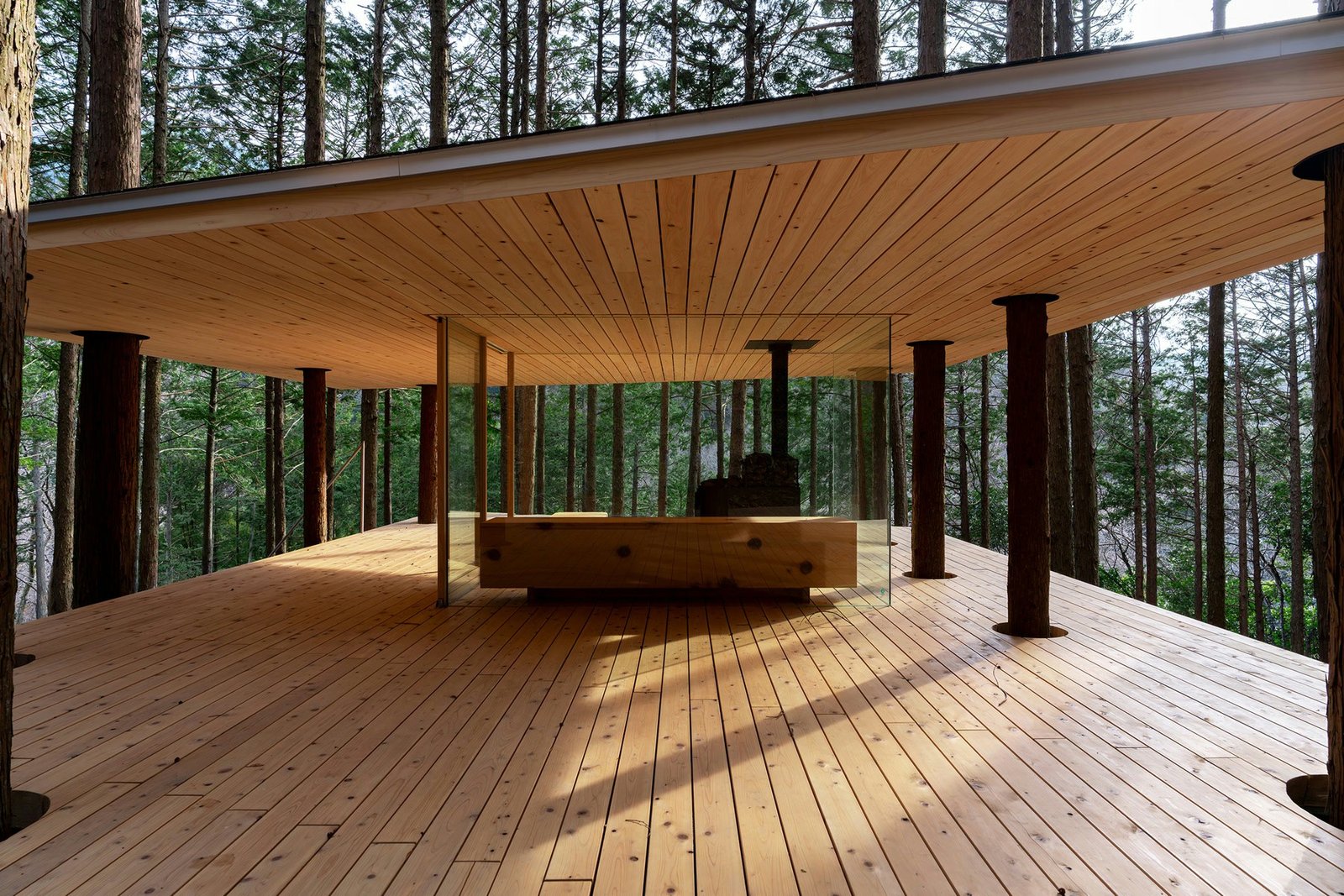
The Daichi Silent River Tree Sauna, a structure suspended among trees in a forest southwest of Tokyo, has claimed the architecture project of the year at the 2026 Dezeen Awards, cementing what judges called a “totally fresh, totally innovative” approach to biophilic design. Located in Kanagawa within a retreat that also includes guest cabins and additional sauna spaces, it won both the overall architecture honor and the leisure and wellness category at the ceremony held in London, marking the second consecutive year that the wellness category winner has ascended to the top architecture title.
The judges praised the design for its stripped-down aesthetic, calling it “beautifully minimalist with a spiritual touch of the soul.” Their reasoning extended beyond form into function: “Leisure and wellness is also about mental health, which this project addresses perfectly,” they stated, noting that the structure “offers a spiritual connection between humans and nature.” The design philosophy centered on a deceptively simple but architecturally ambitious idea: treating the surrounding trees not as obstacles to build around, but as integral structural and aesthetic elements of the building itself.
Dezeen Awards 2026 Spans 11 Countries and Regional Design Innovation
The 19 architecture category winners announced across the ninth annual Dezeen Awards span 11 countries, including Canada, France, India, Japan, and Mexico, each bringing distinct regional approaches to contemporary architecture. The Silent River Tree Sauna faced competition from projects ranging from a sprawling brick-clad university building modeled on stepped wells in India to a country house with walls formed of unstabilized rammed earth in the UK. Mexico contributed an 18-kilometre-long limestone wall designed to allow wildlife to pass through, while other standouts included a housing project that appears to emerge from the natural landscape and a Viking-inspired viewpoint shaped like a giant silver ring positioned on a legendary burial site.
Japan’s Double Moment: Urban and Rural Innovation
Japan’s presence at the awards extended beyond the top prize. Sakai Architects, a local studio, won the urban house project of the year for Amami House, an off-grid residence located on Amami Ōshima, an island in the Amami archipelago off Japan’s southern coast. The design drew from regional traditional materials and crafts, with development prompted by increasing extreme weather conditions on the island. The judges highlighted its sustainability credentials: “This house shows how we can live sustainably on a small footprint, in close relationship to nature. In a time of climate crisis, it offers an excellent solution for autonomy of energy, while smartly reinterpreting the arrangement and materials of a traditional Japanese house.”
Meanwhile, the rural house project of the year went to Jiang Deng Lu by Shisuo Design Office in Anhui, China, a compact building raised partially on stilts that appears to float above its sloped riverside site. Constructed using salvaged stainless-steel offcuts, the project exemplified what judges called design that “sits very delicately in its context and is beautiful as a result.”
The 2026 Dezeen Awards represent the magazine’s most closely watched annual architecture honors, drawing submissions and attention from practitioners globally. The Silent River Tree Sauna’s victory at the Dezeen Awards 2026 signals a marked shift in what contemporary design juries are recognizing as worthy of the year’s highest honor: not monumental scale or technical virtuosity, but rather a quieter integration of human space with ecological systems, delivered with spiritual intention rather than architectural showmanship.