Paul R. Williams Architect: The most prominent Black American architect of his generation shaped how Los Angeles looks and lives, and finally gets the full museum show at LACMA’s Miracle Mile.
Paul R. Williams architect did not build monuments to himself. He built how people actually lived in Los Angeles. He designed family homes and places of worship. He designed office buildings. He shaped the texture and feeling of an entire city across decades, and yet his work has lived largely in the periphery of institutional memory, treated as regional competence rather than what it actually was: a defining force in twentieth-century American architecture. That changes on November 15 when LACMA opens Paul R. Williams: Architect for Living at its Miracle Mile location, marking the kind of full-scale retrospective that has somehow escaped this architect’s résumé until now.
The timing feels both inevitable and inadequate. Williams was the most prominent Black American architect of his generation, a fact that should have secured him canonical status decades ago. Instead, his name has circulated among design professionals and Los Angeles scholars without penetrating the mainstream cultural conversation about what shaped the built environment we inhabit. This exhibition is the museum show he has always deserved, to borrow the language of those who organized it. It is also a corrective measure, an institutional acknowledgment of a gap that should never have existed in the first place.
What makes Williams’ body of work particularly resonant now is the way it cuts through the fantasy of architectural celebrity. He wasn’t designing statement buildings meant to announce their own importance. He was solving problems. He was creating spaces where people could live with dignity and comfort. That approach, fundamentally practical and deeply human, marks a philosophical stance that feels urgent in an era obsessed with architectural ego and landmark status. Williams understood that the most significant architecture often operates quietly, shaping daily life without demanding recognition.
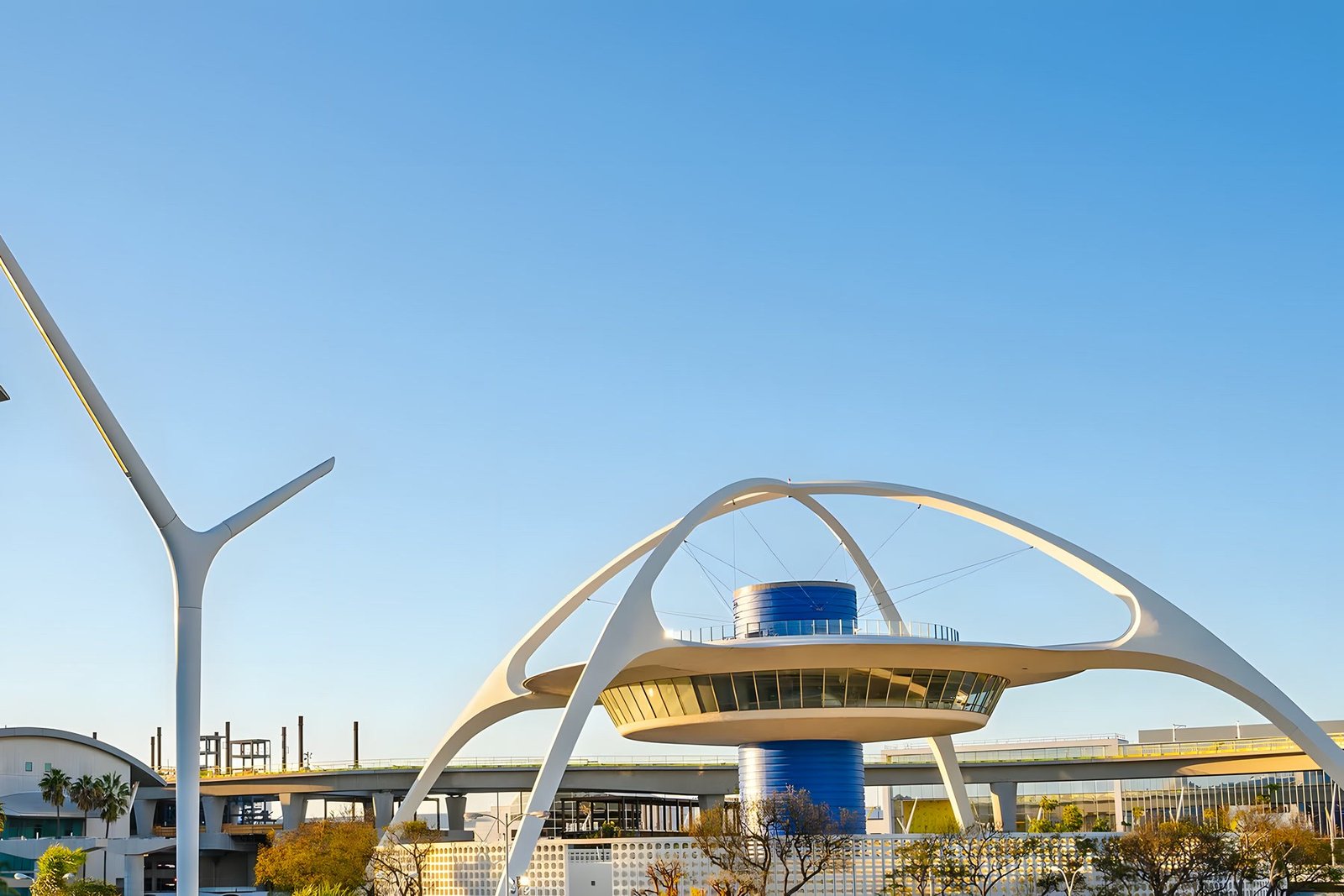
LACMA’s decision to house this retrospective on the Miracle Mile grounds carries its own significance. The museum sits within the landscape that Williams helped define, surrounded by the city he designed for. It is the appropriate venue, the conversation happening in its proper context. The exhibition arrives not as an outsider assessment but as a homecoming of sorts, a return to the place where the work actually lives and breathes.
Paul R. Williams Architect and His Influence on Los Angeles Architecture
Williams’ influence on Los Angeles architecture ranges across residential projects and civic structures, from private family homes to places of worship to commercial office buildings. Each category represented different challenges and different populations, and his approach remained consistent: design that served function without sacrificing beauty, that respected the people inhabiting the spaces. This was not minimalism or austerity dressed up as principle. It was genuine care for how design shapes daily experience.
The driving tour organized by the LA Conservancy on Saturday, November 21, titled Paul Revere Was Here: On the Trail of Paul R. Williams, offers a physical counterpoint to the LACMA exhibition. Co-presented with SoCal NOMA and LACMA, the tour traces his buildings across Los Angeles, moving through the city he shaped. The structure of that tour, described as the perfect sequel to the exhibition, suggests that Williams’ work cannot be fully understood in gallery context alone. His architecture exists in relationship to place, to landscape, to the actual streets and neighborhoods of Los Angeles. The tour recognizes that understanding requires movement through the city itself, seeing how these buildings function within their contexts rather than in isolation.
Recognition Deferred Too Long
That a major American architect required an institutional push this late in the game speaks to the persistent gaps in how we document and celebrate architectural legacy. Williams’ race was certainly a factor in his marginalization, but the oversight also reflects how architectural history privileges certain types of work, certain scales of ambition, certain kinds of visibility. Williams operated within systems that constrained his opportunities, yet produced work of such consistent quality and human-centered thinking that it demanded attention regardless of those constraints. The exhibition becomes, in part, a reckoning with how much brilliant work existed outside the official record.
LACMA’s November 15 opening date marks the beginning of a corrective conversation. It is not too late, but it is later than it should have been. For anyone interested in understanding how Los Angeles became Los Angeles, how twentieth-century American architecture addressed the problem of residential living, or simply how design can serve communities rather than serve itself, this exhibition is mandatory. Williams’ buildings have been standing in plain sight all along. Now, finally, we are stopping to truly look at them.