Toyota Erev: Facing a sales collapse in China, Toyota is debuting its first extended-range electric vehicle at Guangzhou on November 27, banking on gas-engine reliability to slow its market hemorrhage.
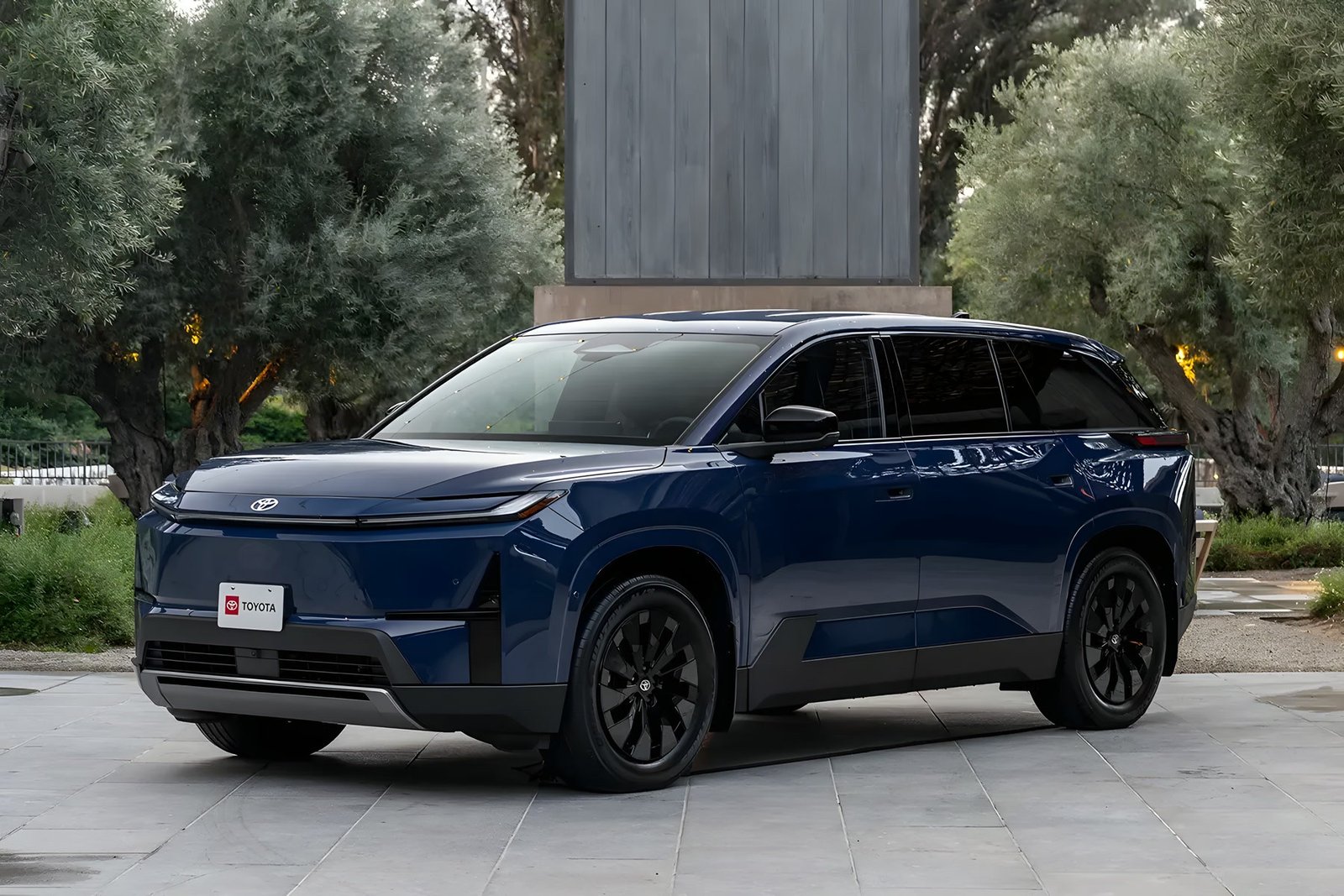
Toyota is finally entering the extended-range electric vehicle market with its first EREV, but not because it wants to. On November 27, the Japanese automaker will reveal the Toyota EREV at the Guangzhou Motor Show, and it’s based on the Highlander, the flagship three-row SUV that’s supposed to anchor the brand’s premium positioning. The move is less innovation and more triage. Toyota’s joint venture in China, GAC Toyota, posted a teaser on Weibo with the tagline “Toyota doesn’t rush but range-extended,” hinting at what’s coming.
An EREV operates differently from the plug-in hybrids or pure EVs dominating the conversation right now. Unlike a battery-electric vehicle, an EREV pairs a smaller battery with a gas engine that functions as a generator, kicking in to recharge the pack when range starts dipping. It’s not a plug-in hybrid either, which typically carries a larger engine and more transmission complexity. Instead, an EREV splits the difference: simpler than a PHEV, cheaper than a full EV, but also less efficient than pure electric power. Toyota markets this as its fifth “electrified” category, joining pure EVs, plug-in hybrids, conventional hybrids, and fuel-cell vehicles in a portfolio that increasingly looks like a brand hedging its bets.
Understanding the Toyota EREV Strategy and Market Response
The timing of this reveal isn’t strategic curiosity. It’s desperation wearing a suit. In the first nine months of 2026, Toyota sold just over 1.05 million vehicles in China, a 19 percent drop compared to the same period the year before. The company’s own diagnosis was bleak: “the market in China remained weak due in part to rising gasoline prices, while the market for gasoline vehicles and hybrid vehicles was particularly affected.” That’s eight consecutive months of year-over-year declines. In an auto market where BYD, Geely, and Chery have already reshaped consumer expectations around price and electrification speed, Toyota’s traditional playbook of reliability and gradual evolution looks like operating in slow motion.
Gasoline and hybrid vehicles, which have been Toyota’s money machine for decades, are getting obliterated by cheaper Chinese competitors who’ve already moved to pure electric or range-extended platforms. The EREV format offers Toyota a way to leverage what it knows best, combustion engine reliability and emissions expertise, while buying time to develop genuine EV capability. A Nikkei report from September indicated Toyota plans to begin producing its first EREV in China in spring 2027, with targets of 200,000 units that year, scaling to roughly 400,000 units by 2028. Those numbers suggest Toyota isn’t treating this as experimental. It’s a full-scale pivot for the Chinese market.
The Highlander EREV Versus the Electrified Highlander
What makes the reveal on November 27 particularly interesting is what Toyota is doing in parallel. While the EREV Highlander debuts in Guangzhou, Toyota is simultaneously preparing a fully electric Highlander for the US market, launching in early 2027. That version will be built at Toyota’s Georgetown, Kentucky plant and will come with two battery options: a 77 kWh pack good for up to 287 miles of range in front-wheel-drive, or a larger 95.8 kWh pack delivering up to 320 miles for FWD models. Both will offer all-wheel-drive variants and retain the three-row seating layout that makes the Highlander a family staple.
The divergence is stark. In the US, Toyota is going full electric. In China, it’s hedging with a gas-engine backup. This isn’t coincidence. The US market still favors plug-in and full-EV adoption with government incentives and charging infrastructure support. China, meanwhile, is a price war where consumers want maximum range assurance at minimum cost. The EREV formula works there: you get most of the efficiency of an EV, the simplicity of single-speed EV drivetrains, and the psychological comfort of never running out of charge far from a charging station. No transmission complexity, no PHEV’s maintenance baggage, just a compact gas generator that sleeps most of the time.
Toyota’s Slower Path Forward
The EREV announcement reveals something uncomfortable about where Toyota stands. It’s not that the Highlander EREV is a bad product. It’s elegant engineering: simpler than a plug-in hybrid, cheaper to produce than a pure EV, more psychologically reassuring to buyers still uncertain about range. But it’s also a concession. Toyota is essentially admitting it can’t win a pure price war in China’s EV space against BYD or the other domestic players. By introducing an EREV rather than a cheaper pure-electric alternative, Toyota is positioning itself as the premium play, the brand you buy when you want reliability and durability over rock-bottom pricing.
That might work for Highlander buyers, who already expect a premium. It won’t save Toyota’s mainstream sedan or crossover sales. And it won’t reverse the broader trend that’s already clear: in markets where electrification is mandatory, Toyota’s ability to leverage its combustion engine expertise becomes less valuable every year. The company has the resources and manufacturing expertise to eventually compete on EV capability. But for now, in China, it’s buying time with a bridge technology, hoping the EREV Highlander can shore up margins while the full-electric version finds its footing elsewhere.