Hublot All Black: At Milan’s 2026 Watch Week, Hublot marks two decades of its darkest icon with a Yohji Yamamoto collaboration that strips luxury watchmaking down to its essentials.
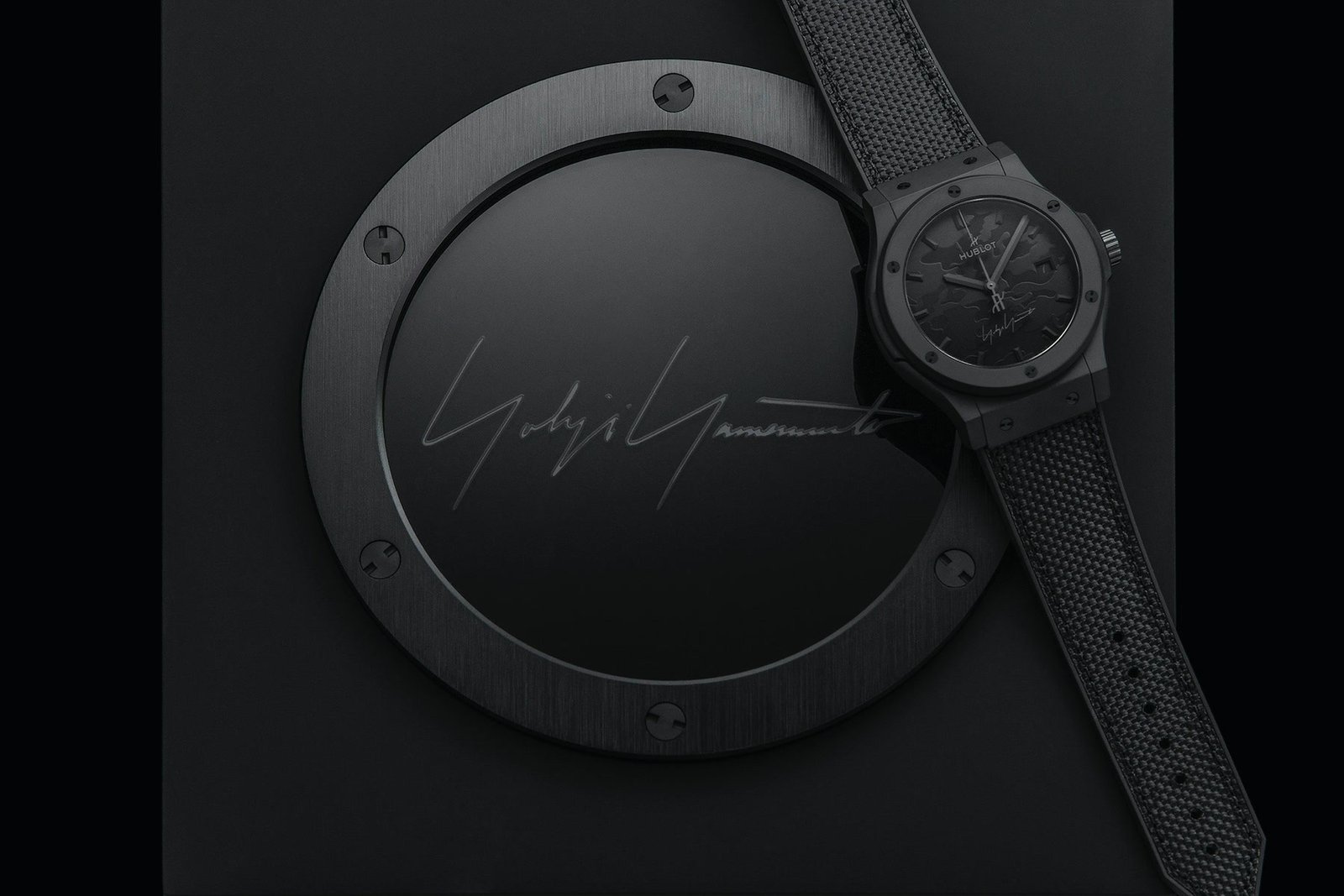
Hublot arrived at LVMH Watch Week 2026 in Milan with a mandate that felt almost defiant: prove that a Swiss watchmaker could operate outside the guardrails of tradition and still command respect. The brand’s latest collaborations spanning tennis, fashion, and industrial design were framed as evidence of what the company calls its “Art of Fusion” philosophy. Among the drops was a moment that deserved its own weight: a reimagined Hublot All Black watch, co-designed with Yohji Yamamoto, arriving exactly 20 years after Hublot first introduced the concept that would become its most recognizable aesthetic.
The timing was deliberate. Two decades into an idea that initially seemed almost heretical in horology circles, Hublot was ready to hand the keys to one of fashion’s most uncompromising designers. Yamamoto’s approach to silhouette, restraint, and the power of negative space aligned perfectly with what the All Black collection had always represented: a refusal to ornament for ornament’s sake. Where traditional luxury watches announce themselves through precious metals and complicated dials, the All Black line had always whispered. The Yamamoto iteration would push that whisper even further.
The Hublot All Black Yamamoto Collaboration Marks Two Decades
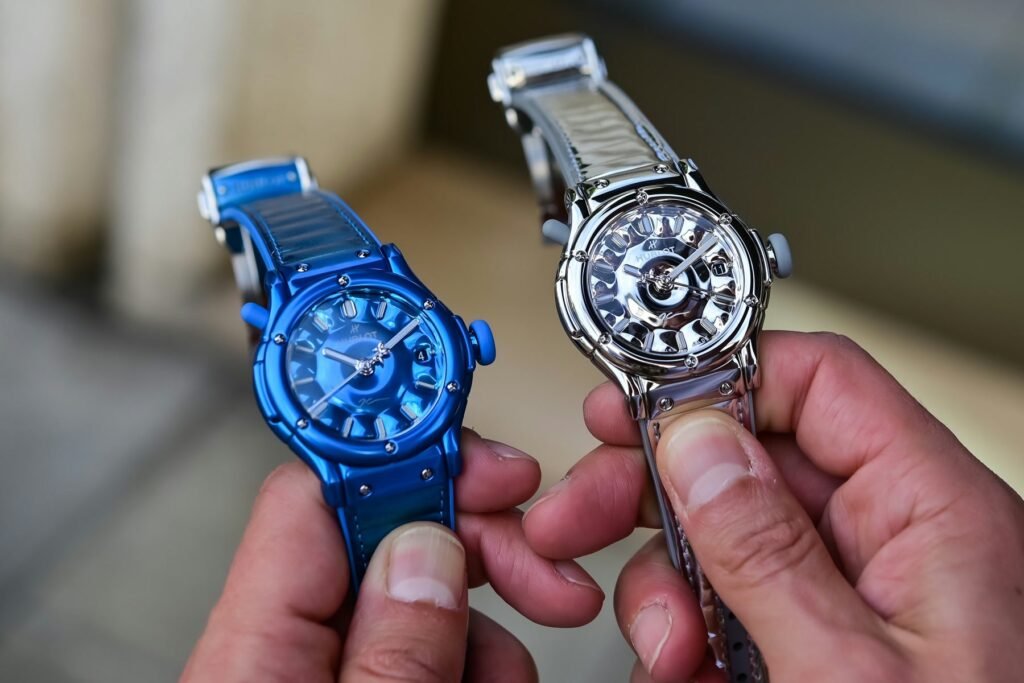
To understand why Hublot felt confident enough to hand creative control to an external visionary, look at what the brand was simultaneously unveiling. The Big Bang Tourbillon Novak Djokovic GOAT Edition arrived as a three-piece collection, with each colorway corresponding to a different tennis surface: blue for hard court (representing 72 of Djokovic’s wins), orange for clay (21 victories), and green for grass (8 triumphs). The numbering system itself was radical. Rather than a fixed production run, Hublot committed to manufacturing additional pieces if Djokovic added more major titles to his record of 24 Grand Slams, an Olympic gold medal, and over 100 professional tournament victories. The watch would grow with the champion’s legacy.
The engineering was where Hublot’s partnership philosophy revealed itself most clearly. The 44mm case was constructed from a bespoke composite material blending Djokovic’s own Lacoste polo shirts and Head tennis racquets. The sourcing was precise: 12 blue shirts, 4 orange, and 2 green, combined with 12 racquets total. The result was a marbled surface that felt less like a watch and more like a relic, marrying athlete and artisan into a single object. The case middle used Titaplast, a high-performance polymer rivaling titanium in durability, while chemically strengthened Gorilla Glass fronted both sides. Despite hitting 14.4mm in thickness and offering 300 metres of water resistance, the entire watch weighed just 56 grams.
Inside, the MHUB6035 automatic tourbillon movement was where aesthetics met obsession. The 293-component, 26-jewel caliber abandoned the conventional solid mainplate for a three-dimensional lattice designed to resemble tennis racquet strings. Each “string” measured just 0.55mm thick, laser-engraved from a single piece and finished with black PVD coating. Djokovic’s personal “ND1” logo appeared in contrasting white across the web. The barrel’s steel rochet wheel was decorated to resemble a tennis ball, complete with rhodium-polished S-curves and yellow-green lacquer. A 22-carat red gold micro-rotor at the 12 o’clock position carried the Hublot logo in laser engraving. The movement delivered a 72-hour power reserve and beat at 21,600 vibrations per hour. The strap itself continued the narrative: white calfskin embossed to mimic racquet grip tape, lined with color-matched leather, and secured via a Velcro loop through an anodized aluminum buckle. For athletes who’d actually wear the piece during competition, Hublot included a white rubber strap with titanium deployant clasp. Even the six bezel screws had been machined to resemble tennis balls, requiring engineers to develop a bespoke S-shaped screwdriver head for assembly.
Yamamoto’s Vision and 20 Years of Darkness
The Yamamoto collaboration emerged from this same ecosystem of radical specificity. Where the Djokovic watch was architecture built around narrative, the reimagined All Black was reduction. Yamamoto’s design sensibility, honed across decades of deconstructing tailoring and exploring the poetry of proportion, found natural harmony with a collection that had always believed luxury didn’t require legibility or shine. The partnership marked the culmination of Hublot’s most distinctive contribution to contemporary watchmaking: the idea that a sports watch could be as aesthetically rigorous as a fashion statement.
That Hublot was celebrating 20 years of a watch that was initially viewed as a commercial curiosity now felt like vindication. The All Black collection had survived the skepticism that greeted it, evolved through iterations and colorway experiments, and become the company’s north star. By placing it in Yamamoto’s hands for this anniversary moment, Hublot was making a statement about its own maturity as a collaborative partner. The brand wasn’t interested in celebrity licensing or superficial branding exercises. Its partnerships were ventures into genuine aesthetic territory, where the designer’s vision could reshape the product at a fundamental level.
What emerged at LVMH Watch Week 2026 was proof of a larger thesis: that the future of Swiss watchmaking belonged not to those defending tradition, but to those willing to dissolve the boundary between watchmaking and other disciplines. Fashion, sport, materials science, and industrial design were no longer supplements to watchmaking. They were the foundation. Hublot’s presence in Milan that week, anchored by the Djokovic trilogy and the Yamamoto anniversary piece, was less a product launch than a philosophical manifesto delivered in titanium, composite materials, and 72 hours of uninterrupted power reserve.