Guggenheim Abu Dhabi: The $1 billion museum on Saadiyat Island becomes the network’s largest outpost, marking a monumental shift in global art infrastructure.
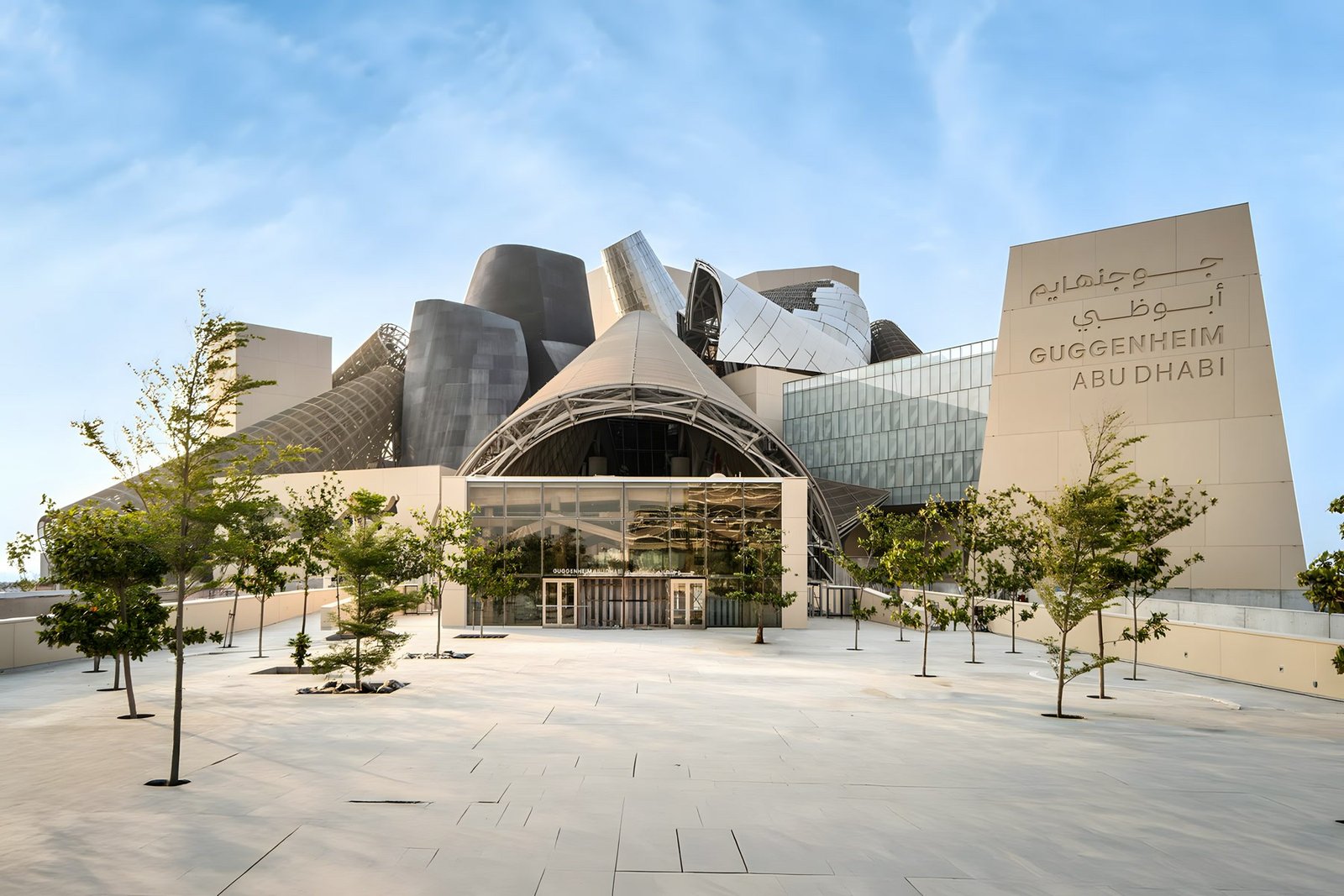
Twenty years of false starts, geopolitical complications, and architectural evolution culminate on December 11, when the Guggenheim Abu Dhabi officially opens its doors on Saadiyat Island. The museum, designed by the late Frank Gehry, represents the most ambitious museum project the Guggenheim network has undertaken since his landmark 1997 Bilbao building transformed that Basque city into a global art destination. This time, the scale is bigger, the ambitions are broader, and the cultural stakes are significantly higher.
The project’s genesis traces back to 2006, when Abu Dhabi first announced plans for the institution. That nearly two-decade gap between conception and execution tells its own story about the complexities of building world-class cultural infrastructure in the Middle East, navigating everything from regional instability to the kind of relentless design iteration that Gehry’s practice demands. The museum will occupy 11,600 square meters of interior gallery space across 30 galleries, with an additional 23,000 square meters of outdoor exhibition areas. It becomes the largest museum in the Guggenheim network, which includes locations in Venice, Bilbao, and the original flagship in New York.
Guggenheim Abu Dhabi’s Regional Focus: A Museum Built for Global Perspectives
The Guggenheim Abu Dhabi positions itself explicitly as a bridge between hemispheres, structured around what the museum describes as “major vectors of art since 1960, such as Abstractions, Popular Culture, Land, Language, and Storytelling.” That framing signals a deliberate pivot away from the Western-centric model that has historically defined major museum collections. The institution’s curatorial focus emphasizes art from West Asia, North Africa, South Asia, and the broader region, a geographic and cultural orientation that reshapes what global contemporary art discourse looks like when it’s not centered in New York, London, or even Paris.
Stephanie Rosenthal, the director of the Guggenheim Abu Dhabi project, has committed to positioning the museum as “one of the most progressive institutions of the 21st century.” In a recent statement, Rosenthal emphasized the diversity of the team that assembled the institution, calling it “one of the most remarkably diverse groups I have ever worked with, bringing together unique cultures, disciplines, and perspectives.” That language matters, particularly when describing a museum that will inevitably shape how Middle Eastern and South Asian art is perceived, collected, and valued globally.
Gehry’s Final Statement, Completed by Others
Gehry’s death in 2022 meant that the Guggenheim Abu Dhabi would join a category of significant architectural projects completed posthumously. The building itself reflects the sculptural audacity that defined his practice, though the specific details of how the design evolved remain less documented in popular discourse than the Bilbao museum’s genesis. What matters architecturally is that Gehry’s approach to museum design, forged through the success of Bilbao and refined through subsequent decades, creates spaces intended to reshape visitor expectation. His buildings don’t simply house art; they compete with it, creating an architectural experience that becomes inseparable from the art itself.
The opening arrives at a complicated moment for the region. The museum’s debut follows a turbulent period in Middle Eastern geopolitics, particularly following the recent escalation of conflict in the region that prompted a postponed and restructured edition of Art Dubai in May. Despite that turbulence, the Guggenheim Abu Dhabi’s opening represents a substantial cultural and economic commitment from Abu Dhabi, alongside other major institutional developments on Saadiyat Island, including the Louvre Abu Dhabi (which opened in 2017) and museums designed by Norman Foster and others.
The museum opens with Frieze Abu Dhabi already scheduled for November 2026, positioning Abu Dhabi as an increasingly central node in the global contemporary art market. These aren’t parallel developments; they’re coordinated, calculated efforts to establish the emirate as a destination where collectors, artists, curators, and institutions converge. The Guggenheim Abu Dhabi’s December 11 opening, now available for bookings, marks the moment when that vision becomes concrete and visitable, when the theoretical influence of a major museum network shifts to the Persian Gulf and the conversation about where global art actually happens reshapes itself accordingly.