Temporary Structures Architecture: A new exhibition opening November 5 argues that temporary urban structures reveal what cities truly need, offering lessons for a more responsive architecture.
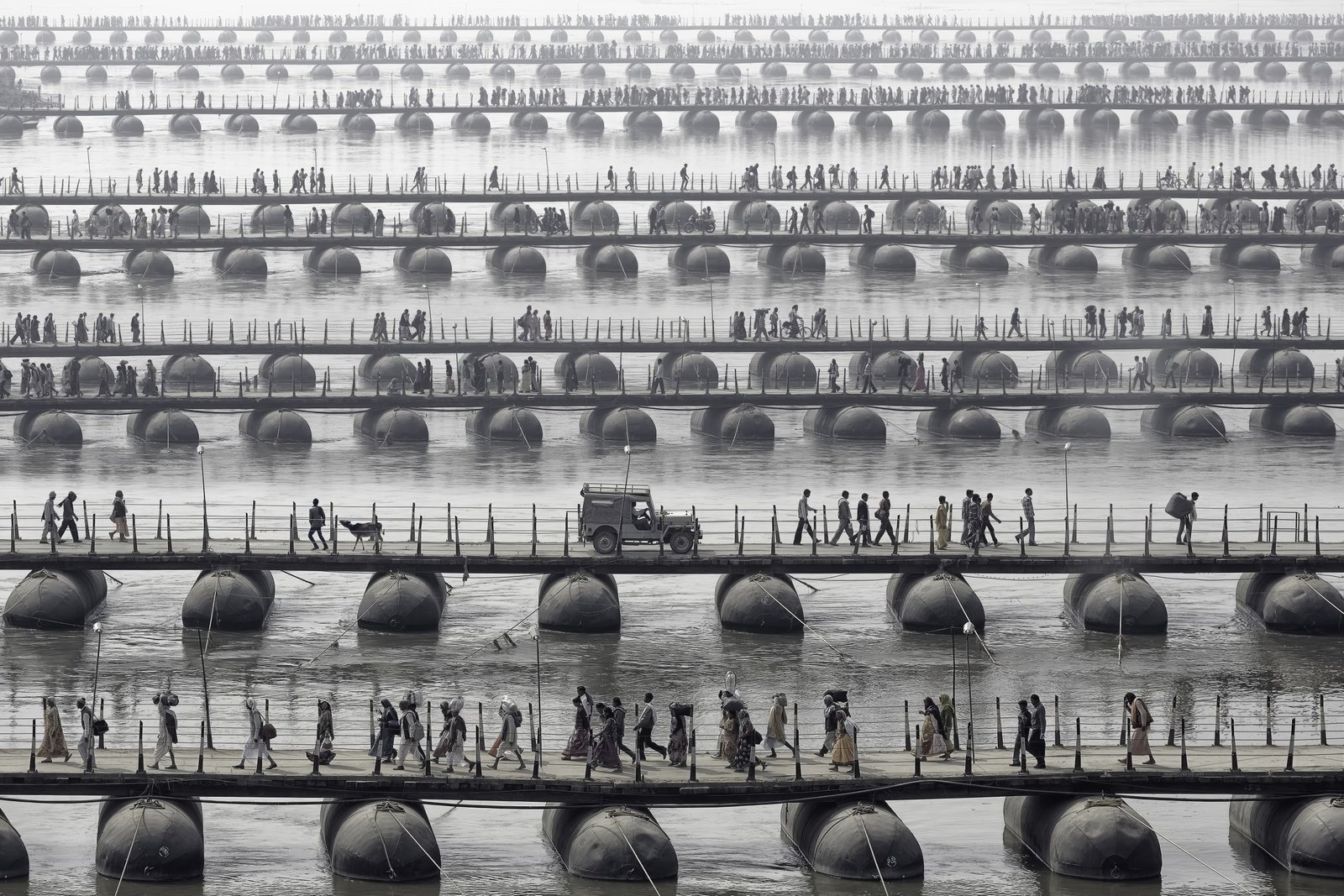
Walk through any major city and you’ll see them everywhere: construction scaffolding, temporary barriers, makeshift vendor stalls, emergency shelters, pop-up markets. These temporary structures are the infrastructure we’re trained not to see, the functional backdrops to permanent architecture. But what if the most honest buildings in our cities are the ones we’re supposed to ignore?
That’s the premise behind “Temporary. Structures of Necessity,” opening November 5 at Architekturzentrum Wien and running through April 5, 2027. KOSMOS architects, the Vienna-based practice behind the exhibition, has spent years collecting and studying these anonymous structures, treating them not as failures of permanent design but as a distinct architectural category worthy of serious analysis. The team has given them a name that signals their intent: “tectures,” shorthand for the constructed self that exists outside the realm of named authorship and ego.
This isn’t nostalgia or a hipster fetish for raw materials. According to the exhibition’s framing, temporary structures operate under a set of constraints that actually make them smarter than their permanent counterparts. They’re fast. They’re adaptable. They can be assembled, modified, and dismantled without the bureaucratic and material drag that slows conventional building. When a city needs housing quickly, when a neighborhood requires new public space, when climate or economic conditions shift suddenly, permanent architecture moves too slowly. Temporary structures, by contrast, respond immediately because they have to.
Temporary Structures as a Laboratory of Immediate Responses
KOSMOS architects began studying these structures during their student years, accumulating examples over time. What emerged was a realization that these utilitarian forms aren’t compromises or Band-Aids on urban problems. They’re direct recordings of what a society actually needs at a given moment. A temporary market stall tells you what commerce looks like when designed for minimum friction. A construction fence shows you the bare logic of containment. They’re sociological documents dressed in metal and wood.
The exhibition, curated and designed by KOSMOS themselves with project management by Katharina Ritter at Architekturzentrum Wien, positions these structures as a kind of laboratory. If conventional architecture is slow to respond to social, economic, political, ecological, and technological change, then temporary structures represent the opposite impulse: they learn from conditions as they exist, adapt in real time, and disappear when no longer needed. The efficiency isn’t accidental. It’s fundamental to their DNA.
Running parallel to the permanent exhibition “Hot Questions, Cold Storage,” which has been displaying the archive of Austrian 20th and 21st century architecture since 2022, “Temporary. Structures of Necessity” offers a counterpoint to canonical architectural history. Where Hot Questions examines named projects and recognized designers, the new show operates in the realm of the anonymous and the ephemeral. Both exhibitions will share space at Museumsplatz 1 in Vienna’s 7th district through April 2027.
Why This Moment Matters for Architecture
The timing of this exhibition lands in a period when architectural discourse is increasingly anxious about sustainability, adaptability, and the pace of change. Climate emergencies demand faster responses. Housing crises require solutions that don’t wait for five-year planning cycles. Traditional building methods, premised on permanence and individual authorship, struggle to keep up. Temporary structures, by their nature, have always prioritized efficiency over ego.
KOSMOS’s framing of temporary structures as a legitimate architectural category, rather than a failure state, reorients how we think about urban space. A temporary structure isn’t a placeholder for something better. It’s a direct answer to the question of what’s needed right now. In that sense, these temporary structures we dismiss as invisible may hold the key to how our cities adapt and survive.