Rh Milan Flagship: The American luxury furniture giant’s most ambitious European bet transforms a historic Italian palace into a sprawling monument to experiential retail.
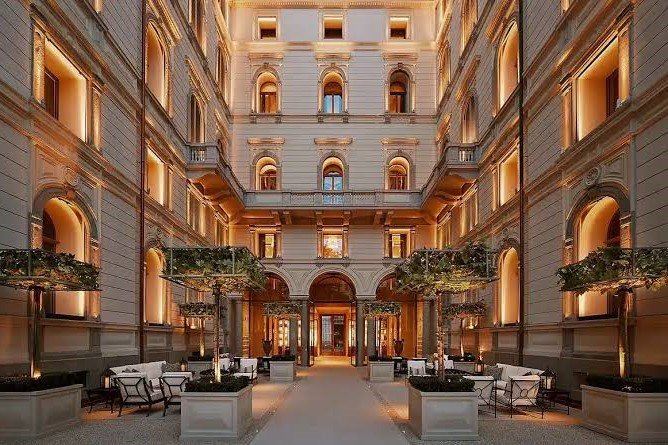
RH’s new Milan flagship isn’t a store in any traditional sense. It’s a seven-story conversion of a historic palazzo into something closer to a contemporary art institution designed exclusively around the sale of furniture, textiles, and home objects. The scale alone signals a fundamental shift in how the brand approaches European luxury consumers: rather than claiming a prominent street corner, RH has effectively swallowed an entire building, turning its architectural bones into the brand’s own gallery infrastructure.
What distinguishes this opening from the typical luxury expansion is the deliberate refusal to minimize or rationalize the palazzo’s original character. Instead, RH has weaponized it. High ceilings, original plasterwork, and period details become the backdrop against which the brand’s curated rooms, monumental installations, and sprawling lifestyle vignettes read as interventions within a museum rather than as commercial displays. Each floor reorganizes the palazzo’s rooms into thematic environments: intimate dining scenarios float in vast gallery spaces, bedroom installations occupy frescoed chambers, and the scale of the surrounding architecture makes individual pieces feel like sculptures commanding the space around them. This is retail as environmental immersion, where the building itself becomes a product demo.
The timing and geography matter. Milan already functions as a global design capital with deep roots in furniture production and heritage. RH’s decision to anchor a seven-level European headquarters there rather than in London or Paris signals confidence in a specific market position: the brand is staking a claim as a luxury player that understands historical context and architectural restraint, even as it floods the space with contemporary design objects. For a company built on American maximalism and lifestyle inflation, the irony is acute. Yet that tension between restraint and abundance, between respecting the palazzo’s past and overwhelming it with contemporary commerce, is precisely what makes the opening culturally legible in 2026. It’s not about replacing European design heritage; it’s about absorbing it, repackaging it, and selling it back as a total environment.
The timing and geography matter. Milan already functions as a global design capital with deep roots in furniture production and heritage. RH’s decision to anchor its seven-level European headquarters there rather than in London or Paris signals confidence in a specific market position: the RH Milan flagship stakes a claim as a luxury player that understands historical context and architectural restraint, even as it floods the space with contemporary vision.