Alter Design Tokyo: The second edition of the young designers’ platform opens at Designart Tokyo, showcasing 75 international makers who are fundamentally rethinking what products can be.
Alter Design has returned to central Tokyo, and this time the exhibition is making space for machines to join the conversation. The second iteration of the Alter Design Tokyo showcase opened recently at Nihonbashi Mitsu Hall as part of the 10th Designart Tokyo festival, bringing together work from 75 international creators, mostly in their 20s or 30s. The unifying thread across the show is a shared conviction that product design has become too predictable, too safe, too locked into established hierarchies of taste and production.
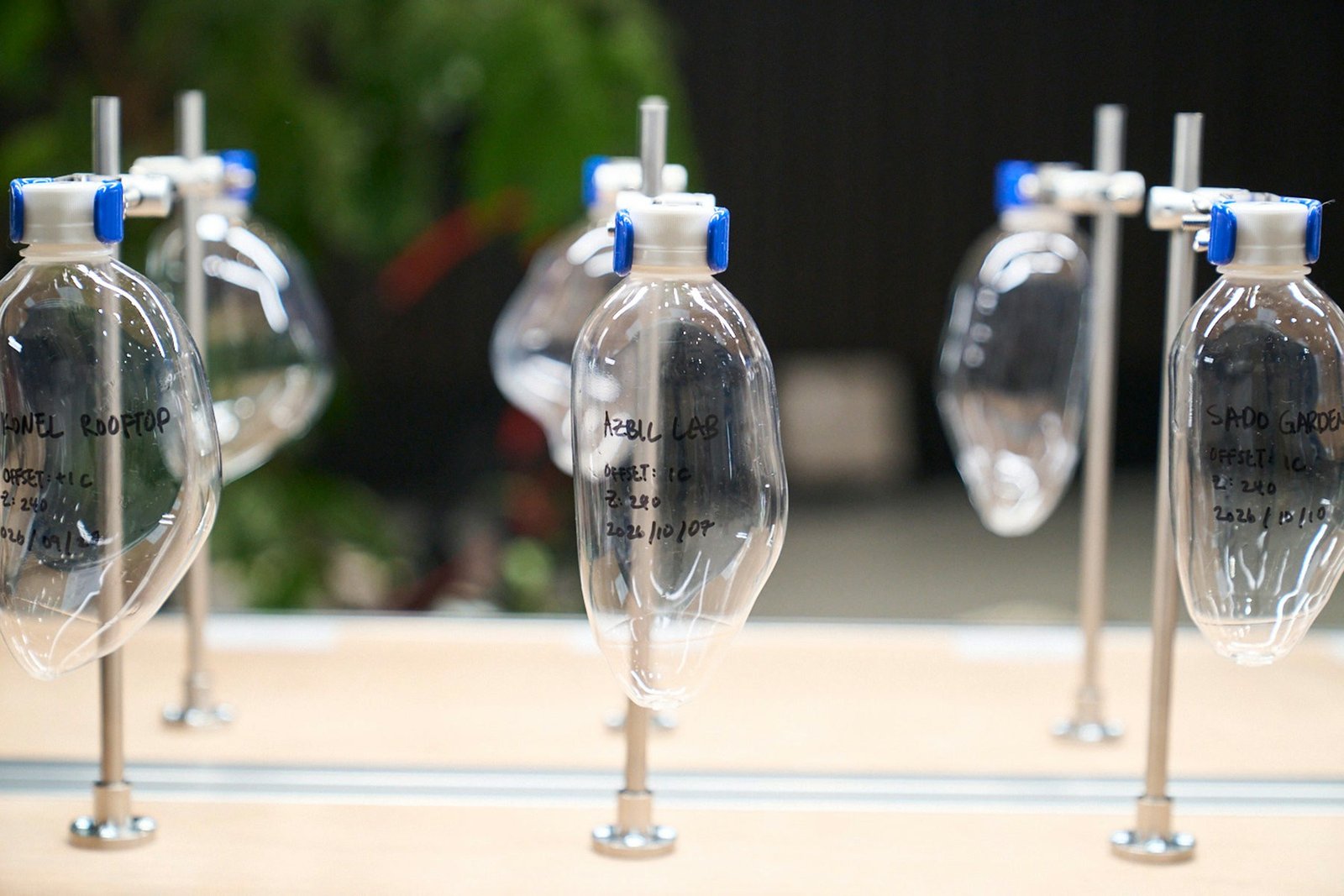
The curatorial impulse throughout Alter pushes back against what organizers describe as an industry growing increasingly rigid in its output. Among the strongest articulations of this philosophy is the Tariki Research Institute’s “tea ceremony with no host,” an intervention that inverts centuries of Japanese ceremonial tradition. Where a traditional tea master would select vessels based on intuition, season, and spiritual judgment, this version replaces human authority with environmental data. Sensors positioned at various locations around the world feed information into an AI algorithm, which translates that data into organic forms and blow-moulds unique vessels from which visitors drink. It’s a provocation wrapped in hospitality: the machine becomes the arbiter of taste, and participants accept what it offers.
Alter Design and the Machine as Taste Arbiter
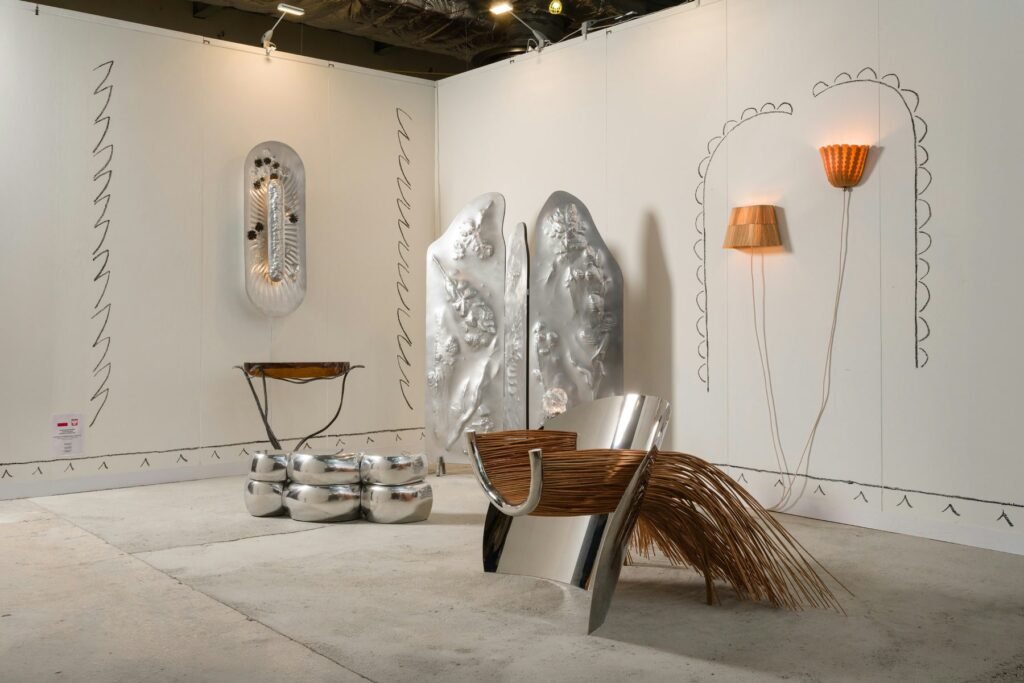
Dutch designer Tim Teven organized a group exhibition within Alter titled “At First Contact,” a collection of texture-heavy pieces that deliberately foreground the evidence of their making. The curatorial logic centers on material presence and surface effect, drawing what Teven describes as a conversation with “traditions within Japanese craft, where the effects of making, material behaviour and use remain visible in the finished object.” The selection includes a bright green vessel by French designer Audrey Large, complete with protruding tentacle-like embellishments that sit squarely within her signature otherworldly aesthetic. Dutch creative Teun Zwets contributed a wall-mounted mirrored cabinet finished in recognisably glossy lacquered split wood. Paris studio LS Gomma presented a polyurethane rubber scone lamp with a glowing ribbed body that approximates the form of lungs. According to Teven, these pieces collectively emphasize qualities of “reflection, gloss and wear,” turning surface finish into a means of philosophical and material exploration rather than mere ornamentation.
Bole: Rethinking Forest Economy
Among the exhibition’s most conceptually dense projects is Bole, a collaboration between London architecture studio Pan Projects, local forestry company Morisho, and Nara-based wood specialist Morisuke Mei Tree Industry. The work addresses a structural problem in Japan’s timber industry: a typical Japanese cedar tree yields five logs, each four metres in length, yet the market value of those logs has fallen below the cost of labor required to grow and maintain them. For the exhibition, the team produced eight simple disc-shaped stools from each of the five logs available from a single tree, then stacked them into a large totemic column to make the process visually legible. The statement this makes is economic as much as aesthetic. As organizers explained, wood flows continuously through Japan’s construction and manufacturing sites, yet most of its value never returns to the forest or the people who steward it. Bole exists as a direct response to that imbalance, treating the stools not as finished luxury objects but as evidence of a broken supply chain.
Washi Paper as Structural Material
Capillary Drift demonstrates an entirely different approach to material thinking. Japanese designer Yuma Kano collaborated with washi paper specialist Gen Taniguchi of Nao Tesuki Washi and artisan Kurara Omichi, who works at Uchida Dyeing Factory in Tokyo, to create stools, vessels, and experimental forms from delicately dyed washi paper. The project rejects the conventional understanding of washi as a flat, decorative surface. Instead, Taniguchi and his collaborators approach the material as a complex network of interwoven fibers, using that structural logic to reveal what they call expressions hidden within the material itself. The result sits somewhere between craft conservation and contemporary design speculation, treating a traditional Japanese material as a site for formal discovery rather than heritage reproduction.
Alter Design Tokyo stands as a comprehensive statement against creative complacency, with each project offering a distinct methodology for rethinking how objects are conceived, made, and valued. From AI determining ceremonial vessels to economic models embedded in wood stacking, the curatorial vision positions Alter Design as a space where philosophical rigor meets material innovation, challenging visitors to reconsider what design can achieve beyond aesthetics alone.