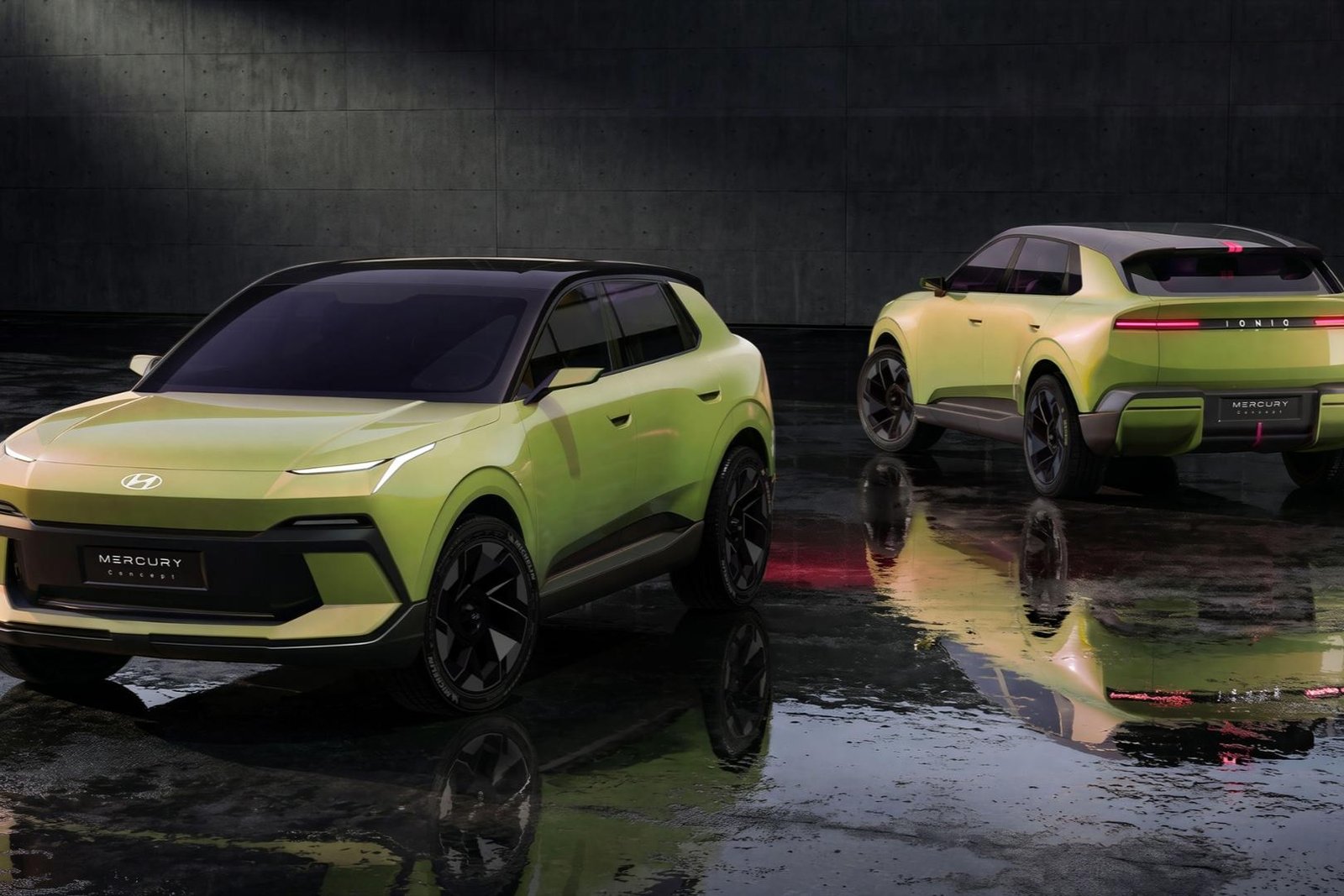
Hyundai Ioniq M Concept: The Korean automaker unveiled the IONIQ M concept at China’s largest southern auto exhibition, signaling an aggressive push into the world’s most competitive electric vehicle market.
When Hyundai Motor walked into Hall 5.1 of the China Import and Export Fair Complex in Guangzhou on November 27, it wasn’t there to blend in. The company had staked 910 square meters of exhibition space at the 2026 Guangzhou International Motor Show, and by press conference time that morning, it had something to prove: the Hyundai IONIQ M concept, a compact electric SUV known internally as the EH1c. In a market where over 63 percent of the 1,106 vehicles on display are new energy models, that number tells you everything about where the conversation is happening.
The Guangzhou show, running through December 6 under the theme “New Tech New Life,” is the largest automotive exhibition in southern China and one of the country’s four major motor events alongside Beijing, Shanghai, and Chengdu. With more than 1,000 brands exhibiting across 240,000 square meters and 115 models making their global premiere, Guangzhou has become the testing ground where global and Chinese automakers stake claims on the world’s most critical EV battleground. For Hyundai, the timing and the venue matter enormously. The company isn’t just showing a concept here; it’s announcing its strategy for a market that’s moving faster than anywhere else on Earth.
Hyundai IONIQ M Lands in a Crowded Ring
Hyundai’s presentation wasn’t a solo act. The company brought a full roster to Guangzhou: the already released EA1c IONIQ V, which launched in September; the EC1c IONIQ E concept car; and a Kusto facelift variant. The strategy is obvious. By clustering them all under the “IONIQ Planet” umbrella, Hyundai’s trying to establish a recognizable electric sub-brand that can compete with the established names and emerging players flooding the Chinese market right now.
That matters because Hyundai is walking into a room where everyone else already knows the dance. BYD showed up with an armada: Denza, Yangwang, and Fang Cheng Bao sub-brands displaying flagships and full EV lineups. NIO, XPeng, Li Auto, Leapmotor, Zeekr, and Xiaomi all unveiled new cars alongside the technology stacks that actually move needles in China today, like high-voltage fast charging systems, smart cockpits powered by large AI models, and urban driving assistance. Even the traditional giants, Volkswagen, Mercedes-Benz, Toyota, Honda, Nissan, showed up with locally tailored strategic models. That’s not competition; that’s saturation.
Why Now, and Why This Show?
Guangzhou’s southern position gives it particular gravity in Chinese auto culture. As one of the country’s four pillar motor shows, it draws buyers, media, and industry strategists from one of China’s wealthiest and most EV-saturated regions. The 240,000-square-meter footprint puts it behind only Beijing (380,000 sqm) and Shanghai (360,000 sqm), but its regional influence punches well above that number. When you show something in Guangzhou, you’re speaking directly to buyers who already know their way around an electric car.
The IONIQ M’s arrival here as a concept car signals that Hyundai sees the compact electric SUV segment as the front line of its Chinese offensive. That’s the category where Chinese brands have already built massive share and global players are still fighting for relevance. By bringing a show car rather than a production vehicle, Hyundai also left itself room to adjust based on feedback, which suggests this isn’t a done deal, it’s market research dressed up as a premiere.
The Number That Matters Most
Of the 1,106 vehicles on display at Guangzhou, 707 are new energy models. That’s 63.9 percent, up from 58 percent the previous year. That five-percentage-point jump, happening year over year at the country’s largest southern auto show, isn’t a trend anymore. It’s a threshold. Gasoline-only vehicles are becoming the footnote in Chinese auto culture. For a company like Hyundai, which has spent decades building a reputation in the sedan and crossover spaces, the IONIQ M represents something deeper than a product launch. It’s proof that the company understands the new language being spoken in the world’s largest EV market, and that it’s willing to bet its credibility on being able to speak it fluently.
Gasoline-only vehicles are becoming the footnote in Chinese auto culture. For a company like Hyundai, which has spent decades building a reputation in the sedan and crossover spaces, the Hyundai IONIQ M concept represents something deeper than a product launch. It signals a full pivot toward the electrified future that China has already embraced.
Sources: starnewskorea.com