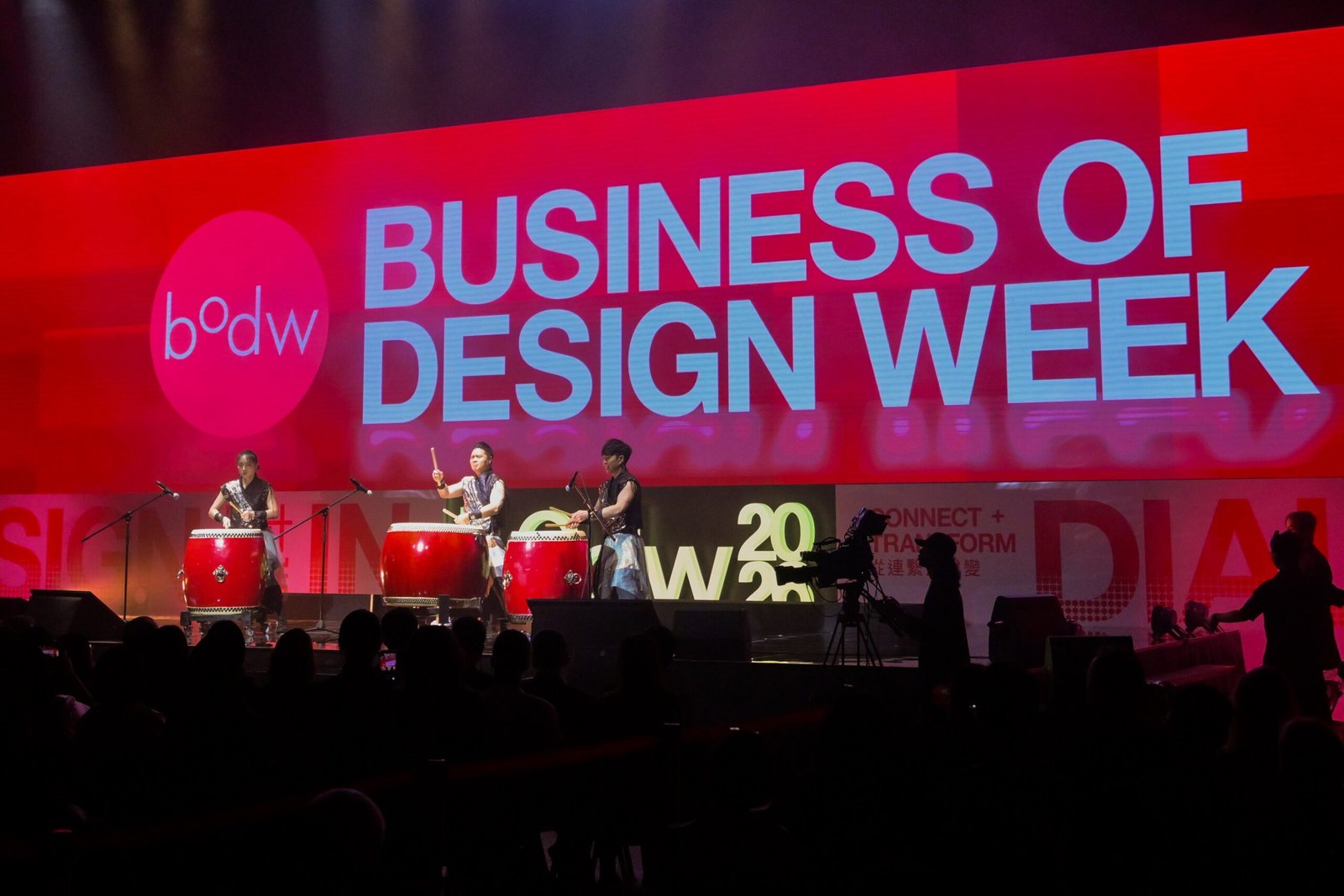
Business Of Design Week 2026: Asia’s design summit returns November 16 to 21 with over 50 international pioneers, Switzerland as partner country, and a focus on luxury retail, social innovation, and cross-cultural exchange.
When Hong Kong Design Centre announced Business of Design Week 2026 on September 17, the lineup told a story about where global design is headed. Over 300 speakers will descend on the Hong Kong Convention and Exhibition Centre from November 16 to 21, but the real signal comes from who’s on the stage: Wim Walschap, the architect behind Herzog & de Meuron’s transformation of Tai Kwun and the M+ museum; Thilo Brunner, Chief Design Officer at On, the Swiss sportswear and running shoe brand; Enzo Enea, the landscape architect reshaping how cities think about space; and Janine Weiz-Bühler, now Navigator and CEO of FREITAG, the Swiss upcycled bag and accessories company. That roster signals a shift in how design conferences are framing their conversations.
The event runs under the banner “Global Creative Leaders Convene,” but the real organizing principle is tighter. BODW 2026 Summit, the flagship three-day programme from November 18 to 20, will explore six core topic areas: Reimagining Spaces, Regenerative Culture and Curation, Brand Transformation, The New Luxury and Artisanal Innovation, Designing for Longevity and Vitality, and Future-Ready Transmedia and Education. That last one matters. Education signals that the conversation isn’t just about what designers and brands are making right now, but how the next generation will approach the work differently. Emily Yan, who shaped the Shanghai Grand Opera House and worked on AIRSIDE; Suyong Joh, founder of Magazine B, the quarterly design publication; and Chef Grégoire Michaud, founder of Bakehouse, appear on the roster too. The mix of architects, editorial voices, and food professionals reflects how fragmented and cross-disciplinary contemporary design discourse has become.
Business of Design Week 2026 Summit Explores Six Core Topics
What makes this edition distinct is the selection of Switzerland as Partner Country for the year, marking the 10th anniversary of the strategic partnership between the Chinese Mainland and Switzerland. That’s not ceremonial. According to the Hong Kong Design Centre, the partnership will draw on Switzerland’s track record in precision craftsmanship, sustainable architecture, brand transformation, and technological innovation. The theme bridging both: “Design in Dialogue: Connect + Transform.” Switzerland’s role is framed explicitly as an exchange, not a showcase. The event organisers positioned it as an opportunity to explore how Swiss design, rooted in multilingual heritage and cross-cultural exchanges, translates creative concepts into actionable strategies for business and social change. For a Hong Kong event, that framing matters. It reinforces BODW’s identity as a “super connector” and “super value-adder,” to use the language from the Hong Kong Design Centre’s statement, linking local and overseas creative resources.
A Lab for Tomorrow’s Design Questions
Beyond the summit proper, the broader BODW 2026 programme runs parallel initiatives that expand the conversation across the city. DESIGN@HKG, the DFA Awards Presentation Ceremony, the DX design hub Anniversary Event, the Leadership Forum, DesignInspire, the Business of IP Asia Forum, and deTour 2026 all run concurrently, turning the entire week into a city-wide creative atmosphere. That’s intentional design strategy. By distributing the conversation across multiple venues and formats, BODW positions itself as the connective tissue binding Hong Kong’s design ecosystem together.
The bodw Future Lab, embedded within the summit structure, operates as a working space where collaborative insights and action strategies develop alongside traditional talks and panels. That’s the detail most observers miss: BODW isn’t positioning itself as a conference where ideas are presented and debated in the abstract. The Future Lab signals an expectation that conversations produce prototypes, strategic partnerships, or at least frameworks that participants can test and refine after they leave. For luxury brands like Vacheron Constantin and furniture companies like Vitra, that matters. For emerging independent designers and founders represented in the speaker list, it matters even more.
The Hong Kong Government’s Cultural and Creative Industries Development Agency (CCIDA) supports the event as Lead Sponsor, with the Hong Kong Trade Development Council (HKTDC) co-organising. That institutional backing underscores how BODW operates as more than a cultural platform. It’s positioned as infrastructure for Hong Kong’s economy and brand identity in the global creative space, particularly as the city repositions itself after years of political and economic volatility. A major design conference, sustained by government support and anchored to a rotating international partner, becomes a statement about creative continuity and global engagement.
Sources: finance.yahoo.com