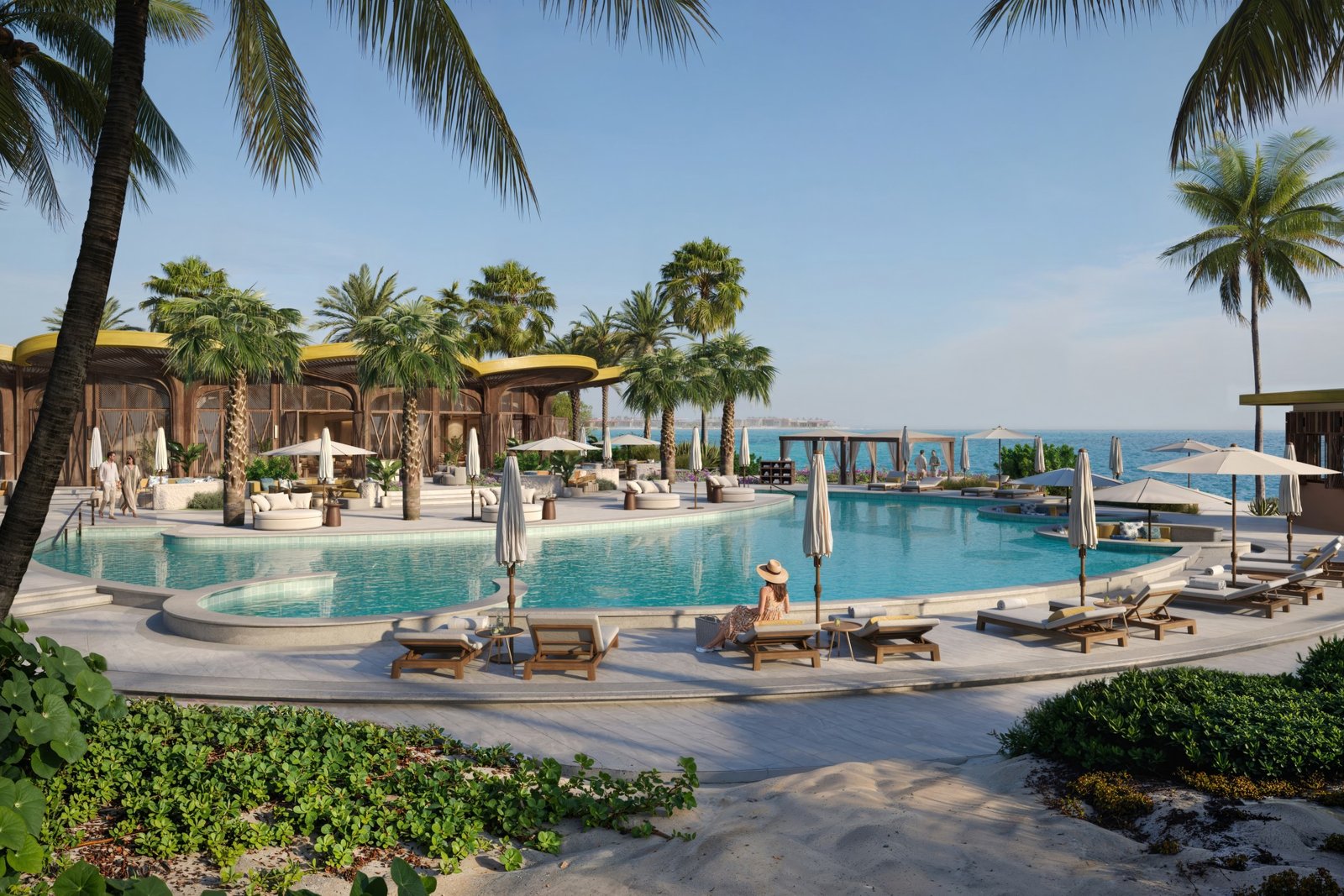
Fairmont The Red Sea: Saudi Arabia’s Red Sea coast welcomes Fairmont’s most ambitious resort yet as the kingdom doubles down on luxury tourism.
When Fairmont The Red Sea opens its doors in November, it will arrive as part of Saudi Arabia’s calculated push to reshape its tourism identity. The kingdom has spent years cultivating a new image around Red Sea developments and urban centers, positioning itself as a serious player in the global luxury hospitality market. This latest Fairmont entry represents the scale of ambition driving contemporary hospitality across the Greater Middle East, where high-profile resort developments continue to multiply along the coastline and in major cities.
The opening carries particular weight because Fairmont’s Red Sea arrival lands during a year when the industry has already proven itself capable of delivering remarkable debuts. According to Robb Report, 2025 was a banner year for hotel openings, with properties like Rosewood Amsterdam earning recognition among the world’s 50 best luxury hotels almost immediately upon debut. That momentum carries into 2026, when roughly 39 noteworthy new luxury hotel openings are scheduled across the calendar year. Travel Plus Style notes that the range of destinations leading the most anticipated new luxury hotels opening in 2026 reflects genuine challenge in selection, with Italy particularly strong across Venice, Milan, and Lake Como, while Saudi Arabia continues its expansion across multiple fronts.
Fairmont The Red Sea Signals Saudi Arabia’s Maturity
Saudi Arabia’s tourism footprint expansion tells a deliberate story. The kingdom isn’t pursuing isolated resort projects but rather building a cohesive luxury hospitality ecosystem. Red Sea developments anchor this strategy, offering travelers a geographic escape that combines maritime appeal with the promise of Saudi hospitality standards rising to international luxury benchmarks. Fairmont, as an operator, brings decades of five-star credibility to this positioning. The brand’s selection for this particular market moment underscores how seriously the kingdom views its tourism transformation.
What makes this development noteworthy isn’t merely that another luxury resort is opening. Travel Plus Style emphasizes that 2026 reflects the scale and ambition shaping contemporary hospitality, with destinations and properties reflecting a broader recalibration of where luxury travelers are being directed and what experiences they’re being offered. The Red Sea coast, relatively underdeveloped compared to other Middle Eastern beach destinations until recently, has become a proving ground for this new vision of Saudi tourism.
The Competitive Landscape
The November opening arrives in a year already thick with high-stakes debuts. Robb Report’s list of 39 major openings includes properties attempting to recapture past glory, like the Delano in Miami reopening after a six-year makeover under boutique specialist Ennismore, and entirely new concepts like the Zannier Group’s transformation of Île de Bendor off the French Riviera into a 93-room refined hub for culture, wellness, and dining. Meanwhile, established operators like Corinthia are on expansion sprees adding locations from Budapest and Prague to New York City, while Italy continues to dominate with openings ranging from Orient Express’s Palazzo Donà Giovannelli in Venice (a 45-room property housed in a 15th-century noble residence overlooking the Grand Canal) to designer Thelma West’s Casina Cinquepozzi in Puglia.
Against this backdrop, Fairmont’s Red Sea entry signals confidence that Saudi Arabia’s tourism proposition has matured beyond novelty. The brand wouldn’t commit to such a high-profile development in a market it didn’t believe offered sustainable, long-term appeal to its clientele. According to Travel Plus Style, opening dates remain subject to change as more details emerge throughout the year, with the publication monitoring new confirmations to help travelers plan ahead and discover hotels shaping 2026’s luxury travel landscape.
What’s Driving the Moment
The proliferation of luxury openings in 2026 reflects a fundamental reset in where wealth and leisure intersect globally. Robb Report notes that the hotel industry is attempting to top 2025’s extraordinary year, with properties like Ritz-Carlton Reserve’s Nekajui in Costa Rica achieving instant-sensation status and emerging destinations like Rwanda attracting new luxury options from homegrown entrepreneurs. London’s hotelscape continues to evolve with even more rooms arriving, while long-established European resort towns like Lake Como remain impossibly competitive, with properties like Passalacqua currently generating unprecedented buzz.
Fairmont The Red Sea’s November arrival fits squarely within this moment of expanded geographic ambition and elevated execution standards. The property doesn’t exist in isolation but rather as one node in a global network of openings designed to capture a very specific traveler: one seeking authentic destination experience wrapped in uncompromising luxury standards. Saudi Arabia’s Red Sea coast, once peripheral to most international travelers’ considerations, has been reframed as a legitimate luxury destination. Fairmont’s commitment to that reframing, through this particular opening, suggests the kingdom’s tourism transformation has moved beyond marketing promise into operational reality.