Kade Noord Food Hall: Amsterdam’s Noord district launches a game-changing food destination featuring five independent concepts under one warehouse roof.
Amsterdam’s Noord waterfront just got a culinary anchor. The Kade Noord food hall, a sprawling 1,000 square meter space housed in a converted industrial warehouse, has quietly become the district’s most ambitious dining project in years, bringing together five independent food concepts under a single roof that prioritizes scale, flexibility, and pure eating culture over Instagram theater.
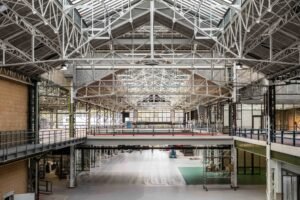
The space itself is the story. Built into a repurposed waterside building, Kade Noord operates as a shared kitchen and dining commons where individual chefs and restaurateurs can build their own micro-operations without the overhead of standalone locations. It’s the anti-fine-dining model: communal seating, open kitchens, and an ethos borrowed as much from street food markets as from European food halls. The 1,000 square meter footprint gives the hall room to breathe, to feel like an actual destination rather than a strip mall with better aesthetics.
Kade Noord’s Five Concepts, One Venue
The specific makeup of Kade Noord’s resident concepts matters because it signals what Amsterdam is hungry for right now. Rather than chasing Michelin stars or Instagram moments, each operator brought their own specialty to the table. The result reads like a carefully curated neighborhood menu rather than a corporate food court. Each concept maintains its own identity, its own kitchen station, and its own customer base, but they share infrastructure, labor, and foot traffic.
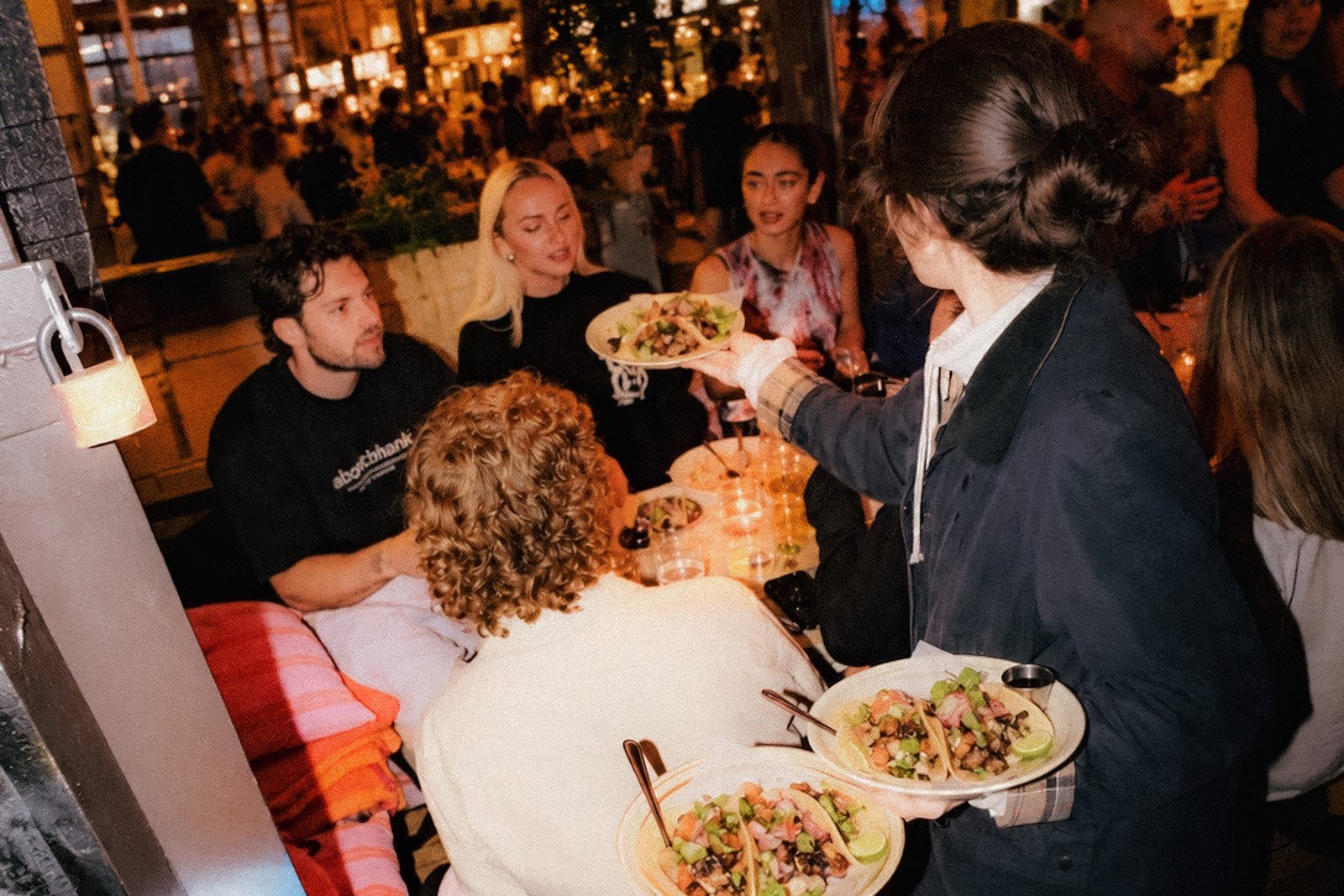
What distinguishes Kade Noord from competing food halls is its refusal to become a branded experience. There’s no singular design language, no attempt to smooth over the industrial bones of the space or apologize for its warehouse aesthetic. The concrete, the exposed brick, the high ceilings and shared seating are features, not bugs. It’s the kind of environment where a 22-year-old can grab a quick bite at one station while a couple settles in for a two-hour meal at another, and neither feels out of place.
The Waterside Location and What It Means
Noord’s transformation over the past decade has been uneven. The district has accumulated galleries, studios, and boutique fitness spaces, but it’s always lacked a central gathering point for eating and drinking that wasn’t either tourist-focused or aggressively hip. Kade Noord, positioned directly on the waterfront, changes that equation. The waterside address does real work here: it’s close enough to Amsterdam’s center that locals and visitors will make the trip, but far enough away that it feels like a genuine destination rather than an overflow parking lot for the Canal Ring.
The timing also matters. Post-pandemic, independent food operators in Amsterdam have faced mounting pressure from rising rents and consumer uncertainty. Shared kitchen models like Kade Noord reduce that pressure by distributing costs while maintaining the autonomy that keeps food culture from calcifying into sameness. Each resident chef keeps their menu, their pricing, and their brand intact, but they’re not carrying the full rent or utility burden of a standalone location.
The 1,000 square meter scale is purposeful too. It’s large enough to accommodate real traffic and multiple simultaneous dining experiences, but intimate enough that you’re not wandering through an airport terminal to find food. The seating is designed as a commons, meaning you might be three feet away from a stranger’s meal, which creates a natural energy and social texture that private dining rooms can never replicate.
What Most People Will Overlook
Here’s the detail nobody will talk about in the first wave of coverage: Kade Noord succeeds precisely because it doesn’t try to be a destination food hall in the global template sense. There’s no celebrity chef, no Instagram-bait plating, no narrative about innovation or disruption. The hall exists because five independent operators needed affordable space and customers needed a place to eat without ceremony. That functional simplicity is what makes it actually interesting. It’s not a concept that required venture capital to explain or a business plan that needed to justify itself to investors. It’s just five kitchens sharing a room on the water.
Kade Noord succeeds precisely because it doesn’t try to be a destination food hall in the global template sense. There’s no celebrity chef, no Instagram-bait plating, no narrative about innovation or disruption. The Kade Noord model exists because five independent operators needed affordable space and customers needed a place to eat without ceremony. That functional simplicity is what makes it actually matter.