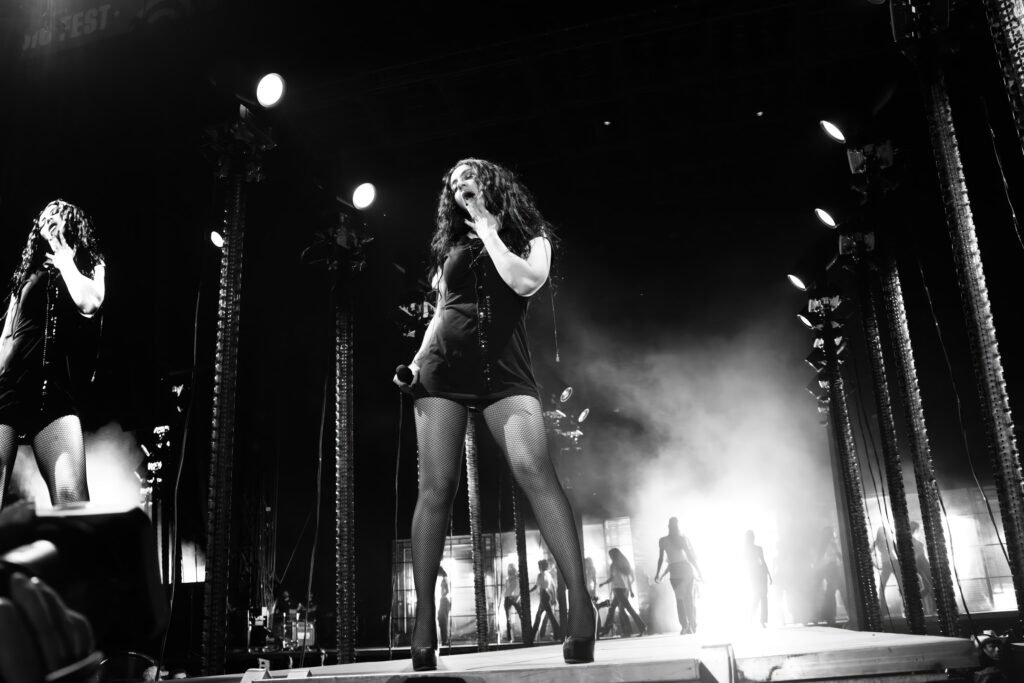
Efg London Jazz Festival: A ten-day run of world-class jazz across London stages proves the city still knows how to stage a proper festival, from intimate dinners to main-stage performances.
November in London has always belonged to a particular kind of cultural moment. The year starts its final descent, the weather turns properly cold, and the city’s venues and institutions shift into a more deliberate gear. This November, the EFG London Jazz Festival arrives November 13, 22 as a reminder that London’s claim on serious jazz programming remains uncontested, even as festivals proliferate and attention fragments across screens and streaming services.
The festival comes at an interesting cultural moment. Jazz has cycled through enough iterations of “revival” and “resurgence” over the past decade that the language has started to feel thin. What’s happening instead is quieter and more durable: jazz has simply become a permanent fixture in how sophisticated cities organize their cultural calendar, no longer fighting for legitimacy but instead commanding premium real estate on the social calendar alongside opera, theatre, and contemporary art.
The EFG London Jazz Festival’s Dorchester Partnership and the Intimacy Premium
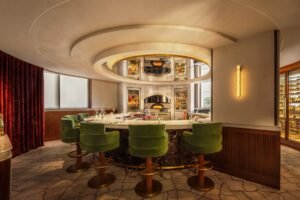
One of the festival’s most revealing moves this year is its deepening partnership with The Dorchester through Ronnie Scott’s Jazz Club evenings, underwritten by Champagne house Ruinart. On November 25, Australian jazz artist Frances Madden performs at The Grill, paired with a three-course dinner created by culinary director Martyn Nail, priced at £175 per person. According to The Gentleman’s Journal, this format represents a deliberate play on luxury positioning: few things, the coverage notes, go together as well as live jazz, good Champagne, and an exceptional dinner.
This isn’t accidental framing. By pairing performances with premium dining and luxury brand partnerships, the festival signals that jazz occupies a specific cultural register in contemporary London, one that sits comfortably alongside fine dining, bespoke tailoring, and heritage luxury. It’s the opposite of the scrappy, counter-cultural jazz mythology. This is jazz as an essential component of how people with money and taste organize their evenings.
The Dorchester residency also speaks to geography and access. While the festival runs across multiple London venues and stages, anchoring a prominent series at a Mayfair institution ensures that the most accessible entry point for casual audiences is also the most expensive and gatekept. This isn’t a complaint so much as an observation about how contemporary festival programming actually works: the main stages might be free or cheap, but the performances that get coverage, that build social capital, that make the cultural pages, often happen behind roped-off areas with ticket prices that matter.
Scale and the Challenge of Multi-Venue Programming
A ten-day run across multiple venues is logistically ambitious in ways that single-site festivals no longer have to be. The EFG London Jazz Festival’s history as a distributed event, working across clubs, concert halls, and independent spaces throughout the city, means it has to work harder to build narrative coherence. There’s no central hub, no unified aesthetic, no single moment of critical mass. Instead, there’s a network.
This structure has real advantages and real constraints. The advantage is reach, jazz programming can happen in Soho clubs, South Bank venues, East London independent spaces, and Mayfair hotels simultaneously, which theoretically allows the festival to program for genuine aesthetic diversity rather than pretending that one curatorial vision can contain everything from avant-garde European improvisation to mainstream soul-jazz revivals. The constraint is visibility. Multi-venue festivals are harder to market, harder to build word-of-mouth momentum around, and harder for casual audiences to navigate.
What remains clear from the programming is that London’s jazz infrastructure remains robust. The city still has enough functional independent jazz clubs, enough secondary concert halls willing to program jazz for ten days straight, and enough audience density to fill rooms across multiple neighborhoods. That’s not guaranteed anymore in most global cities.
The November Positioning
The timing matters too. November 13, 22 sits in that precise window where London’s cultural calendar is accelerating toward the winter holidays but hasn’t yet been completely colonized by Christmas programming. Winter Wonderland arrives at Hyde Park on November 19, according to The Gentleman’s Journal, and Somerset House reopens its ice rink on November 11. The jazz festival occupies the sophisticated adult alternative to what’s framed as the more populist festive programming, a positioning that’s been codified in London’s cultural marketing for years but that still works because it’s functionally true. You can do Winter Wonderland with a group. Jazz requires attention.
The EFG London Jazz Festival has spent enough years building institutional weight that it no longer needs to argue for its importance. It simply exists as part of how London’s cultural year is structured, commanding premium placements in broadsheet coverage and luxury lifestyle publications. That’s not a sign that jazz has conquered popular culture. It’s a sign that in cities like London, jazz has found its actual audience and learned to stop apologizing for the size of the room.