Peggy Guggenheim Retrospective: The American collector who shaped modern art gets a landmark exhibition at London’s Royal Academy of Arts, cementing her legacy as the figure who rescued the avant-garde.
Peggy Guggenheim, the American heiress and art collector who spent decades reshaping the modern art canon from Venice to New York, is getting her moment in the city where her influence was first forged. The Royal Academy of Arts in London will open a major retrospective dedicated to the Peggy Guggenheim retrospective, marking the first comprehensive exhibition of its scale dedicated to the woman who became synonymous with 20th-century artistic patronage.
The exhibition arrives at a pivotal cultural moment, when the role of private collectors in shaping artistic history is under intense scrutiny. Guggenheim’s story complicates easy narratives about wealth and culture. She didn’t merely accumulate art; she rescued it. During the Nazi occupation of Europe, she used her fortune to smuggle modernist work out of danger, employing tactics that ranged from strategic buying to direct smuggling operations. Her private collection became a kind of ark for the avant-garde at a time when surrealism, abstract expressionism, and other revolutionary movements faced erasure.
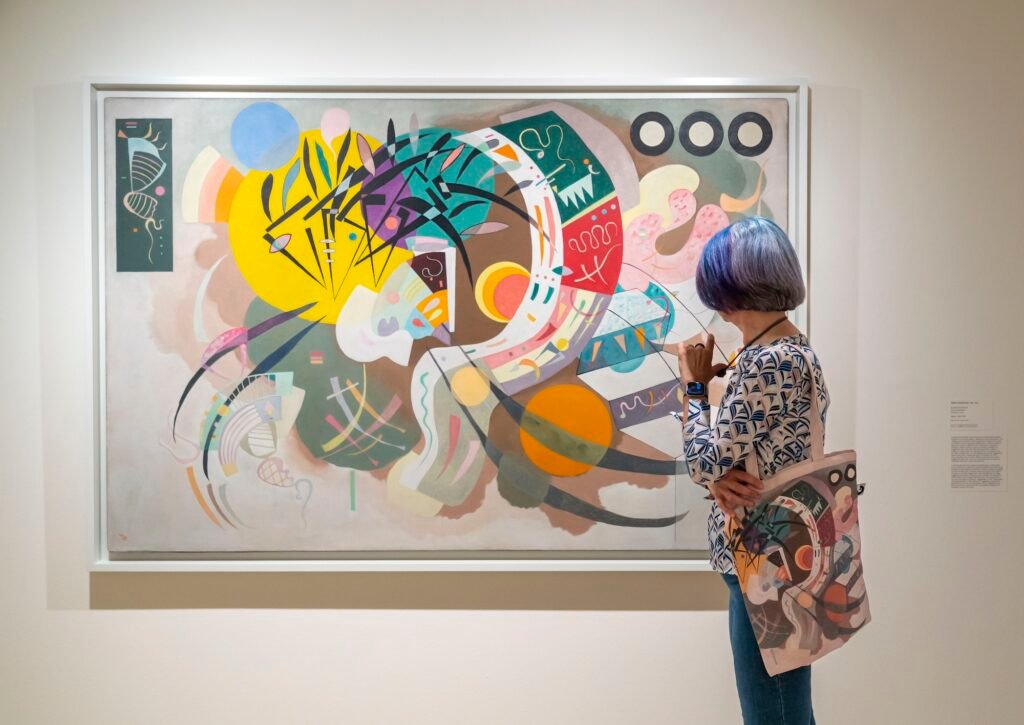
Born in 1898 into one of America’s wealthiest families, Guggenheim initially occupied the predictable role of a society heiress. Her transformation into a serious collector began in earnest in the 1930s, after a marriage that left her with both trauma and determination. She moved to Europe, opened a gallery on London’s Cork Street, and began acquiring work with the intensity of someone who understood she was participating in something historic. She collected Jackson Pollock, Constantin Brancusi, Kurt Schwitters, Marcel Duchamp, and dozens of artists who would define modernism, often buying directly from studios and supporting living creators rather than hunting for established names.
Her London gallery, Guggenheim Jeune, operated from 1938 to 1939 and became a vital space for experimental work during a period when mainstream institutions remained skeptical of modernism. The shows she mounted anticipated by decades the critical reassessment of artists who were then dismissed as obscure or radical. After the gallery closed with the onset of World War II, she relocated to New York, where she continued to collect and eventually opened Art of This Century, a gallery and salon that became legendary among artists and intellectuals seeking refuge from Europe’s devastation.
What distinguishes Guggenheim from other wealthy collectors of her era was her willingness to live with the artists she supported, to commission their work, to marry them, and to insert herself directly into the creative process. She was not a passive investor in culture but an active agent within it, a figure whose taste and judgment carried real weight. This also meant she was contentious, sometimes reckless, and deeply involved in the personal dramas of the artistic world she inhabited. She was both patron and personality, and the Royal Academy exhibition will likely explore this complexity at length.
After World War II, Guggenheim settled in Venice, where she opened her palazzo to artists, students, and collectors. Her collection and her presence transformed how Venice was perceived as a cultural destination. When she died in 1979, her legacy was secure in institutional form: the Peggy Guggenheim Collection remains one of Venice’s most significant art museums, and her influence on how modern art is collected, preserved, and displayed continues to shape the field.
The Royal Academy retrospective represents a full-circle moment for a woman whose impact on London’s art world came early, then shifted elsewhere. The exhibition will give London audiences an opportunity to reassess not just her collection but her role as a historical actor, a figure whose choices about which artists to support literally shaped which movements survived and which faded from view. In an era when museums are increasingly reckoning with the legacies of private collectors, the Peggy Guggenheim retrospective timing of this retrospective feels urgently necessary.