
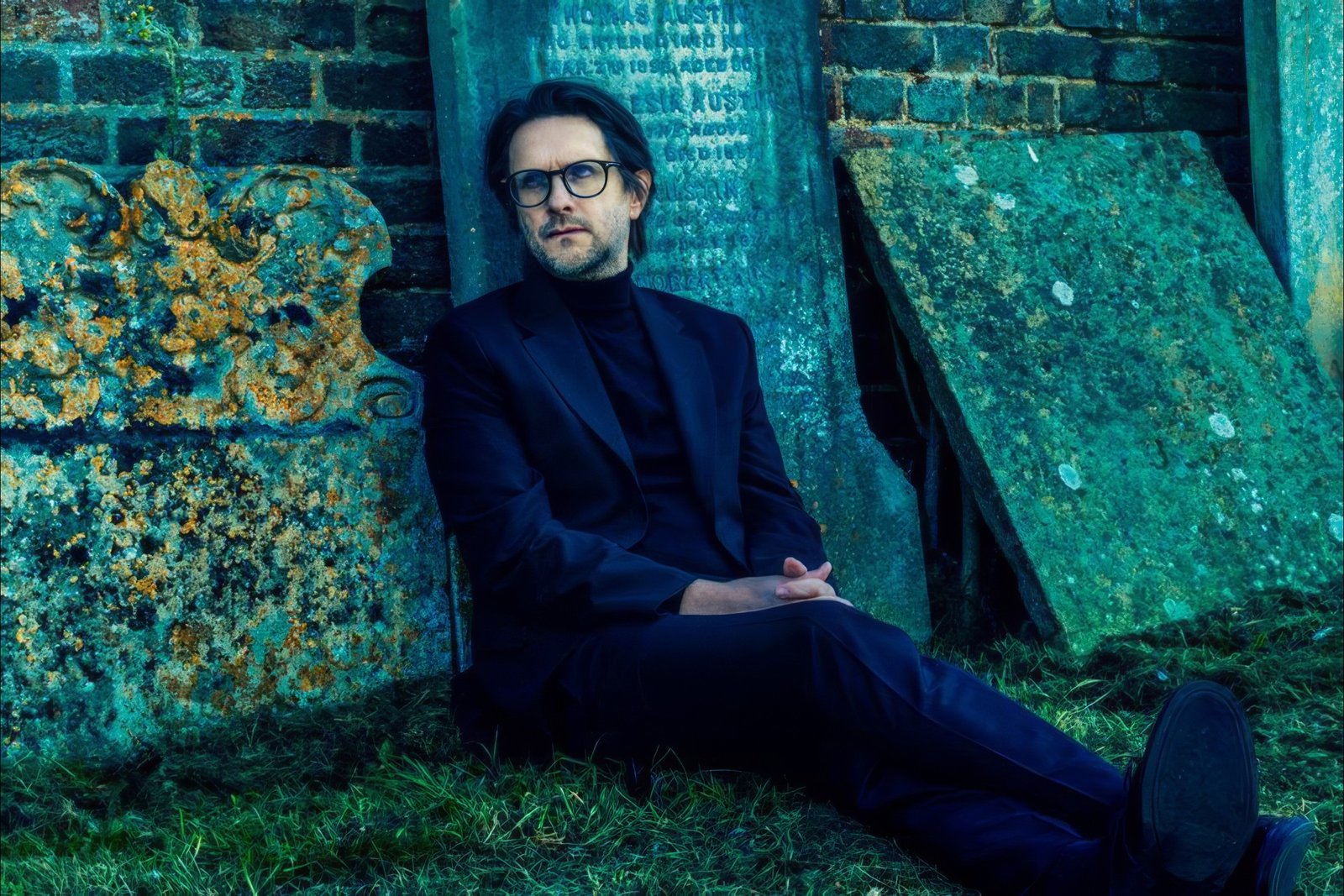
Steven Wilson Requiem For A Village: The Porcupine Tree architect bends prog into English folk tradition on a new solo album that rewrites what he’s capable of.
Steven Wilson’s Requiem for a Village is back with a record that feels less like a sequel to anything he’s made before and more like the sound of an artist finally letting his most maximal instincts run full throttle. Requiem for a Village, out now, is the kind of album that doesn’t announce itself with a single or a rollout strategy. It simply arrives, fully formed, demanding the kind of sustained listening that prog rock fans have trained themselves to give.
The album marks a notable pivot for Wilson, who built his reputation as the architect of Porcupine Tree’s dense, guitar-driven progressive metal universe before parlaying his solo work into a parallel career spanning orchestral arrangements, experimental production, and reissue archaeology. But this time, the thread running through Requiem for a Village isn’t synthesizer grandeur or metal muscle. It’s English folk tradition, folded, refracted, and rebuilt through a sonic prism that feels both deeply rooted and radically contemporary.
The conceptual weight here is substantial. A village, a requiem, the suggestion of something being mourned or memorialized, points toward the kind of narrative ambition Wilson has occasionally touched in his solo catalog but never quite committed to with this level of scope. The album becomes less a collection of songs and more an architectural statement, each piece a room in a structure designed to hold a particular emotional register or historical echo.
What separates this from Wilson’s previous work is the restraint embedded within the ambition. Where his production work has sometimes felt like an exercise in maximum detail, Requiem for a Village appears to be built on the principle that space, silence, and the specific textures of traditional instrumentation can carry weight that layers of digital processing cannot. The folk element isn’t window dressing. It’s a foundational language through which everything else speaks.
For listeners arriving from the Porcupine Tree era, expecting guitar heroics and compression-heavy heaviness, this album will likely feel like a lateral move rather than a continuation. That’s intentional. Wilson has never been a perfectionist concerned with repeating what worked before. The orchestral turn he’s taken over the last decade has gradually stripped away the metal framework, replacing it with something more chamber-like, more attentive to the space between notes than the density of the ones being played.
The production aesthetic on Requiem for a Village operates with a clarity that serves the material. Traditional instrumentation appears to have been recorded with an ear toward capturing room tone and natural resonance rather than pursuing the kind of clinical precision that dominated studio rock through the 2000s and 2010s. It’s a choice that makes the work feel more like a document and less like a construction project, even when the compositional architecture is undeniably complex.
Wilson’s voice, deployed sparingly across the album’s runtime, carries the weight of someone who’s spent years learning how to sing in a way that doesn’t compete with his own arrangements. He’s not here to dominate the songs. He’s here to inhabit them, to sit within the spaces created by strings, woodwinds, and whatever folk instruments form the backbone of these pieces.
The stakes of Requiem for a Village feel different from the solo records that preceded it. This isn’t an artist proving he can work outside his established framework. This is an artist working at the full extent of what his framework can actually accommodate. Steven Wilson’s Requiem for a Village exists as evidence that progressive music doesn’t require velocity or technical display to earn the designation. Sometimes it just requires a willingness to let an idea unfold at its own pace, across however much time and however much musical material the vision demands.