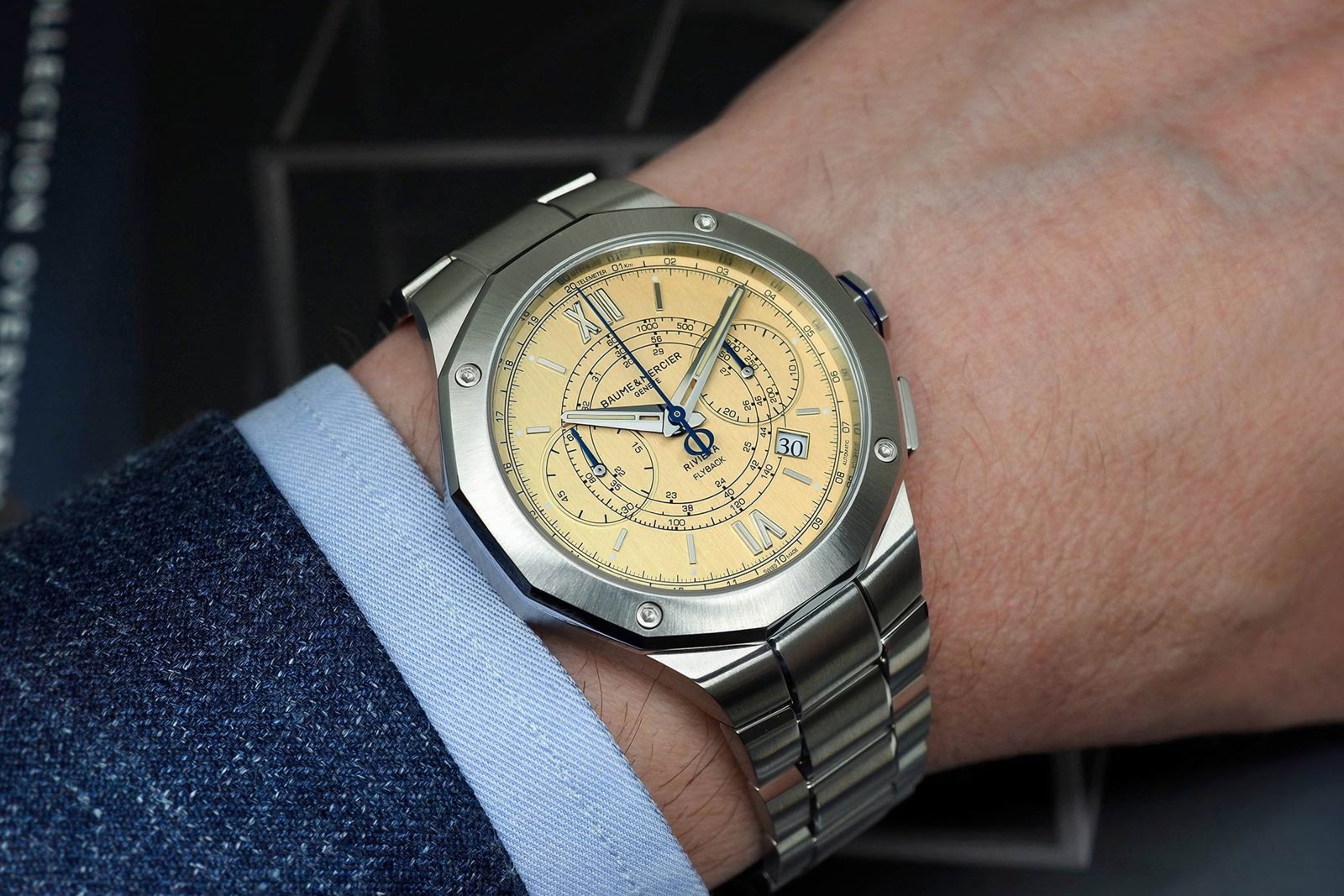
Baume & Mercier Sold: The 194-year-old Swiss watchmaker changes ownership for the first time since joining the luxury conglomerate in 1988.
Baume & Mercier has been sold by Richemont to Italy’s Damiani Group in 2026, marking the first major ownership change for the storied Swiss watchmaker since it joined the conglomerate in 1988. The deal signals a significant reshuffling within the luxury watch world, as the Geneva-based maker transitions from the portfolio of one of the world’s largest luxury holding companies to a new European home.
How Baume & Mercier Built Two Centuries of Swiss Watchmaking
Baume & Mercier’s pedigree runs deeper than most contemporary luxury brands. The watchmaker traces its origins to 1830, when brothers Louis-Victor and Célestin Baume opened a watch dealership in Les Bois, a village nestled in the Swiss Jura mountains. By 1851, the operation had expanded across the English Channel with the establishment of a London branch trading as “Baume Brothers,” which gave the fledgling company access to markets throughout the British Empire. The firm’s early reputation was built on precision; by the late 19th century, Baume timepieces had set accuracy records and claimed victories in international timekeeping competitions.
The modern iteration emerged in 1918 when company director William Baume joined forces with Paul Mercier to establish “Baume & Mercier” in Geneva. A year later, in 1919, the newly christened house was awarded the Geneva Seal, the highest international distinction available to watchmakers of that era. The Geneva pedigree and the pivot toward wristwatch manufacturing, particularly models in unconventional shapes, positioned Baume & Mercier as a progressive luxury maker entering the mechanical watch industry’s most glamorous decade.
The Roaring Twenties Through the Modern Era
During the 1920s, as women’s social roles underwent seismic shifts, Baume & Mercier aligned itself with the era’s progressive currents, creating watches that celebrated female emancipation. The 1940s brought the 2 Register Chronograph, a landmark model whose earliest double-caseback versions have become collector obsessions, regularly commanding prices more than double those of later iterations. The brand’s experimental ethos continued into the 1970s, when shaped timepieces like the Galaxie and Stardust models redefined the vocabulary of dress watch design. In 1973, Baume & Mercier unveiled the Riviera, positioning itself among the world’s first steel sports watches at a moment when the category was still being defined.
When Richemont acquired the brand in 1988, Baume & Mercier joined a portfolio already heavy with Swiss watchmaking talent. Under the conglomerate’s stewardship, the house expanded its collections systematically: the Clifton, Classima, and Hampton models became core offerings for both men and women, while the Capeland anchored the men’s sports segment and the Linea and Promesse collections addressed the women’s market.
Sports Heritage and Technological Innovation
In 2015, Baume & Mercier forged a partnership with Carroll Shelby International, the legendary American race car manufacturer, an alliance that yielded limited-edition “Shelby Cobra” models in 2016, named after Shelby’s iconic sports car. The collaboration appeared across both the Capeland and Clifton collections, merging haute horlogerie with automotive heritage.
Richemont’s development of the proprietary Baumatic Movement represented Baume & Mercier’s most significant recent technological contribution. Engineered by Richemont’s Manufacture Horlogère ValFleurier, this automatic calibre features the Powerscape escapement and a Twinspir silicon hairspring, delivering enhanced energy efficiency and resistance to magnetism. The movement delivers a 120-hour power reserve with accuracy of -4/+6 seconds-per-day, while silicon components and optimized lubricants reduce friction and servicing requirements. The innovation positioned Baume & Mercier competitively in the mid-luxury segment without sacrificing the technical sophistication that defines the category.
Pricing Strategy and Market Position
Baume & Mercier has occupied a distinctly accessible tier within luxury watchmaking. According to available pricing, the brand’s average selling price falls between $2,000 and $7,000, positioning it in the lower-range luxury market. The 2016 introduction of the “My Classima” collection, with models priced under $1,000, represented a deliberate move to capture entry-level luxury customers without cannibalizing the core business. The brand also operated Baume, a short-lived downmarket subsidiary launched on May 15, 2018, which was sold exclusively online and assembled in Amsterdam using Ronda and Miyota movements, before being discontinued.
The sale of Baume & Mercier to Damiani represents a watershed moment for the brand, which will now operate independently for the first time in 38 years. As the luxury watch industry continues to consolidate and fragment simultaneously, Baume & Mercier’s transition under new ownership promises to reshape how one of Switzerland’s most historic maisons competes in an evolving market defined as much by heritage as by innovation.