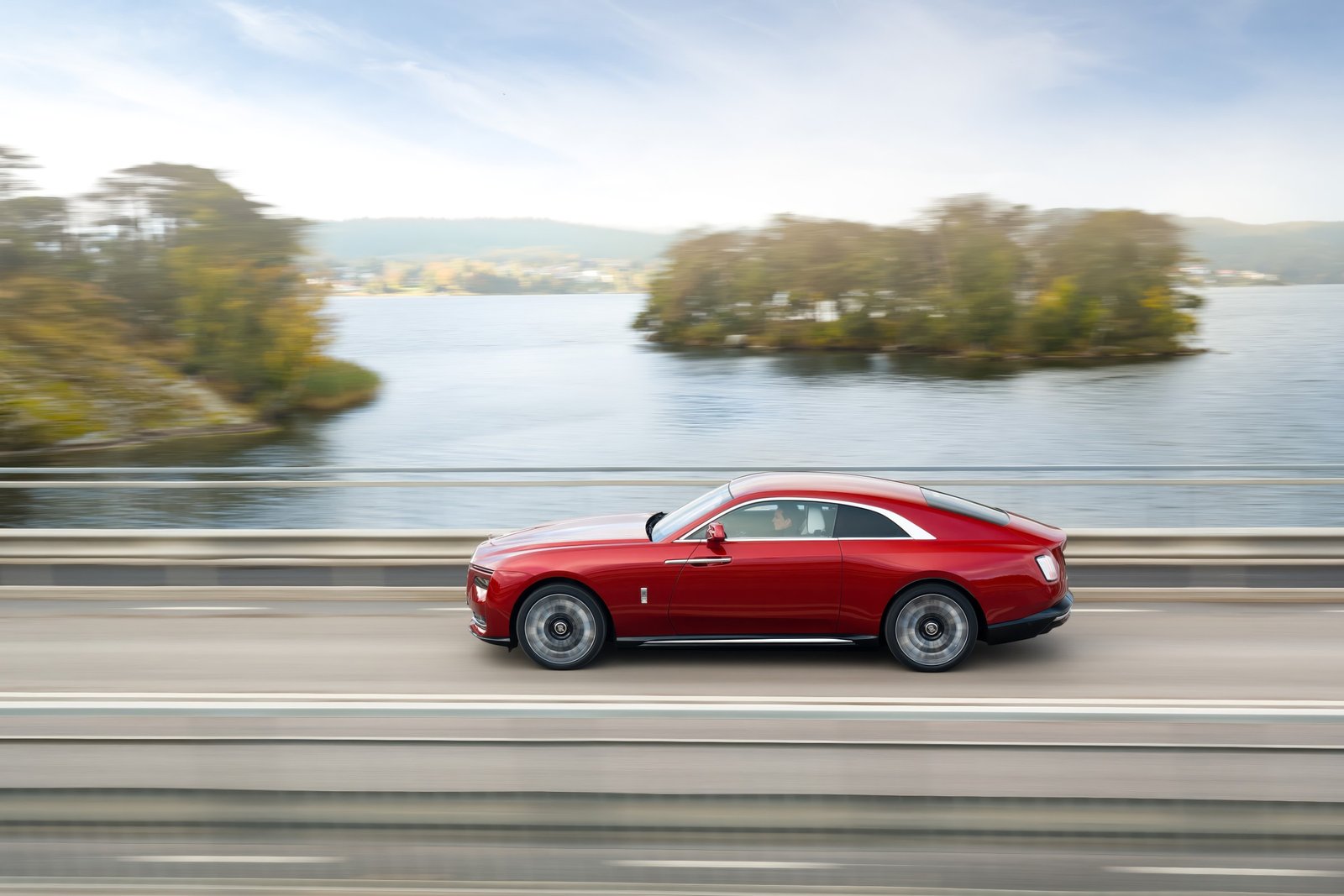
Rolls-Royce Deliveries: The world’s most exclusive automaker can’t escape a brutal slowdown that’s hitting even the ultra-wealthy.
Rolls-Royce just posted its worst quarterly performance in years. Between July and September 2026, the Goodwood-based marque delivered only 1,069 vehicles worldwide, according to BMW Group’s latest quarterly statement. That represents an 18% nosedive from the same three-month period in 2025, when the brand shipped 1,304 cars. In raw numbers, 235 fewer customers took possession of a Rolls in Q3 alone.
The damage extends beyond one quarter. Year-to-date figures paint an even grimmer picture. Through the first nine months of 2026, Rolls-Royce has delivered 3,592 vehicles, down 12.4% from the 4,100 units recorded during January through September 2025. That’s a shortfall of 508 cars, and it underscores a fundamental problem: the brand is losing momentum across the board.
Within the BMW Group’s three automotive divisions, Rolls-Royce is clearly struggling the hardest. BMW’s core brand saw deliveries fall 6.4% to 1,483,963 units through September, while MINI bucked the trend entirely, rising 6.8% to 220,247 vehicles. Only Rolls-Royce posted double-digit declines. In the third quarter specifically, the gap widens further: Rolls tanked 18%, BMW dropped 6.8%, and MINI fell just 2.4%.
Rolls-Royce Deliveries Slip as Volume Metrics Signal Broader Weakness
Rolls-Royce operates in a universe where volume metrics don’t tell the whole story. Unlike BMW or MINI, the ultra-luxury marque doesn’t measure success primarily by how many units leave the factory. Profit margins and the value of each individual commission drive the business far more than raw sales figures. A single Phantom or Cullinan bespoke commission can generate margins that would take MINI weeks to accumulate across dozens of city cars.
Yet even by that logic, an 18% quarterly drop and a 12.4% year-to-date decline are unsettling. An ultra-luxury brand losing deliveries at nearly triple the rate of BMW Group’s mainstream business signals something has shifted in how wealthy customers are shopping for seven-figure cars. The hesitation isn’t about affordability in the traditional sense, it’s about discretionary spending at the very top of the wealth spectrum, and that discretion is tightening.
The Electric SUV Gamble Looms Large
Rolls-Royce has a potential lifeline arriving in 2027: an electric SUV that will serve as the brand’s entry point into the luxury EV segment. Camouflaged prototypes have already been spotted, signaling that development is well advanced. The new model aims to broaden appeal beyond the V12-powered Cullinan by offering something the current lineup can’t match: electric power at the highest echelon of luxury.
But timing matters. Even if the electric SUV launches next year, BMW Group’s internal projections suggest full delivery impact won’t materialize until 2028, when production and customer deliveries have ramped up to meaningful volumes. Until then, Rolls-Royce is stuck relying on its existing collection of V12 models to restore momentum against a market that’s showing fewer signs of urgency.
The ALPINA Wildcard
Another variable has entered the equation: BMW’s relaunch of ALPINA as a standalone sub-brand positioned above regular BMW models but below Rolls-Royce. Theoretically, the two shouldn’t compete directly. A potential ALPINA customer sits in a distinct bracket from a Rolls-Royce buyer. But luxury markets have never operated on clean lines. Wealthy customers shopping at that level move fluidly between categories, and some overlap is inevitable as ALPINA establishes itself as a distinct ultra-premium option.
Until the electric SUV arrives and production ramps meaningfully in 2028, Rolls-Royce deliveries will remain under pressure. The brand’s current V12 lineup faces a market where the ultra-wealthy are hesitating on discretionary purchases, and competitors like ALPINA are beginning to encroach on the ultra-premium space. The next two years will determine whether Rolls-Royce can arrest its momentum loss or whether the 18% Q3 decline signals a more fundamental shift in how the world’s wealthiest consumers approach seven-figure car purchases.