Pift Berlin Showcase: Six independent designers present AI-assisted fashion projects at the Pixel Institute of Fashion and Technology’s inaugural graduating cohort presentation in Berlin on November 12.
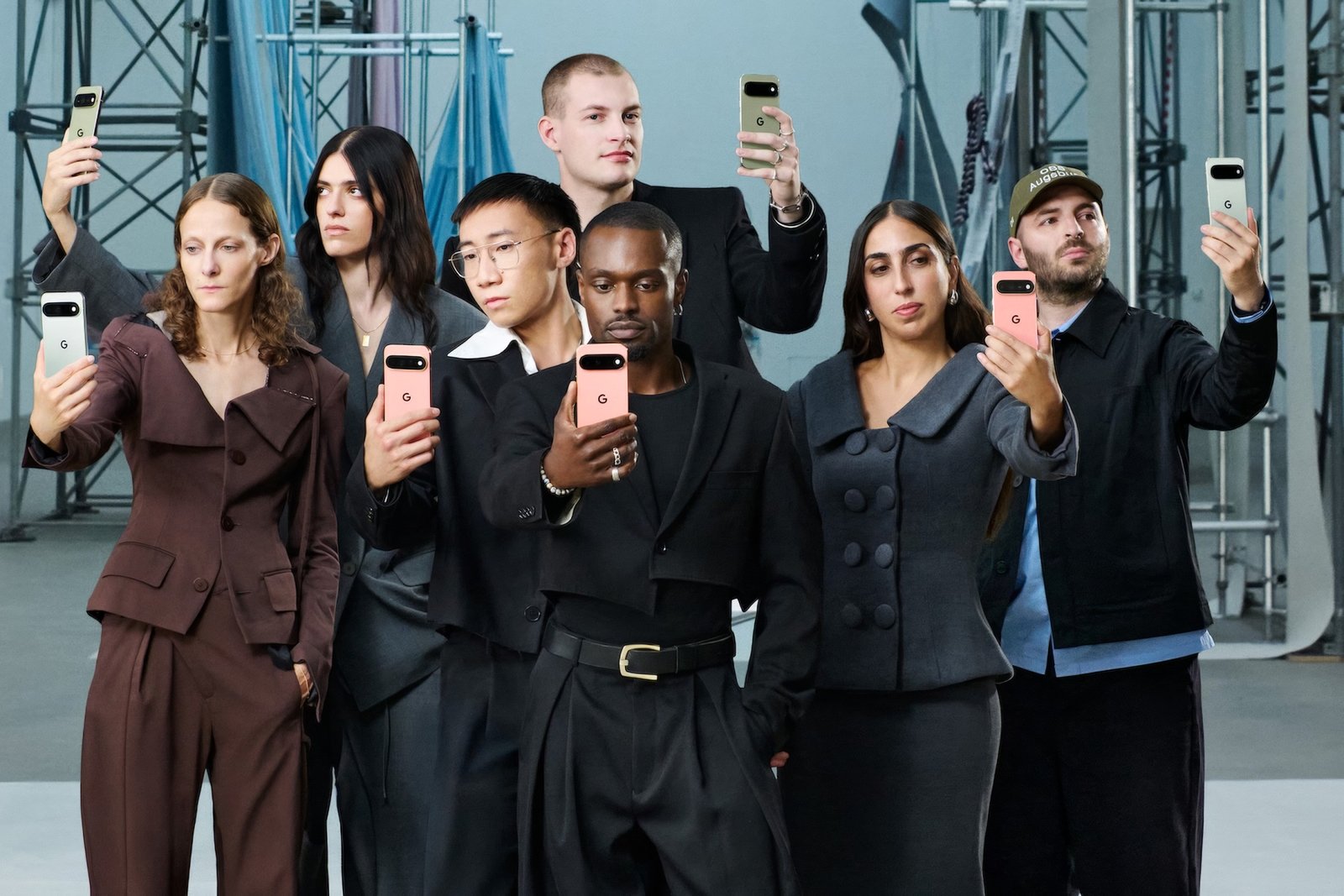
On November 12, Berlin will host the debut of the PIFT Berlin showcase, presenting the Pixel Institute of Fashion and Technology’s inaugural cohort, a collaborative program between Google Pixel and Highsnobiety that pairs independent designers with AI tools, mentorship, and a platform to present their work. The first cohort’s projects range from a heavy cotton-canvas bag to a dress inspired by a single flower, each developed through a workflow that treats AI as an active creative partner rather than a finishing tool.
PIFT launched during Milan Design Week in April with an explicit mission to test what happens when real creatives gain access to professional-grade technology. According to Anne-Katrin Huebel, Google’s senior director of marketing for Germany, Austria and Switzerland, the program was built to “discover what happens when true creatives get their hands on it,” not simply to demonstrate technological capability. The program offers participants access to Google Pixel phones and Google’s AI tools, including Gemini, alongside mentorship from established figures in design and photography. The inaugural mentors included photographer Campbell Addy, photographer and director Hugo Comte, and Girls in Blue Studio. A second edition is already planned for 2027 with a new cohort.
PIFT Berlin’s Six Designers and Six Approaches to AI Integration
At OBS, co-founder and managing director Matthias Schweizer developed a heavy cotton-canvas bag, the label’s first entry into the material after a longstanding focus on leather. The process involved using Gemini to navigate between digital sketches and physical prototypes, allowing the designer to test iterations without committing to production samples at each stage. The workflow transformed a linear design process into something more fluid and exploratory.
Ottolinger co-founders Christa Bösch and Cosima Gadient approached their assignment differently. They designed a print for a mesh T-shirt using Gemini directly on their phones, expecting the technology to either accelerate their workflow or introduce randomness. Instead, they discovered a collaborative dynamic. “We thought it would be faster or more random, but it turned into a real back-and-forth, almost like working with another designer in the studio,” the pair said. The experience revealed that AI, in their hands, functioned less as an automation tool and more as a dialogue partner capable of responding to refined aesthetic direction.
Chet Lo began with a specific visual reference point: shadows cast by blinds combined with the color palettes of 1980s anime. Using Gemini’s Deep Research feature, he explored both elements across a capsule collection, letting the tool help him synthesize two disparate references into cohesive design language. Lou de Bètoly took a commercial angle, using Pixel to generate animated mannequin imagery for e-commerce and social media platforms. She valued the immediacy of the tool. “It’s so nice to work with a small tool that is professional and fits in your pocket,” she said.
From Hesitation to Practical Application
Lukas Krob, founder of Krobos, approached the program with initial resistance. His practice had been built entirely around hands-on design, and introducing AI felt antithetical to that ethos. He began with a single flower as his point of departure, using its shape to drive a dress silhouette. He tested multiple silhouettes digitally before committing to physical prototypes, a process that revealed a pragmatic use for the technology: communicating work still in development to clients and collaborators. “I still want to design myself, but using AI to visualize my ideas for my clients is super helpful,” Krob said, indicating a resolution between creative integrity and technological utility.
The designers’ projects will be presented alongside a promotional campaign developed with Media Futures Group, part of WPP Media. That campaign integrates the design work across multiple contexts, including product development, collection research, and beyond. With a second edition already planned for 2027, the PIFT Berlin showcase demonstrates how technology can deepen rather than replace creative vision when paired with genuine artistic intent.