The Camera Nazionale’s Palazzo Morando hub, underwritten by Prada, consolidates Milan Fashion Week’s scattered energy into a single historic venue, reshaping how emerging and established designers meet the industry.
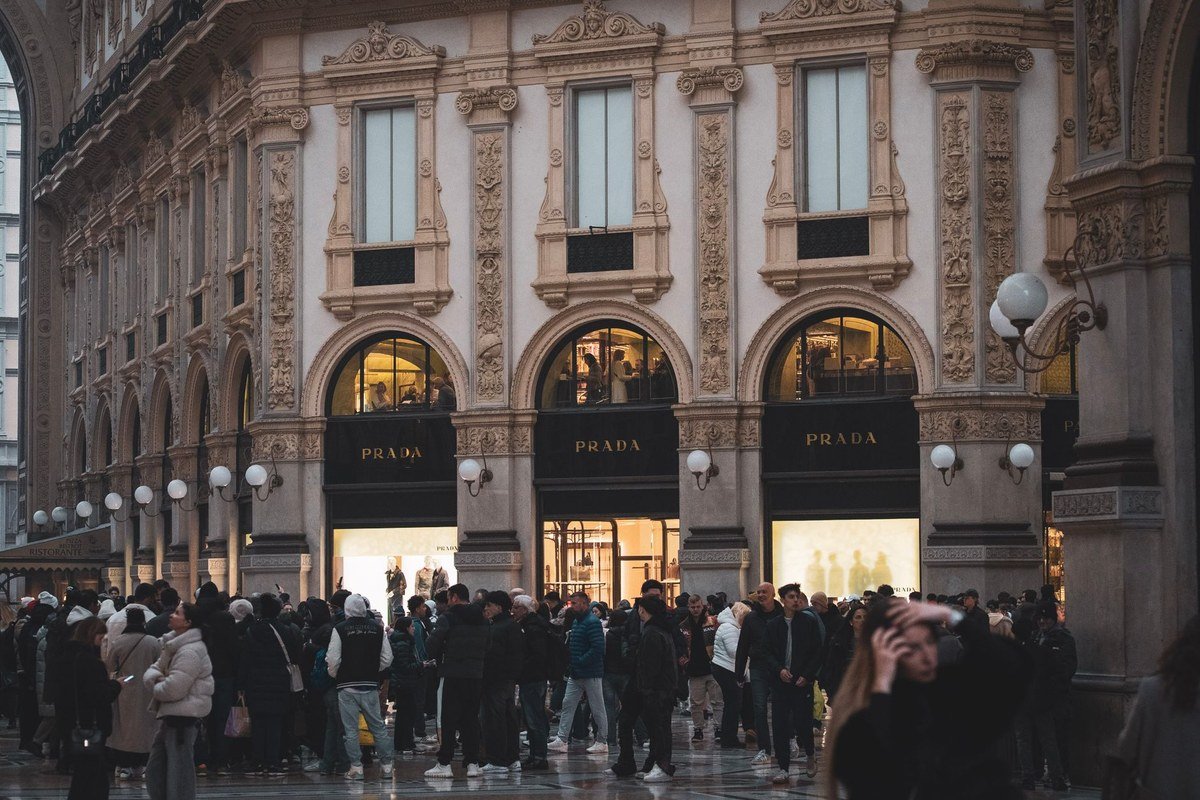
Milan Fashion Week has always thrived on fragmentation. Designers scattered across the city’s galleries, showrooms, and hotel ballrooms created a kind of productive chaos, forcing buyers and editors to hunt. But SS27 marks a visible shift in how Milan Fashion Week operates: the Camera Nazionale della Moda Italiana, backed by Prada’s investment and housed in the 18th-century Palazzo Morando, has created something closer to a unified command center. It’s not a trade fair in the traditional sense. Instead, the space functions as an operating base where both emerging labels and established players show under one roof from day one, collapsing the hierarchical geometry that has defined the calendar for decades.
The move signals something deeper than real estate efficiency. By anchoring the week’s energy in a single prestigious location, the hub inverts Milan’s traditional power structure. Palazzo Morando, a storied Milanese landmark, becomes less a venue and more an institutional guarantor of legitimacy. Emerging designers get proximity to the machinery that usually requires years of networking to access. Established houses gain the social capital of appearing within a curated, design-focused setting rather than isolated in private presentations. Prada’s financial commitment to this infrastructure is particularly telling. It’s not sponsorship in the billboard sense. It’s structural investment in the institution itself, the kind of move that rarely happens without a deeper commitment to reshaping how an ecosystem operates.
The format erases some of Milan’s romantic inefficiency, but it creates new friction worth watching. When everyone shows in the same venue, comparison becomes unavoidable and immediate. There’s nowhere to hide in a bad presentation. The curator of that space, the architecture of its layout, the pace of the schedule, these details now carry industrial weight. Palazzo Morando isn’t just a building housing fashion. It’s becoming the mechanism by which Milan’s design narrative gets written, vetted, and sold to the world. Whether that concentration strengthens or dilutes the city’s legendary pluralism will define the next chapter of European fashion week strategy.