
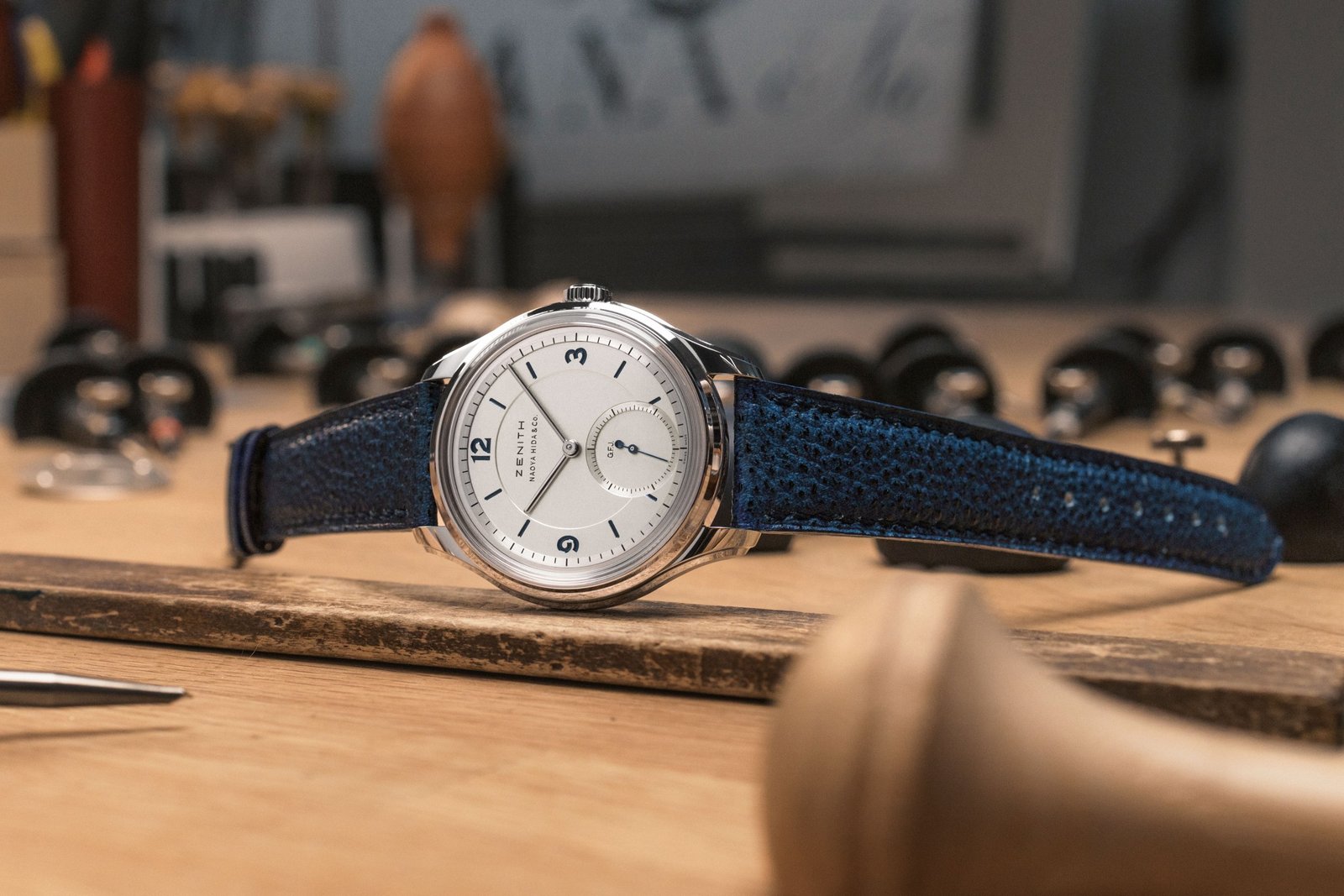
Naoya Hida Zenith Platinum Watch: A Japanese independent watchmaker and a Swiss manufacture just shattered the rulebook with a platinum collaboration that proves size and heritage mean nothing against vision.
The watch world has spent decades constructing a pecking order: Swiss manufactures sit atop the pyramid, independent makers cluster below, and collaboration typically flows downward as brands loan credibility to scrappier operations. Naoya Hida and Zenith just flipped that entirely. The Naoya Hida and Zenith platinum watch emerging from their partnership isn’t a sponsorship or a vanity project, it’s a genuine collision between two incompatible philosophies that somehow yielded something neither could have built alone.
Naoya Hida represents a particular breed of Japanese watchmaking that’s become quietly influential across the industry: meticulous, uncompromising, and allergic to scale. His reputation rests on technical mastery and restraint, watches designed for people who actually know how to read a chronograph rather than wear one as jewelry. Zenith, by contrast, is an institution. The manufacture owns its movements, its production, its entire supply chain. They operate at a different velocity entirely, built for quarterly earnings and global distribution. That these two entities even spoke, let alone committed to a platinum collaboration, signals something shifting in how luxury watchmaking values itself.
The platinum spec matters more than it might initially appear. Precious metal watches have become safer every year, each one chasing the same aesthetic temperature. Platinum forces decisions: it’s expensive to work with, demands different finishing techniques than gold, and appeals to a smaller collector base. Choosing it for a collaborative piece suggests neither party was interested in hedging bets or maximizing sales targets. This is the kind of material choice that gets made when two creators actually agree on what they’re making, not when a marketing department has signed off on something.
The platinum spec matters more than it might initially appear. Precious metal watches have become safer every year, each one chasing the same aesthetic temperature. Platinum forces decisions: it’s expensive to work with, demands different finishing techniques than gold, and appeals to a smaller collector base. Choosing platinum for a collaborative piece suggests neither party was interested in hedging bets or maximizing sales targets. The Naoya Hida and Zenith platinum watch represents the kind of material choice that gets made when two creators actually agree on what they’re making, not when a marketing department has signed off.