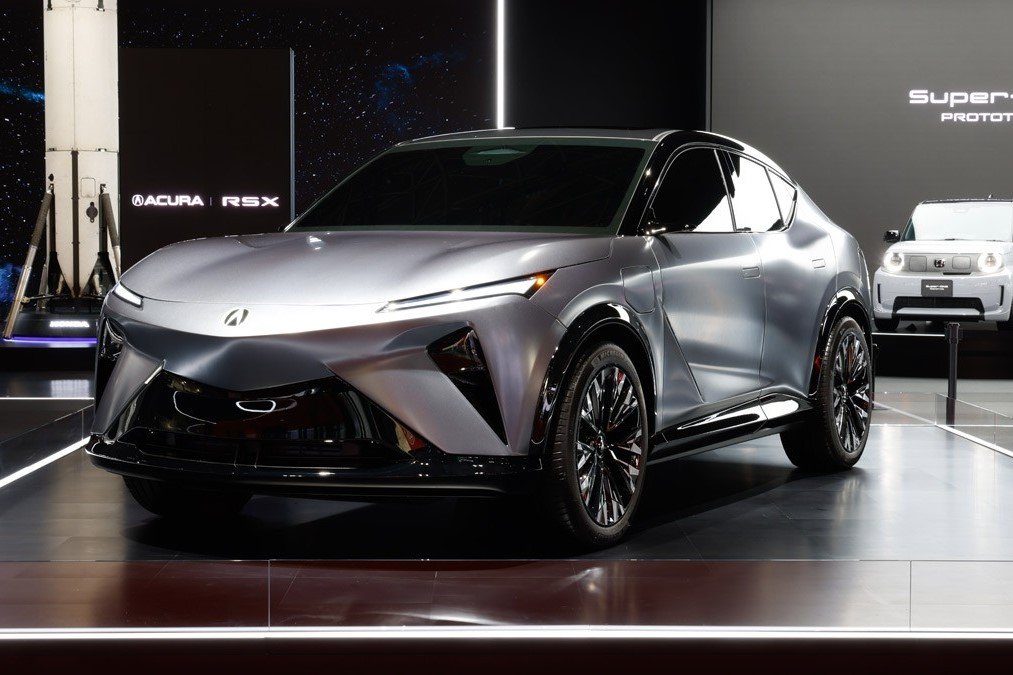
Acura Rsx Ev: The 2026 RSX EV arrives as the first production car running Honda’s proprietary ASIMO OS, built in Ohio with Brembo brakes, a calculated move to reclaim performance credibility.
Honda is betting its EV future on a nameplate that never actually left the road in most minds, even after Acura killed the RSX sedan in 2006. The 2026 RSX EV’s arrival matters not because it resurrects a beloved model line, but because it’s the debut vehicle for ASIMO OS, Honda’s homegrown operating system architected specifically for electric performance. This isn’t some tokenized resurrection or cash-grab rebrand. It’s Honda saying that the RSX, historically a driver’s car, belongs at the front of its electrified lineup.
The ASIMO OS represents something rare in automotive: genuine internal infrastructure rather than licensing somebody else’s software stack. While Tesla spent years building Autopilot and BMW, Audi, and others either licensed or partnered for their digital platforms, Honda engineered its own from the ground up. Pairing that with the RSX nameplate signals intention. The RSX GSR and Type-S were about precision steering, minimal sound deadening, raw mechanical feedback, and the kind of driver engagement that didn’t require a big V6 or turbo to matter. An EV demands different architecture, but those values don’t have to evaporate in the translation. Standard Brembo brakes on a production EV, not a premium tier, but baseline, underscores the message: this isn’t a commuter play.
Building it in Ohio instead of Japan or Mexico carries its own subtext. Domestic assembly positions the RSX EV as a domestic performance car during a moment when Americans remain skeptical about whether electric powertrains can deliver excitement. Honda has always understood that a car’s origin story and production logistics shape perception as much as horsepower does. An American-built Acura with Italian stopping power and Japanese software architecture becomes a statement about where performance lives in the EV era, not just a technical checklist.
Building it in Ohio instead of Japan or Mexico carries its own subtext. Domestic assembly positions the Acura RSX EV as a domestic performance car during a moment when Americans remain skeptical about whether electric powertrains can deliver excitement. Honda has always understood that a car’s origin story and production logistics shape perception as much as horsepower does. An American-built Acura with Italian stopping power and Japanese software architecture becomes a statement about what the brand believes electric performance should be, and why the RSX EV deserves your attention.