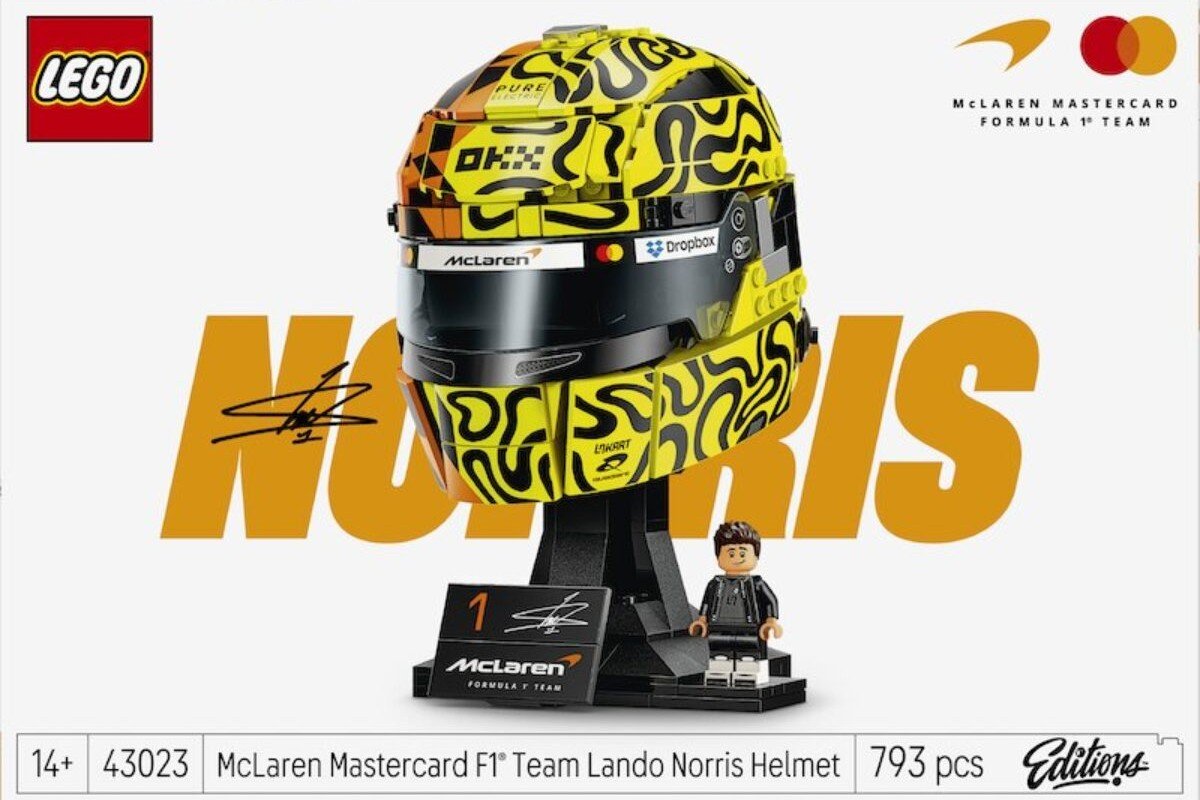
As the storied F1 team hits 1,000 races, a new brick-and-speed collaboration drops with Piastri and Norris at the helm.
A Thousand Reasons to Build
McLaren’s 1,000th race is not just a number, it’s a cultural moment, and LEGO understands the assignment. The Danish toy giant has partnered with the iconic British racing team to mark this historic milestone with a collector’s edition that bridges the gap between motorsport heritage and contemporary design culture. It’s the kind of crossover that feels inevitable in hindsight, yet genuinely moves the needle on what a brand collaboration can signify in 2025.
The partnership taps into something deeper than nostalgia or corporate synergy. LEGO’s precision engineering meets McLaren’s obsession with speed and performance, two brands that both understand the power of iteration, detail, and the kind of fandom that borders on religion. For collectors and casual enthusiasts alike, this drop represents a tangible way to celebrate a team’s storied legacy without needing a six-figure budget or a garage in Monaco.
The Piastri and Norris Factor
Oscar Piastri and Lando Norris, McLaren’s current driver pairing, aren’t just faces on marketing collateral. Both have cultivated their own cultural footprints beyond the track, with Norris especially active in gaming and streaming culture, reaching audiences far beyond traditional motorsport demographics. Their involvement in this release grounds it in the present moment, linking the historical milestone to the team’s contemporary ambitions.
The two drivers represent different generations of McLaren fandom and talent. Norris carries the weight of being a homegrown British driver for a British team, a narrative that resonates deeply with the brand’s identity. Piastri, the younger Australian talent, embodies the team’s forward momentum. Together, they’re not just endorsing a product, they’re legitimizing it within the sport and beyond.
Design Meets Speed Culture
LEGO sets have become increasingly sophisticated in how they function as cultural objects. This isn’t a basic brick dump, it’s a precision model that respects both the toy’s heritage and McLaren’s aesthetic language. The orange and blue colorway forms the backbone of the design, instantly recognizable to anyone who’s paid attention to the team over the past decades. But modern LEGO design tends to favor architectural detail and technical authenticity, which means this build likely captures the car’s proportions and design DNA in ways that satisfy both eight-year-olds and forty-year-old engineers.
The convergence of toy design and motorsport culture reflects a broader shift in how brands approach collectibles. Physical objects matter more than ever in an increasingly digital world, especially when they represent something rare or milestone-worthy. A set that commemorates a thousand races holds narrative weight. It’s not just a toy, it’s a timestamp, a marker of where a legendary team stood in 2025.
The Collector Moment
LEGO collaborations with major brands have proven to be genuine investment pieces within collector communities. Limited editions and special releases appreciate in value, create waitlists, and generate the kind of organic conversation that money can’t buy. This McLaren set arrives at a moment when motorsport aesthetics have become fully embedded in mainstream culture, from streetwear to interior design to the kinds of objects people display on shelves and desks.
For McLaren fans, this isn’t just merch. It’s the physical embodiment of a thousand moments, a thousand races, a thousand decisions that got the team to this point. And for LEGO, it’s another demonstration that their platform can serve as a canvas for commemorating major cultural and sporting moments with genuine prestige.
Why This Moment Matters
Motorsport culture has shifted from being a niche passion to a legitimate cultural force. F1 audiences have expanded exponentially, streaming deals have amplified the sport’s narrative reach, and driver personalities now matter as much as results. In this context, a LEGO x McLaren collaboration isn’t a marketing stunt, it’s a cultural acknowledgment of where these brands sit in the contemporary landscape.
The 1,000th race is a milestone that demands celebration, but not in the traditional sense of a trophy or a press release. It demands something tangible, collectible, and shareable. This drop delivers exactly that, turning a historic sporting achievement into an object culture moment that’ll sit on shelves and resonate with a generation that grew up building plastic bricks and watching F1 rise from specialty broadcasting to global phenomenon. The next thousand races are coming, and they’ll be built on moments like these.