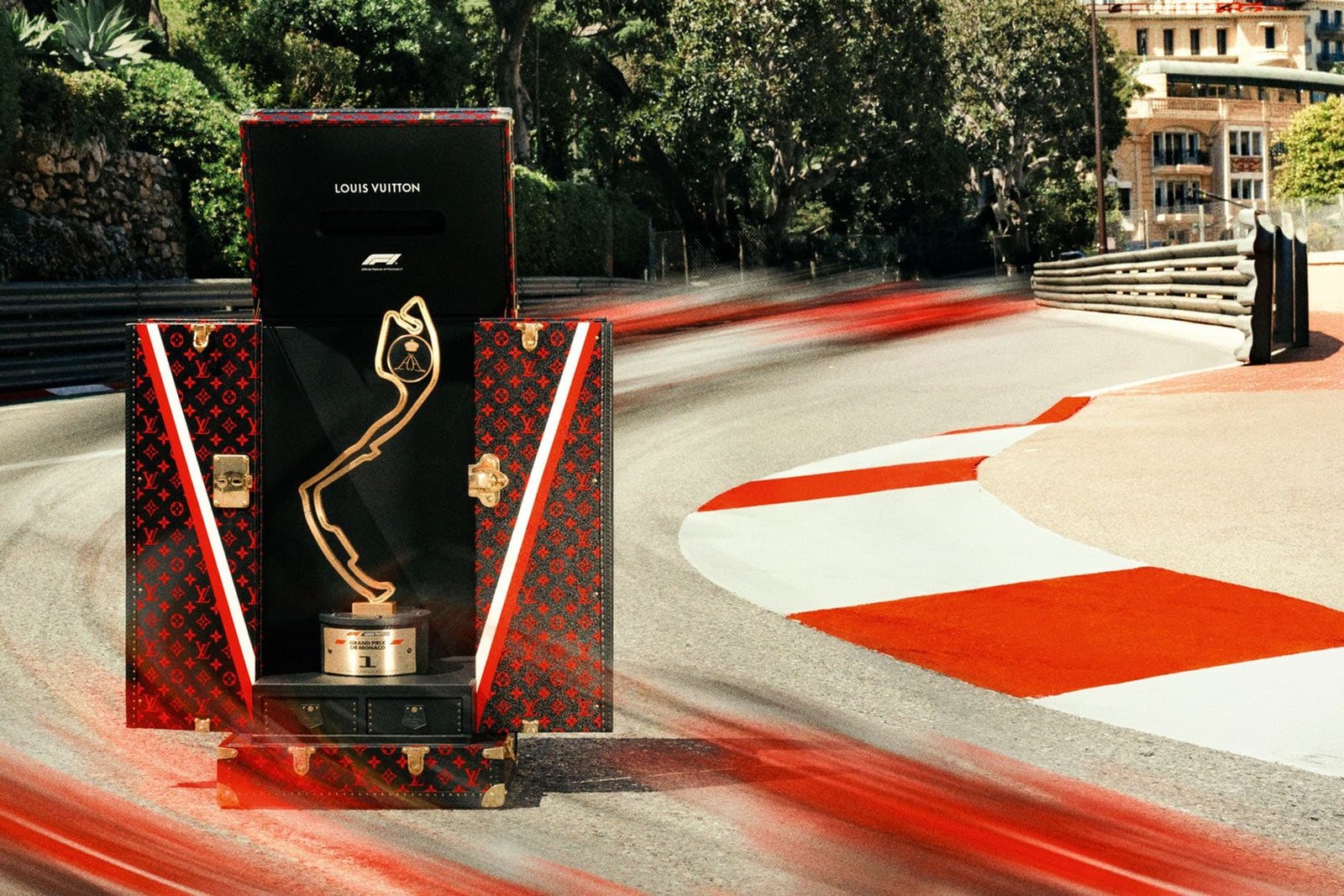
The luxury house becomes title partner of the F1 Monaco Grand Prix, cementing fashion’s grip on motorsport’s most prestigious event.
Where High Fashion Meets High Speed
Louis Vuitton didn’t just sponsor the Monaco Grand Prix. The French luxury powerhouse became the official title partner, transforming what’s already the most glamorous race on the F1 calendar into a full-throttle fashion moment. It’s the kind of move that signals how completely luxury has colonized motorsport, turning a sporting spectacle into a runway with horsepower.
Monaco has always been where old money meets new wealth, where yachts line the harbor and the elite gather to see who’s driving the fastest. Now it’s also where Louis Vuitton’s design language gets stamped onto the entire weekend. This isn’t about slapping a logo on a few paddock banners. Title partnerships reshape everything: the aesthetic, the experience, the narrative.
Fashion’s Acceleration Into Racing
The crossover between haute couture and motorsport isn’t accidental. Both worlds traffic in precision, craftsmanship, and an almost religious devotion to heritage. Both attract billionaires and celebrities who treat appearances as part of the competitive sport itself. Monaco, specifically, is where that overlap hits critical mass.
Louis Vuitton understands this audience intimately. The brand has spent decades positioning itself as the house of travel and exploration, from its trunks to its Speedy bags to its trunk shows in exotic locales. Racing is just another frontier for that narrative, one where danger and luxury coexist at 200 miles per hour. The Monaco partnership lets the house wrap itself in velocity and precision while maintaining its core identity as the ultimate status symbol.
The Playbook of Prestige
This move follows a familiar playbook that luxury brands have perfected in recent years. You anchor yourself to an event so culturally dominant that it becomes impossible to separate your brand from the occasion. It’s what happened when fashion invaded golf, when it infiltrated streetwear, when it swallowed sneaker culture whole. With Monaco, Louis Vuitton isn’t creating a partnership. It’s acquiring cultural real estate.
The timing matters too. Monaco in June draws the kind of global audience that most brands can only dream of reaching. It’s televised globally, streamed across platforms, and obsessively covered by both sports and fashion media. For Louis Vuitton, the exposure isn’t just about reach, it’s about association. Every shot of the course, every moment of prestige, now carries the weight of the LV monogram.
What This Means for Everyone Else
For competitors and rival luxury houses, this is a wake-up call. When LVMH subsidiary brands control the narrative around motorsport’s most prestigious event, other luxury conglomerates have to either match the investment or accept a secondary position in this newly claimed territory. This is how dominance in luxury works in the 2020s: you don’t just make great products, you colonize the cultural moments that matter.
For F1 fans, the partnership means more glamour, more fashion moments, and possibly more design collaborations tied to the race. For the drivers and teams, it means competing in an arena where the aesthetics are now centrally controlled by one of the world’s most influential fashion houses.
The Future of Branded Spectacle
Louis Vuitton becoming title partner of Monaco signals something larger: luxury brands no longer just sponsor events, they own them. They reshape them. They use them as three-dimensional advertising that feels less like marketing and more like culture itself. The Grand Prix becomes Louis Vuitton’s stage, and every moment of it, from the qualifying sessions to the champagne podium to the after-parties, exists within the brand’s curated universe.
For fashion watchers and motorsport enthusiasts alike, this is the new normal. The merger of glamour and speed, of tailoring and turbocharged engines, isn’t coming. It’s already here, and it’s wearing the LV initials.