A sweeping new exhibition centers the visionary post-independence architects of West Africa who shaped entire cities and were systematically written out of design history.
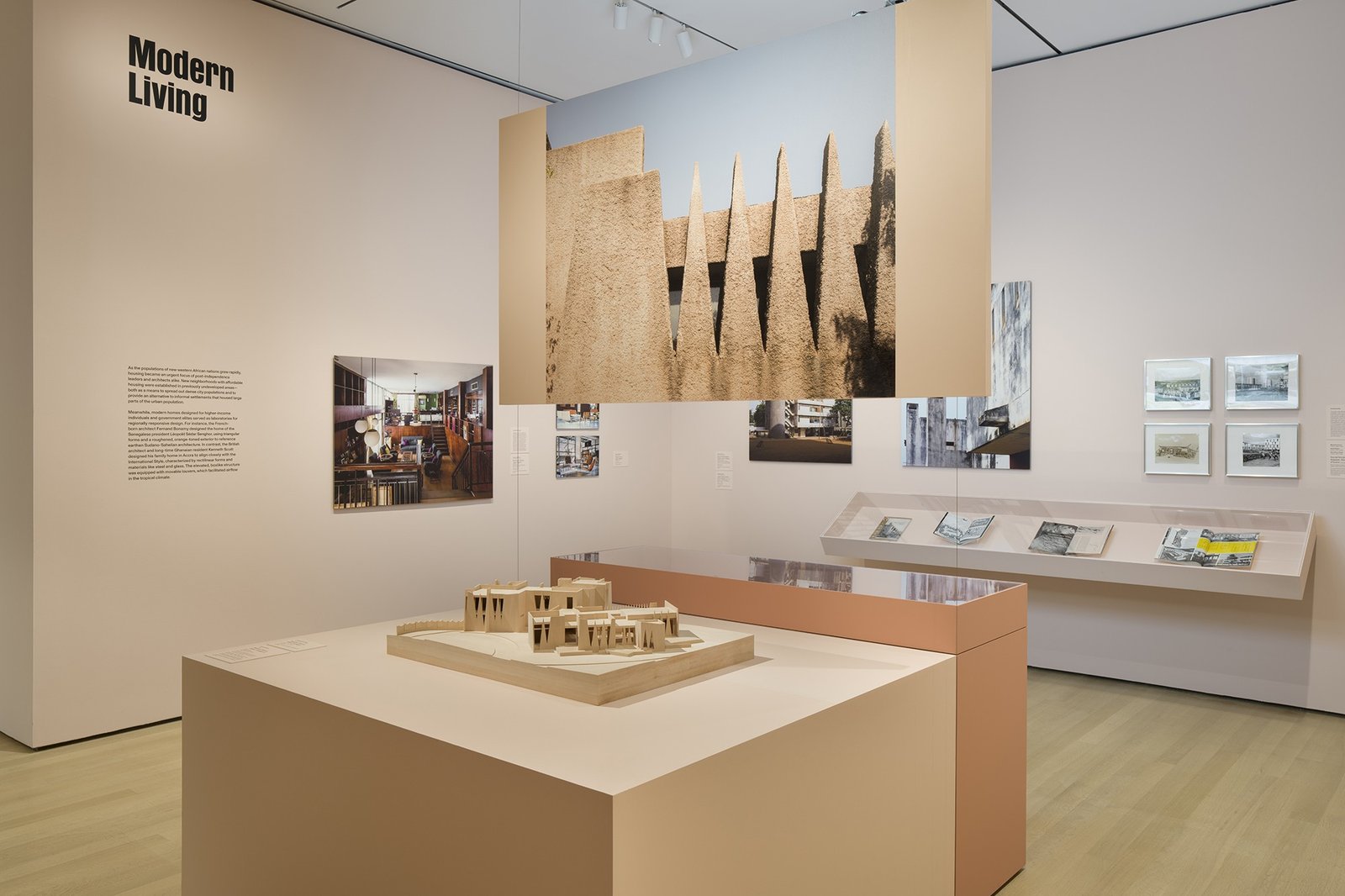
MoMA is mounting what amounts to a corrective: a major survey of the modernist architects who designed government buildings, universities, and civic centers across newly independent West African nations in the 1960s and 70s, only to have their work relegated to footnotes in the global architectural canon. “Architects of Liberation” restores these practitioners to their proper place as foundational figures who merged European modernist principles with indigenous spatial traditions and postcolonial ambition.
The exhibition traces how architects across the region, from Senegal to Nigeria to Ghana, seized the moment of national sovereignty to reimagine public space. Their buildings weren’t imitations of Western models but deliberate syntheses. A government complex in Dakar shares DNA with both Le Corbusier’s geometric severity and the courtyard logic of local vernacular design. A university campus in Accra fuses brutalist mass with climatic responsiveness honed through generations of building in West African heat and humidity. The work speaks to a specific historical window when architecture functioned as political language, when a parliament building or ministry could express the ideals of a new nation.
For decades, these projects were either ignored or absorbed into vague narratives about “African modernism” without naming the architects, the politics, or the ideas that animated them. MoMA’s intervention is both scholarly and urgent: it establishes authorship, recovers archival material, and insists that design history expand beyond the familiar European and American figures. The exhibition includes drawings, photographs, models, and built works documented in situ, mapping a modernism that was neither derivative nor exotic but intrinsically tied to decolonization itself.