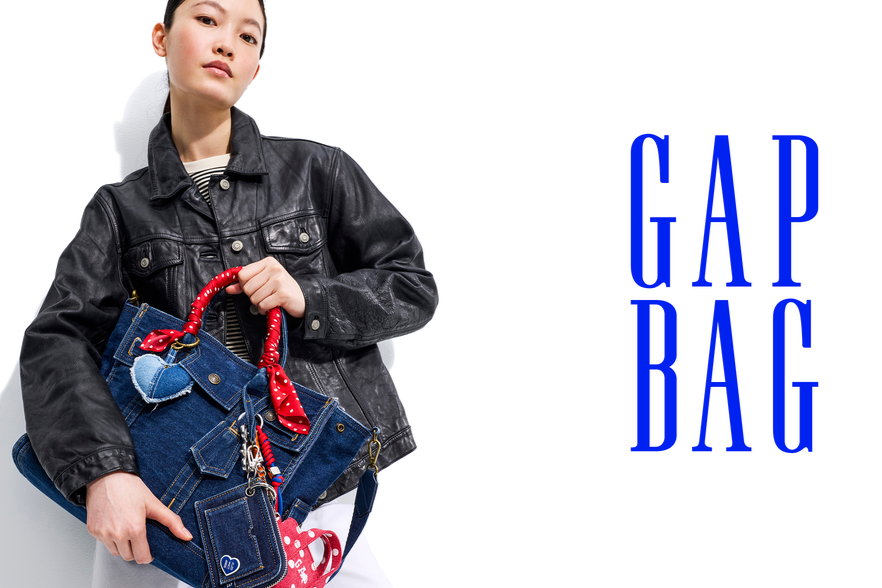
Reed Krakoff has spent three decades studying how luxury accessories live in the culture. His appointment as the creative force behind Gap’s first dedicated GapBag collection marks a rare moment when heritage and accessibility meet without compromise. The result is five denim-inspired silhouettes built for actual use rather than pure display.
The collection pulls from specific denim moments in Gap’s catalog. Each bag references a cut, wash, or construction detail from the brand’s clothing archives, translating rigid denim proportions into leather and canvas. Krakoff’s three CFDA Accessories Designer of the Year wins suggest he understands the mechanics of a working bag, and that expertise surfaces in hardware choices, strap engineering, and pocket placement. The price range starts at $30 for smaller pieces and climbs to $148 for structured totes and crossbodies, positioning the line between fast fashion and designer accessible.
This is not a collaboration dressed up as one. Gap owns the bag category outright now, with Krakoff directing the vision but the brand absorbing the entire GapBag collection into its core offering. That structural choice means the bags won’t live in a limited-edition capsule or disappear in six weeks. They’re built to sit in stores and on the Gap website as permanent fixtures, a signal that the brand intends to compete for bag real estate in the same way it dominated denim for decades.