Be Wanderlust Hotel: Balnibarbi’s new hilltop property trades scale for intimacy, wrapping 14 rooms in a geometric landmark that faces both sea and mountain.
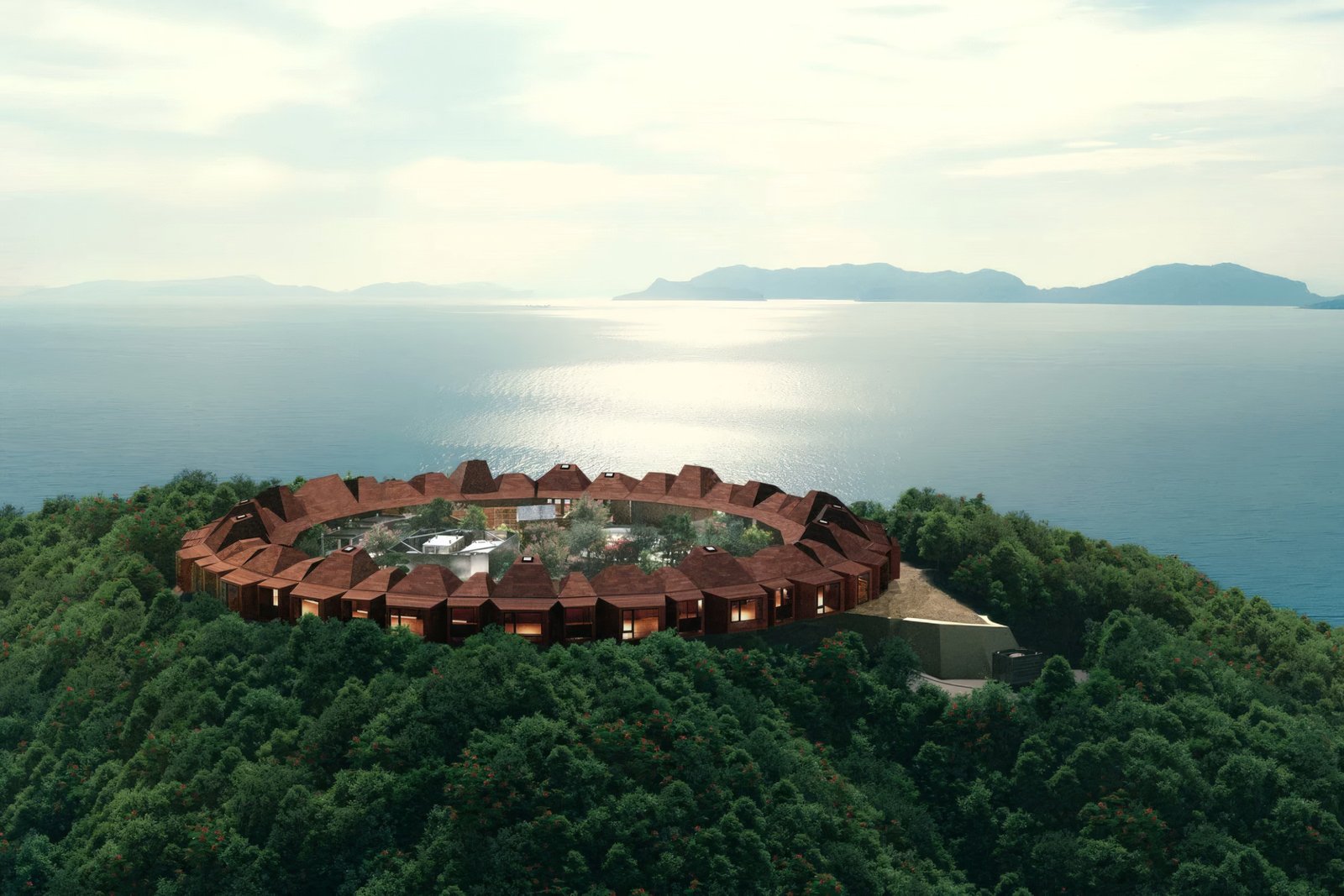
On December 1, 2026, a 14-room hotel shaped like a circle will open on a mountain in southern Awaji Island and immediately redefine what a small luxury property in Japan can be. BE WANDERLUST HOTEL, announced by developer Balnibarbi on November 11, sits on a secluded hilltop in Minamiawaji, Hyogo Prefecture, with views across the Seto Inland Sea and the surrounding mountains. It is not trying to be everything. It is trying to be one thing: a hotel built into its place rather than imposed on it.
The circular architecture is the most visible statement. Rather than the rectilinear precision that dominates Japanese resort design, BE WANDERLUST follows the natural contours of the hillside, creating what amounts to a visual landmark above the surrounding countryside. This is not novelty for its own sake. The form creates the function: the entire structure orbits around views, making the landscape itself the organizing principle of the building. Seven rooms face the sea. Seven face the mountains. The choice is not a luxury option; it is the design.
BE WANDERLUST HOTEL’s Circular Architecture and Design Philosophy
The hotel operates a single restaurant, Restaurant UZU, with exactly 12 seats. It is open only to overnight guests. This is the opposite of most luxury hotel strategy, which treats dining as a separate revenue stream open to the public. Balnibarbi has chosen to make the restaurant smaller and more exclusive, not larger and more profitable. The menu draws from Awaji Island’s fishing ports and nearby farms, with seasonal ingredients that change according to what the island produces. A chef and 11 other diners at the same table every night creates something that cannot be faked: a sense of community within constraint.
The pricing reflects the smallness rather than fighting it. Published rates start at approximately ¥90,000 per room for two guests with breakfast, before service charges. This is not budget hospitality, but it is not the ¥200,000-plus per night positioning of Tokyo’s flagship luxury hotels either. The hotel is priced for people who will spend money to be somewhere real, not somewhere famous.
Beyond the Room
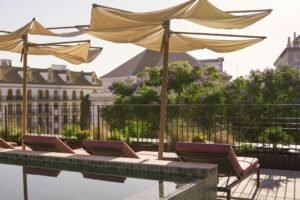
BE WANDERLUST positions itself as a destination in its own right, not a temporary hold for tourists passing through. The property includes an outdoor swimming pool and a panoramic sauna, but these are secondary. The primary offering is access to Awaji Island itself. The hotel plans activities that move guests into fishing communities, agricultural areas, and the daily life of the island’s southern region. This reflects a shift happening quietly across independent luxury hospitality: the understanding that a hotel’s value lies not in what it contains, but in what it connects you to.
Awaji Island sits between Honshu and Shikoku and has long been known for its coastal scenery, seafood, and agricultural output, but it has remained relatively unknown to international travelers. It is close enough to Kobe and Osaka for a short trip, far enough from those cities to feel genuinely removed. The hotel’s location and programming lean into this geography intentionally. You do not come here to experience luxury. You come here to experience an island, and the luxury is that you do it on your own terms, in 14 separate rooms, with 11 other people at dinner.
For Balnibarbi, the project demonstrates a broader thesis about hospitality in Japan’s luxury market: that size is a constraint that creates value, and that design can serve place rather than override it. The circular building is elegant partly because it has nowhere to hide. It sits exposed on a hilltop, shaped by the landscape rather than shaping it. When the hotel opens on December 1, it will have no suites, no conference spaces, no spa, and no reason to exist except that someone decided it should. That decision, visible in concrete and glass and the careful placing of seven sea-facing rooms, will be the point.