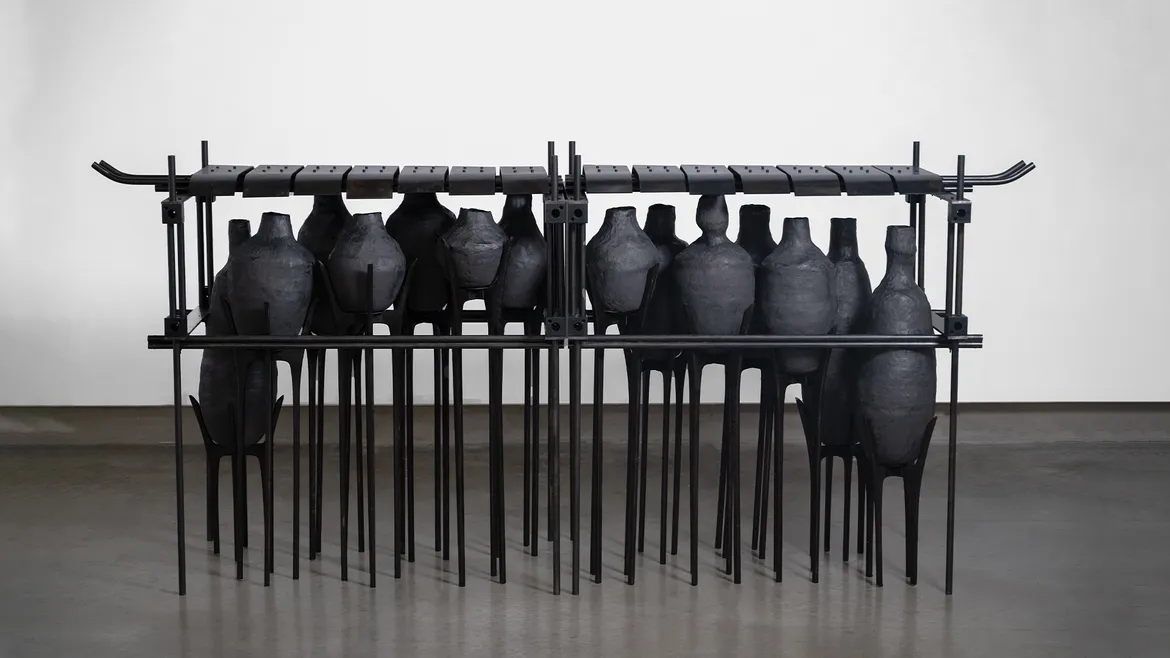
The Nue Black Aesthetic: A sweeping new exhibition at the Design Museum challenges what we think we know about contemporary British design through over 100 objects spanning six carefully constructed sections.
On November 6, the Design Museum opens a landmark exhibition that refuses to be boxed into a single narrative about Black creative practice in Britain. The Nue Black Aesthetic brings together more than 100 objects across six distinct sections, each exploring a different dimension of how Black designers, makers, and visual thinkers are reshaping what British design means in 2026. Rather than presenting a retrospective or a celebration of individual heroes, the show operates as a living argument: Black design isn’t a subcategory or a moment, but a fundamental reimagining of the field itself.
The scale alone signals institutional ambition. Six sections allow the curators to move beyond the usual grand-narrative structure and instead create space for contradictions, overlaps, and conversations that don’t fit neatly into a single theme. This approach mirrors how contemporary design actually works: not in isolation, but in constant dialogue across disciplines, geographies, and influences. Each section becomes its own ecosystem, pulling in furniture, fashion, graphic work, digital products, architectural thinking, and craft practices that might never otherwise share gallery space. The objects range from established names to emerging voices, from commercial work to speculative and experimental pieces that exist purely to ask questions.
What often gets lost in design discourse is the simple fact that aesthetic choices are never neutral. The Nue Black Aesthetic anchors itself in that recognition. By gathering this volume of material under one roof and presenting it as the legitimate center of contemporary design conversation rather than as a side story, the exhibition makes a structural argument: the frameworks through which British design has been historically understood and legitimized may themselves need redesigning. The work here doesn’t exist to prove anything to anyone. It exists because it exists, and that self-evidence is the whole point.