Matisse: The World In A Room: A landmark 100-work exhibition traces how African, Islamic, and Pacific artifacts fundamentally altered Henri Matisse’s artistic vision.
Milan’s MUDEC has opened a comprehensive retrospective centered on one of modernism’s most consequential creative transformations: how Henri Matisse’s encounter with non-Western objects became the engine for his radical formal language. The exhibition, titled Matisse: The World in a Room, presents roughly 100 works spanning paintings, sculptures, textiles, and decorative objects that document the French master’s absorption and reinvention of African, Islamic, and Pacific influences throughout his career.
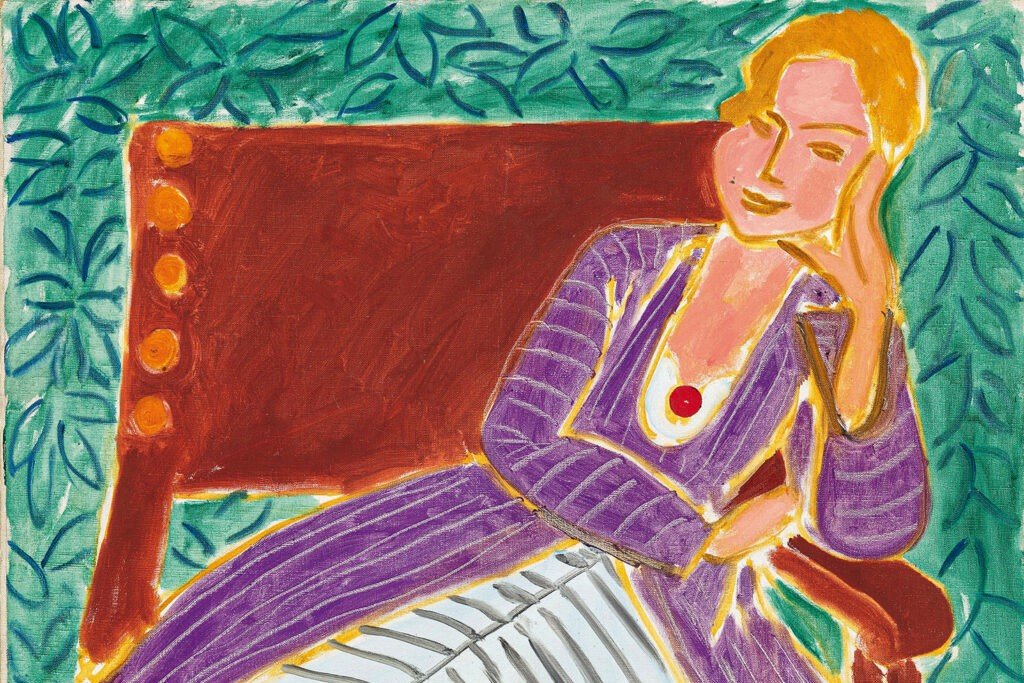
The show reconstructs Matisse’s studio as both physical space and intellectual archive, demonstrating how he didn’t simply collect ethnographic objects but lived within a deliberate ecosystem of visual reference. Wall-to-wall arrangements of masks, weavings, and ceremonial pieces sit alongside his own paintings and cut-outs, making visible the reciprocal dialogue between source material and artistic output. This approach dismantles the colonial framework that typically positioned Western artists as borrowers from passive “primitive” traditions, instead framing Matisse as engaged in active cross-cultural conversation. His late-career cut-outs, which revolutionized color theory and spatial composition, emerge directly from patterns and proportional systems he extracted from Islamic manuscripts and African textiles.
The exhibition’s architecture deliberately avoids chronological progression, instead organizing works by thematic resonance and visual dialogue. Matisse’s 1947 Jazz series hangs alongside the Polynesian bark cloths that inspired its chromatic audacity. Sculptures sit in configurations mirroring how the artist himself arranged them within his workspace. By treating the exhibition design as a curatorial argument rather than a biographical timeline, MUDEC reframes the conversation from “influence” to something closer to aesthetic kinship, suggesting that Matisse’s greatest innovation was learning to see form and color through multiple cultural lenses simultaneously.
By treating the exhibition design as a curatorial argument rather than a biographical timeline, MUDEC’s Matisse: The World in a Room reframes how we understand the dialogue between Western modernism and global artistic traditions, positioning the artist not as a borrower but as an active participant in cross-cultural creative exchange.