Geoffrey Bawa Retrospective: The Sri Lankan modernist’s first major European show proves why his sensory approach to space still feels radically alive.
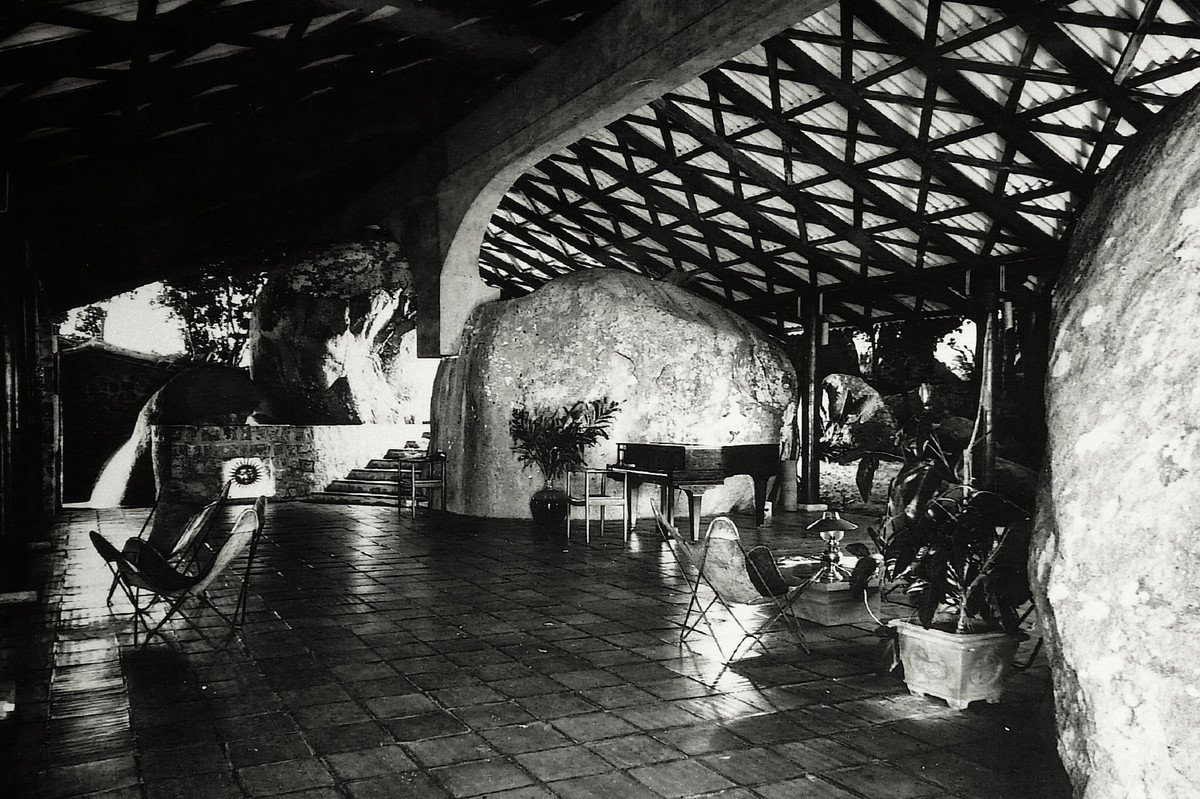
The Geoffrey Bawa retrospective at Vitra Design Museum marks a watershed moment for the legendary Sri Lankan architect. For fifty years, Bawa built a language of architecture that treated the human body as the starting point, not the afterthought. Thick stone walls that hold coolness. Courtyards that funnel light at precise angles. Staircases that slow you down. Materiality as feeling. Yet outside Sri Lanka and a tight circle of architects who made pilgrimage to his island works, Bawa remained a specter, referenced in whispers, canonized mostly through books. This European institution finally gives Bawa the sustained, uncompromising platform his work has warranted for decades, and the timing feels less like a belated correction than a recognition that his approach to sensory space has become urgent again.
The exhibition spans six decades of Bawa’s practice, moving through his early experiments with vernacular Sri Lankan materials and forms, his collaborations with other visionary thinkers, and the signature projects that defined his mature vision. The museum has reconstructed full-scale spatial sequences rather than relying on drawings and photographs alone, understanding that Bawa’s architecture can’t be truly grasped from documentation. You have to walk through it, feel the temperature shift, watch how light behaves as you move. The curatorial approach honors that demand: the show is architecture about architecture, which means the walls and sequences themselves become argument. Visitors encounter working models, archival material, and installations that make visible the conceptual moves often obscured in the finished buildings.
What emerges from the Geoffrey Bawa retrospective is a practice built on refusal, albeit one that never advertised itself as such. Bawa rejected the International Style’s abstraction from place, insisting instead that architecture must root itself in climate, material tradition, and the specific choreography of human movement through space. The Vitra exhibition argues persuasively that this was never provincial or nostalgic. It was visionary, and it remains so.