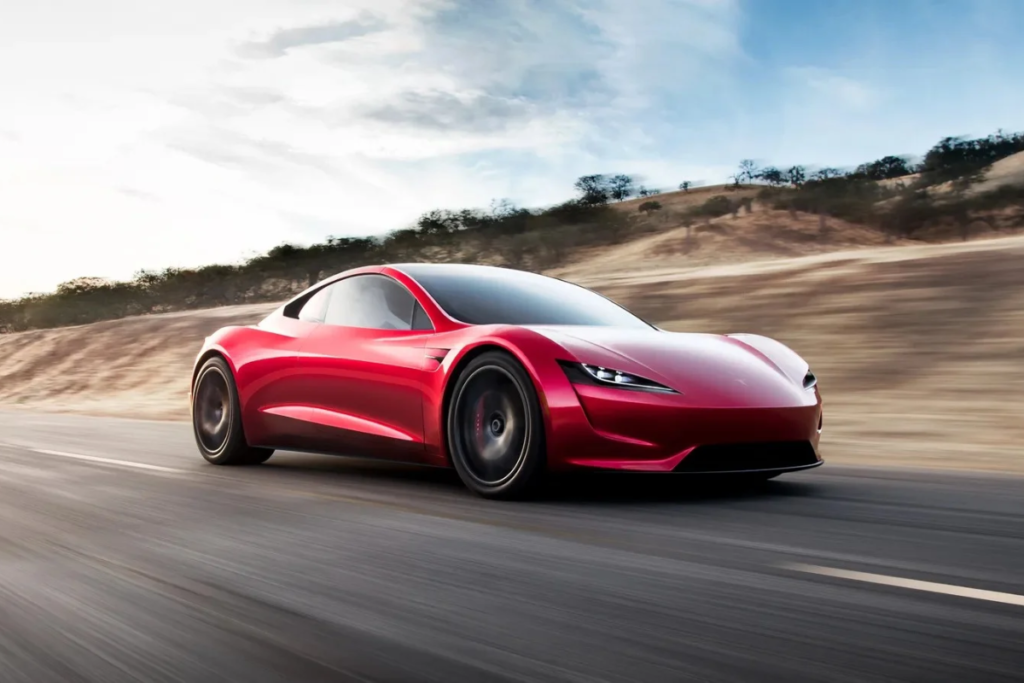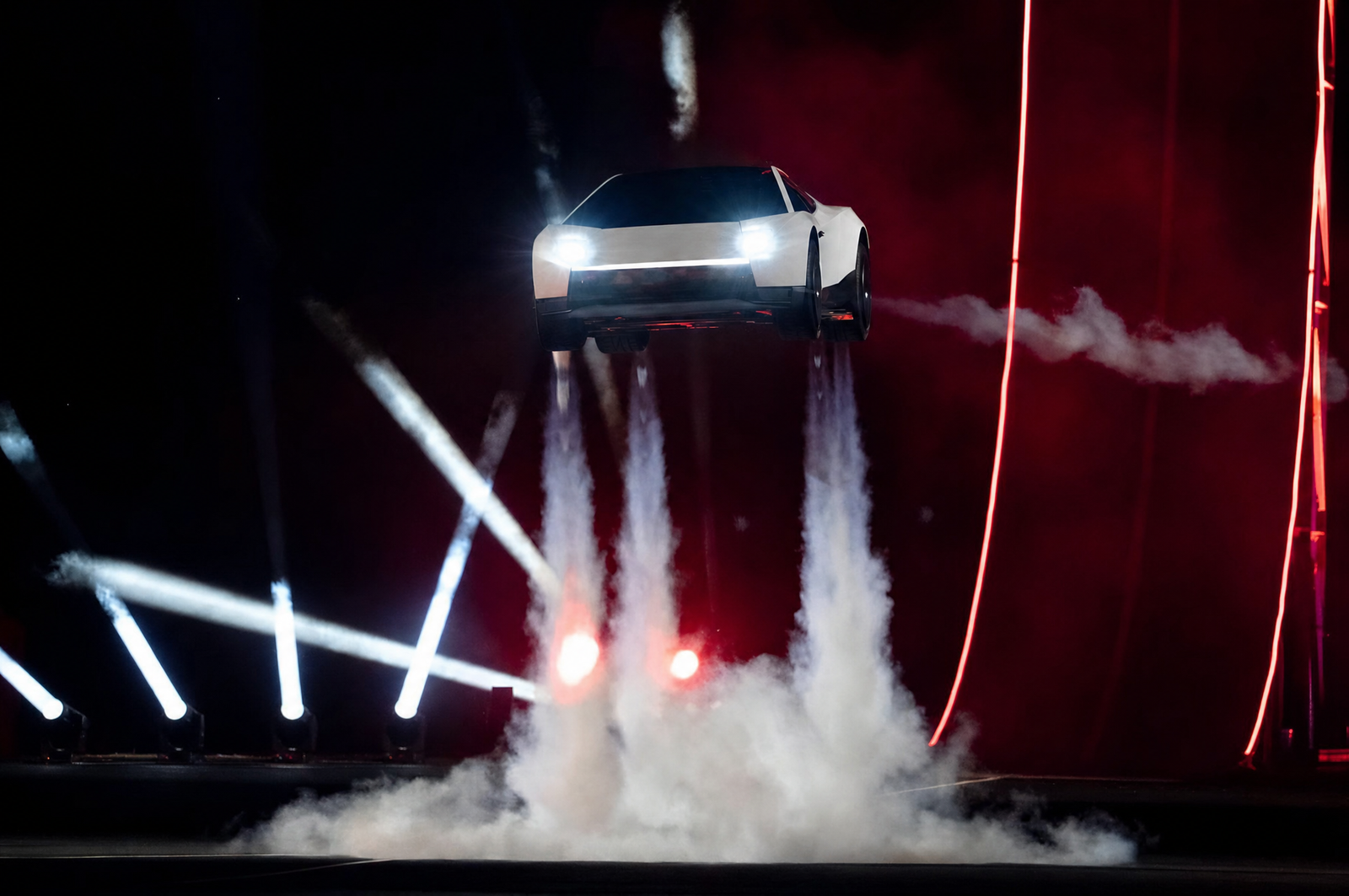
Flying Roadster: After nine years of vaporware mythology, Elon Musk’s aerospace-powered hypercar actually took to the air in Texas, and regulators are officially panicking.
Tesla dropped the hammer on its decade-long flying Roadster saga this week at its Texas headquarters, revealing a production-ready vehicle equipped with SpaceX propulsion technology that actually leaves the ground. The reveal wasn’t a render, a concept sketch, or another Musk promise dissolving into thin air, they flew it. Footage showed the vehicle achieving sustained altitude with vertical thrust vectoring, composite airframe integration, and what amounts to a stripped-down Raptor engine architecture adapted for automotive use. This isn’t science fiction cosplay anymore. It’s happening in real time, and the Federal Aviation Administration’s regulatory framework is nowhere close to ready for it.
The original Roadster concept debuted in 2015 as a distant fantasy, a punchline about what Elon might do next. Over nine years, the project absorbed countless engineering iterations, SpaceX’s accumulated expertise in reusable rocket technology, and what insiders describe as “borderline obsessive” refinement of flight stability algorithms. The current build pairs Tesla’s battery systems with SpaceX’s propulsion know-how, creating a hybrid platform that technically qualifies as both a vehicle and an aircraft depending on which regulatory body you ask. That ambiguity is precisely why federal agencies are scrambling. The machine doesn’t fit existing classifications. It’s not a drone. It’s not a helicopter. It’s a hypercar that occasionally ignores gravity, and nobody wrote rules for that.
The debut footage showed clean takeoffs, stable hover patterns, and controlled descents, suggesting the engineering actually works at a functional level, not just a theoretical one. Range estimates hover around 60 miles in flight mode, with the battery architecture holding enough power for traditional ground driving. What emerges from this flying Roadster reveal is a vehicle that obliterates the boundary between automotive and aerospace engineering, forcing regulators to rethink what a car can actually be.