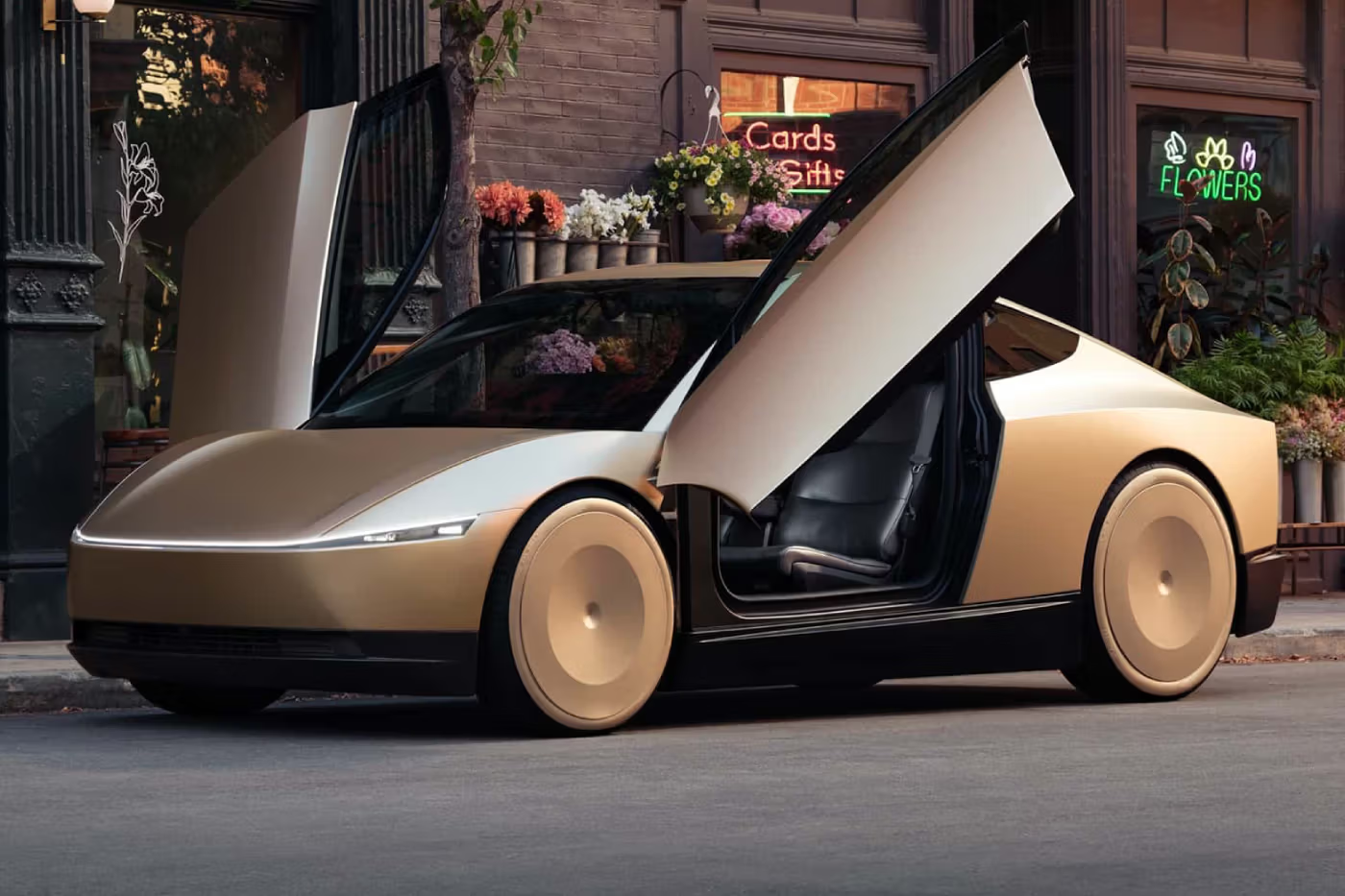
New EPA filings provide the clearest look yet at Tesla’s upcoming robotaxi, highlighting its compact battery, lightweight construction, and remarkable range figures.
A Lightweight EV Built For Urban Mobility
Fresh EPA documents have revealed key specifications for Tesla’s highly anticipated Cybercab. The dedicated two seat robotaxi weighs just 3,113 pounds, making it approximately 700 pounds lighter than the Model 3 and one of the lightest electric vehicles currently certified in the United States.
The reduced weight comes from a minimalist cabin and a relatively small 48 kWh battery pack. According to the filings, the Cybercab carries a gross vehicle weight rating of 3,730 pounds, providing a payload capacity of 617 pounds for passengers and luggage. Designed with efficiency in mind, the compact EV represents a different approach from Tesla’s existing lineup.
Modest Power With Remarkable Range
Power comes from a single front mounted electric motor producing 219 horsepower. The front wheel drive setup marks a departure from the rear wheel and all wheel drive configurations found in most Tesla vehicles.
Despite its smaller battery, the Cybercab achieved an unadjusted EPA laboratory range of 418 miles. Real world conditions and standard regulatory adjustments are expected to bring that figure closer to 293 miles, still an impressive result for a vehicle of its size. Even more noteworthy is its efficiency rating of 165 Wh per mile, making it one of the most efficient production EVs ever tested.
Recent prototype sightings have shown test vehicles equipped with traditional steering wheels and pedals, despite Tesla originally presenting the Cybercab as a fully autonomous vehicle.
Production Moves Forward Ahead Of Launch
Initial production has reportedly begun at Tesla’s Texas facility as the company works toward a commercial rollout. Executives have previously stated that the Cybercab is expected to carry a starting price below $30,000, positioning it as an affordable solution for future urban transportation.
However, the vehicle’s broader launch timeline remains heavily dependent on the development and approval of Tesla’s autonomous driving software. If successful, the Cybercab could play a major role in reshaping how people move through cities before the end of the decade.