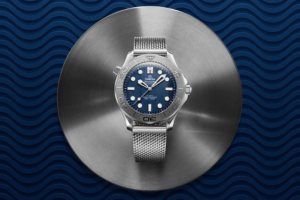

The Swiss watchmaker is taking Big Tech to court, arguing Samsung’s digital designs ripped off its iconic playbook.
When Heritage Meets Hardware
Swatch didn’t build a global empire by sitting quietly when someone copies its homework. The Swiss watchmaker just filed a $170 million lawsuit against Samsung, alleging that the South Korean tech giant’s smartwatch line borrows so heavily from Swatch’s design DNA that it crosses from inspiration into outright imitation. It’s a rare confrontation between old-guard luxury and the unstoppable force of consumer electronics, and it reveals something uncomfortable about how design ownership works in the digital age.
The case matters precisely because Swatch occupies such a strange position in the watch world. It’s neither haute horlogerie nor an underground brand. Instead, it’s the accessible icon that made watches fun, colorful, and culturally relevant again in the 1980s. That democratic approach built something worth protecting. Samsung, by contrast, has become perhaps the most formidable smartwatch player outside of Apple, selling millions of wearables annually. The company doesn’t need to copy anyone. So why does Swatch believe it did?
Design as a Legal Battleground
The lawsuit hinges on a fundamental question: how much visual and functional similarity is too much? Swatch points to specific design elements across Samsung’s Galaxy Watch line that allegedly mirror Swatch’s signature aesthetic. We’re talking color combinations, bezel designs, case shapes, and the overall visual language that made Swatch watches instantly recognizable on wrists worldwide. In the luxury and fashion world, design protection is serious business. Hermès has sued over bag knockoffs. Rolex has gone after fake dials. But smartwatches exist in murkier legal territory because they’re partially software, partially hardware, and partly just… function.
The $170 million figure suggests Swatch is measuring real damages. That’s not a nuisance-level claim. It reflects lost sales, lost brand equity, and the cost of defending intellectual property that Swatch has invested decades and billions building. Whether a jury or judge agrees that Samsung crossed the line from homage to theft will likely set precedent for how tech companies approach design moving forward, especially as the smartwatch market becomes increasingly saturated.
The Smartwatch Wars Heat Up
Samsung’s Galaxy Watch family has been nothing short of dominant. The devices offer genuine value: elegant designs, solid performance, deep integration with Android, and a price point that undercuts luxury alternatives. Swatch watches, by contrast, are still affordable and fun, but they’re quartz movements in an increasingly digital world. The lawsuit isn’t really about Swatch suddenly worrying that people will confuse a $300 Samsung smartwatch with a $100 Swatch plastic timepiece. It’s about design language, brand identity, and the creeping reality that tech companies can essentially aestheticize decades of work if there’s no legal pushback.
This is also Swatch fighting to remain relevant in a conversation it’s partly losing. As wearables become the default watch for millions, traditional watchmakers find themselves either pivoting to smartwatches or defending analog values. Swatch owns a hybrid space. It makes digital watches too. So does this lawsuit represent a genuine IP violation, or is it a proxy fight for market share in a space where Swatch fears losing cultural resonance?
What Happens Next
The case will likely be long and expensive for both sides. Samsung has virtually unlimited legal resources and won’t cave easily. Swatch, despite being owned by the Swatch Group (a multi-billion-dollar conglomerate), is betting that a public fight and potential court victory sends a message to Samsung and other tech manufacturers that copying design elements has consequences. Even a settlement would be significant, because it would formally acknowledge that Swatch’s aesthetic innovations warrant protection.
For consumers and the broader design world, the outcome will determine how free tech companies feel to draw from watchmaking heritage when designing their own wearables. If Swatch wins, expect tech companies to lawyer up their design teams harder and differentiate more aggressively. If Samsung prevails, the message is clear: in the digital age, heritage design is inspirational free real estate.
Either way, this lawsuit is a reminder that luxury and tech are no longer operating in separate universes. They’re colliding, competing, and increasingly, litigating.