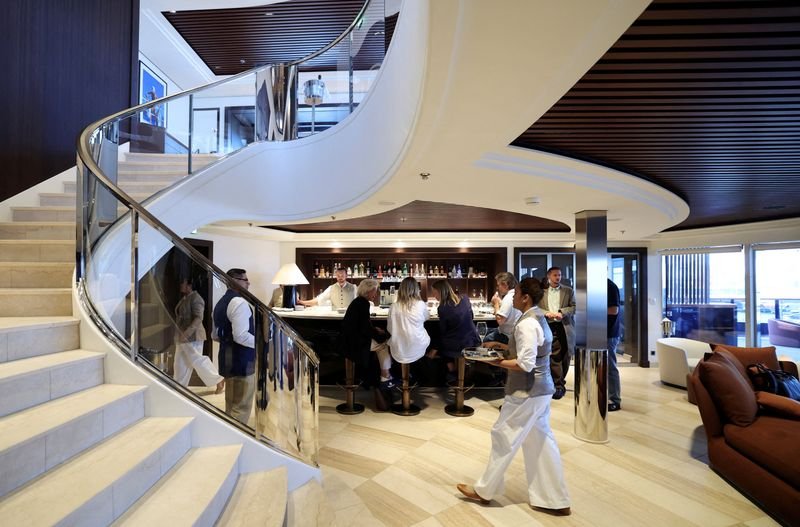
The French luxury conglomerate and hospitality giant Accor are bringing the storied rail brand’s golden-age mystique to ultra-premium yachting.
When Trains Go Nautical
LVMH and Accor have officially set sail into the ultra-luxury yacht market, transforming the iconic Orient Express brand from legendary rail journeys into an aquatic experience for the world’s most discerning travelers. The move represents a calculated expansion of the Orient Express empire, which has spent decades trafficking in mystique, romance, and the kind of old-world glamour that only a brand with over 140 years of heritage can authentically peddle. By launching into yachting, LVMH isn’t just chasing a new revenue stream; it’s colonizing yet another corner of the ultra-high-net-worth leisure market with one of its most storied properties.
The partnership between the luxury goods titan and Accor, which operates some of the world’s most exclusive hotel brands, signals a clear strategy: take the narrative of timeless elegance that made the Orient Express legendary on rails and translate it seamlessly onto water. Yacht tourism has exploded in recent years among billionaires and near-billionaires seeking bespoke experiences that money can buy but mainstream luxury cannot.
The Brand’s Golden Ticket
The Orient Express carries an almost unparalleled brand weight in luxury circles. Since its first departure in 1883, the train has symbolized a very specific flavor of opulence: the kind that prizes storytelling, craftsmanship, and theatrical presentation alongside material excess. Think velvet banquettes, Michelin-starred dining cars, and itineraries designed to make passengers feel like characters in a Agatha Christie novel rather than tourists crossing borders.
That DNA translates powerfully to yachting. Ultra-wealthy travelers aren’t simply buying transportation or accommodation; they’re buying entry into a historical narrative, a conversation piece, a way of moving through the world that separates them from the merely rich. LVMH’s gambit is betting that the same person who’ll drop half a million on a Orient Express rail journey will happily commit significantly more for an equivalent seaborne experience, complete with curated ports, Michelin-starred chefs, and the kind of attention to detail that has become the brand’s calling card.
Accor’s Luxury Repositioning
Accor’s involvement underscores the hospitality group’s aggressive pivot toward the ultra-luxury end of the market. While the company still operates mid-market hotel chains that dominate airport terminals worldwide, its real growth engine in recent years has been its haute couture properties: Fairmont, Raffles, and Aman. The Orient Express yacht venture positions Accor alongside LVMH not as a service provider, but as a partner in the luxury narrative itself.
This is significant. By combining LVMH’s brand architecture and deep pockets with Accor’s operational expertise in hospitality, the two companies have created a formidable entry barrier for competitors. Launching a luxury yacht brand is capital intensive and operationally complex. Building one with the heritage weight of Orient Express and the backing of two global luxury powerhouses makes it nearly impossible for rivals to replicate convincingly.
The Yacht Market Gets More Rarefied
The ultra-luxury yacht sector has been on a growth tear, with billionaires treating superyachts less as occasional indulgences and more as essential status infrastructure. But most yacht offerings, even the most expensive ones, lack narrative depth. They’re luxury products floating on water. The Orient Express yacht doesn’t just offer cabins and restaurants; it offers mythology, history, and a sense of belonging to something culturally resonant that transcends mere consumption.
The market’s appetite for this kind of experiential luxury is insatiable. Mega-yachts routinely fetch $200 million to $500 million, and their owners use them for months at a time. Pricing an Orient Express yacht experience as a charter rather than a purchase removes barriers while maintaining the aura of exclusivity. The ultra-wealthy can experience the brand without the hassle of ownership, which appeals to an increasingly mobile global elite.
What Comes Next
The real question isn’t whether the Orient Express yacht will succeed, but how aggressively LVMH and Accor will expand the concept. Additional vessels are almost certainly planned. Eventually, we might see an integrated ecosystem where travelers book multi-leg journeys combining rail, yacht, and curated land experiences across the globe. That’s the kind of total-immersion luxury narrative that justifies the price points these brands command.
For LVMH, the yacht represents another proof point that luxury isn’t about products anymore; it’s about world-building. The Orient Express has always understood this, which is why its resurrection on the high seas feels less like a brand extension and more like an inevitability finally catching up to reality.