Rooftop Izakaya Sydney: The team behind some of Sydney’s most reliable Japanese spots launches a rooftop izakaya with a retractable glass ceiling at Redfern’s Eve Hotel.
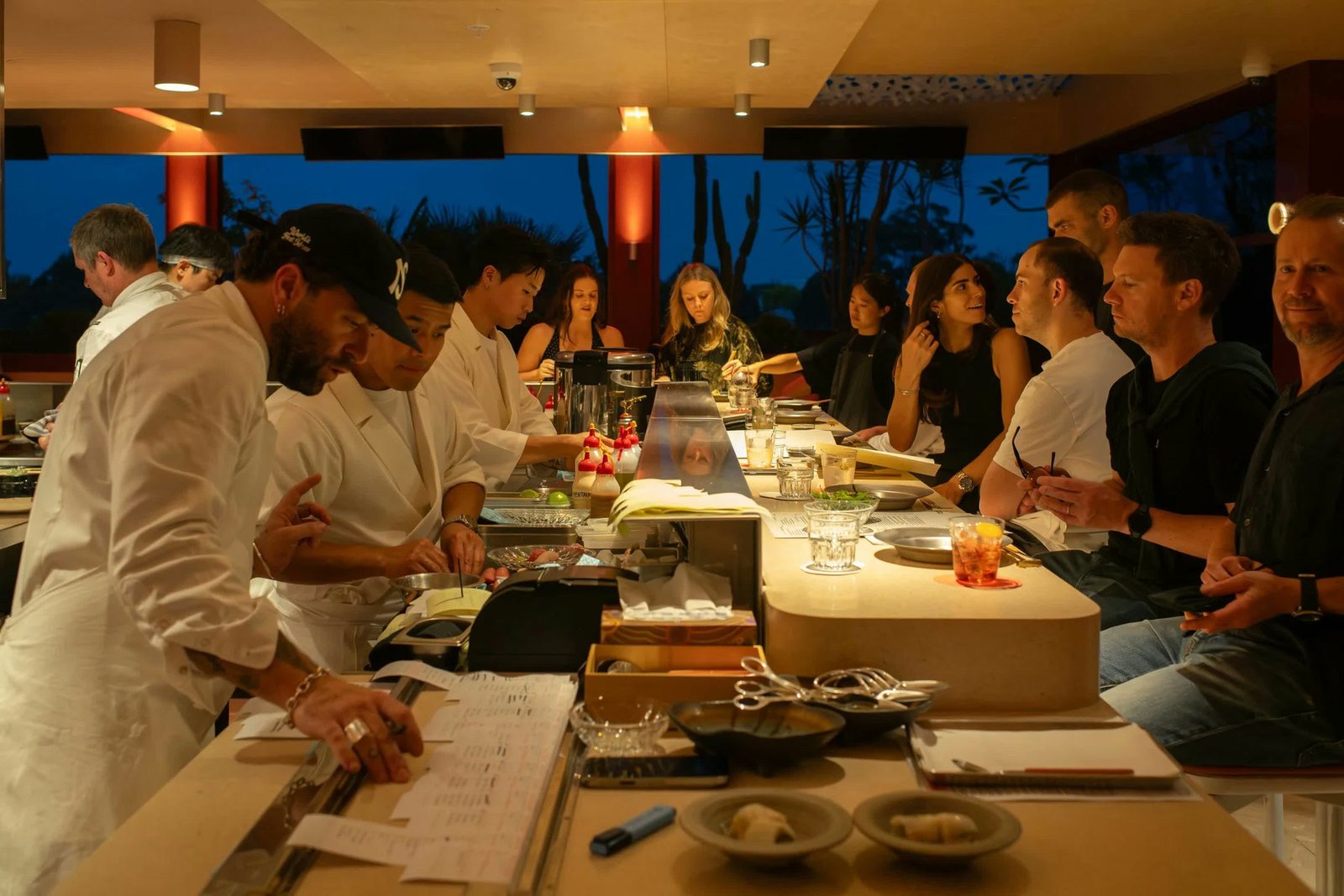
Tenjo rooftop izakaya, which translates to ceiling in Japanese, is perched on the rooftop of the Eve Hotel in Redfern, and it arrives with a defining architectural flourish: a retractable glass roof that collapses the boundary between inside and outside. It’s the kind of detail that matters in a city obsessed with rooftop real estate, but it also signals something more deliberate about the venue’s ambitions. This isn’t a rooftop bar playing casual vibes. This is a rooftop restaurant with a point of view.
The venue opened in November 2026, the latest addition to a hospitality portfolio that already includes Olympus, The Apollo, and Cho Cho San, the last of which has become a reliable fixture in Sydney’s Japanese dining landscape. That pedigree alone suggests Tenjo will operate with a certain level of discipline and kitchen knowledge that most rooftop openings lack. The team behind these three restaurants clearly understands how to build a concept and sustain it, which is a rare thing in a market where novelty often trumps execution.
What Makes a Rooftop Izakaya Work in Sydney
Izakayas are inherently casual spaces, designed for communal eating and drinking in Japan. They’re not fine dining establishments, though they can absolutely be refined. The challenge with opening one on a rooftop in an Australian city is managing expectations around formality and atmosphere. You’re asking diners to climb several stories to reach what should feel like a neighborhood bar. The retractable glass roof addresses part of that tension. When closed, it creates an intimate, climate-controlled environment. When open, it delivers on the promise that rooftop dining should offer something weather, light, and sky can’t provide at ground level.
Redfern is a neighborhood that has undergone significant gentrification in recent years, particularly around South Eveleigh Street and the emerging hospitality precinct there. The Eve Hotel sits within that context, and a rooftop izakaya targeting both locals and visitors makes commercial sense. The neighborhood already supports higher-end Japanese dining experiences, so the question isn’t whether there’s demand for Japanese food. It’s whether Tenjo can offer something distinct enough to justify the rooftop positioning and the operational complexity of a venue that relies on weather-dependent architecture.
The Hospitality Group Behind It
The team responsible for Cho Cho San, Olympus, and The Apollo has built a track record of consistency in Sydney’s Japanese restaurant scene. That matters because rooftop openings are inherently fragile operations. The novelty of location can carry a venue for the first few months, but the food and service have to sustain interest beyond the opening rush. The fact that this group has already proven it can build Japanese restaurants that operate at a certain level suggests they understand the fundamentals: ingredient sourcing, staff training, and menu development that works at scale without sacrificing quality.
The November 2026 opening places Tenjo squarely in a crowded year for Sydney restaurant debuts. According to Russh, 2026 saw significant new openings across multiple cuisines and neighborhoods, including Volta, a Greek ouzeri on Oxford Street; Vito’s, an Italian-American space with custom mosaics and silk-shaded lamps; and Spezia, an Italian restaurant helmed by three Michelin-starred chef Jae Bang. The competitive environment means Tenjo arrives in a market where diners have options, and where novelty alone won’t sustain interest once the opening moment passes.
The rooftop izakaya model suggests a shift in how Sydney’s hospitality industry thinks about Japanese dining. It’s no longer confined to streetfront locations or ground-level storefronts. By positioning an izakaya on a rooftop and engineering the ceiling to transform based on weather and time of day, Tenjo makes a statement about how casual Japanese dining can command premium real estate while maintaining the communal, unaffected spirit that defines the category.