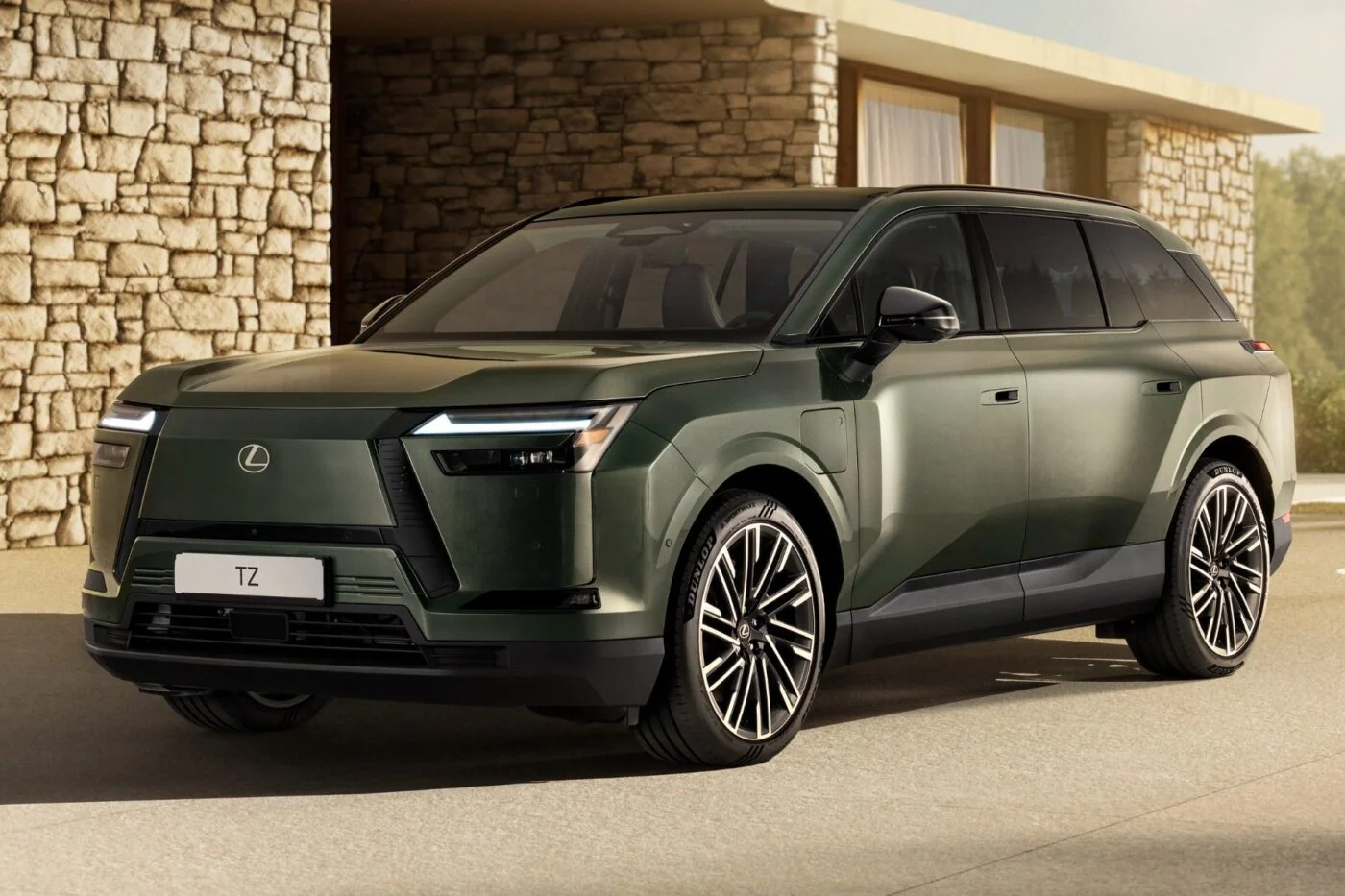
Lexus Tz All-Electric: Lexus officially enters the three-row electric SUV segment with the TZ at Auto Guangzhou 2026, signaling the brand’s serious pivot toward family-sized battery vehicles in China’s booming EV market.
On November 27, Lexus will roll out the TZ, its first all-electric three-row sport utility vehicle and a significant expansion of the luxury brand’s electrified portfolio in what is arguably the world’s most consequential EV marketplace. The Lexus TZ all-electric debut at Auto Guangzhou 2026 marks a move onto the floor of the China Import and Export Fair Complex, targeting a segment traditionally dominated by Chinese domestic brands and Tesla’s Model X.
Auto Guangzhou 2026, the 24th iteration of the show, will run from November 27 through December 6 and occupy 220,000 square meters of exhibition space. The scale underscores how central this event has become to the global automotive industry’s EV strategy. According to the event organizers, the show will feature 1,106 vehicles total, with 707 classified as new energy vehicles, meaning more than 60 percent of everything on display runs on batteries or hybrid powertrains. Among those entries are 115 world premieres, cementing Guangzhou as a launchpad for automotive innovation rather than a secondary venue.
The Lexus TZ All-Electric Platform Arrives for Luxury Family Haulers
The TZ’s arrival carries weight because three-row electric SUVs remain relatively scarce in the global luxury segment outside of China. Tesla’s Model X dominates the premium two-row EV space, while most traditional luxury automakers have only recently begun engineering comparable three-row platforms. Lexus, long known for conservative design and incremental innovation, is making a statement by introducing a vehicle that can seat seven passengers on battery power. The model’s debut in China rather than North America or Europe speaks volumes about where the market for such vehicles actually exists and where profit margins justify the R&D investment.
The Guangzhou show itself has evolved into something of a bellwether for the automotive industry’s immediate future. In addition to 115 world premieres, the exhibition will showcase emerging technologies that define the current moment: high-voltage fast charging systems, large artificial intelligence models for vehicle interfaces, smart cockpits with advanced driver assistance capabilities, urban Navigate on Autopilot functionality, and vehicle-to-everything connectivity infrastructure. These technologies will be demonstrated by both automakers and component suppliers like CATL and Huawei’s Qiankun ADAS division. The presence of such comprehensive technical infrastructure at a single venue illustrates how rapidly the automotive landscape has shifted toward electrification and autonomous driving capabilities in the span of just five years.
A Crowded Stage, But Lexus’ Moment Stands Out
Lexus shares the November 27 debut stage with numerous competitors. BMW’s new-generation i3 will officially launch and open for pre-orders at the same show, representing the automaker’s Neue Klasse platform strategy for the Chinese market. NIO plans to introduce a special edition of its ES8, while Leapmotor’s refreshed Lafa5 model will make its official debut, now featuring an 800-volt high-voltage platform alongside enhanced smart cockpit technology and comfort refinements. BYD will unveil its third-generation Han sedan, and the company’s ultra-luxury Yangwang brand will debut its Altior flagship executive sedan in China for the first time, having premiered the vehicle earlier in Abu Dhabi.
The roster of exhibitors reads like a comprehensive list of automotive power players. Mercedes-Benz, Volkswagen, Audi, Porsche, Volvo, Toyota, and Honda will all display their latest models and technologies. Among Chinese brands, BYD (exhibiting under its BYD, Denza, Yangwang, and Fangchengbao marques), Geely, Great Wall Motor, Chery, Changan, GAC, SAIC Motor, BAIC, and FAW will occupy significant floor space. EV-focused startups including NIO, XPeng, Xiaomi Auto, AITO, Li Auto, and Zeekr round out a lineup that essentially represents every major contender in the global automotive transition.
What Makes the TZ Different From the Noise
Yet the TZ’s positioning deserves closer scrutiny. Lexus, as a luxury division of Toyota, operates under different constraints than pure EV startups or aggressive Chinese battery carmakers. The brand’s reputation rests on reliability, refinement, and longevity rather than technological flash or aggressive pricing. By introducing a three-row all-electric SUV, Lexus is essentially telling the market that family vehicles and luxury credentials can coexist on a battery platform, without compromise. The TZ doesn’t need to be the fastest or cheapest; it needs to be the most dependable and the most satisfying to own over time.
The timing matters as well. Auto Guangzhou 2026 will host a series of industry summits and forums alongside the vehicle displays, suggesting that the conversation surrounding this event extends beyond product launches into the strategic and technical direction of the entire sector. The TZ arrives in an environment where Chinese domestic EV makers have already normalized three-row electric families, where charging infrastructure spans major cities, and where consumer acceptance of battery vehicles has moved beyond early adoption into mainstream territory. For Lexus, that acceptance means the market is finally ready for a vehicle that prioritizes the brand’s core values on an electric platform.
Lexus will present the TZ beginning November 27 at the China Import and Export Fair Complex, with the full exhibition running through December 6. The vehicle’s debut, while not commanding headlines in the same way as a revolutionary new startup or an aggressive price-cut announcement might, signals something arguably more important: the definitive point at which traditional luxury automakers have fully committed to building family-sized electric vehicles without hedging, compromise, or fallback positions. The three-row EV is no longer experimental. It’s now business as usual in the most competitive automotive market on Earth.
Sources: chinaevhome.com