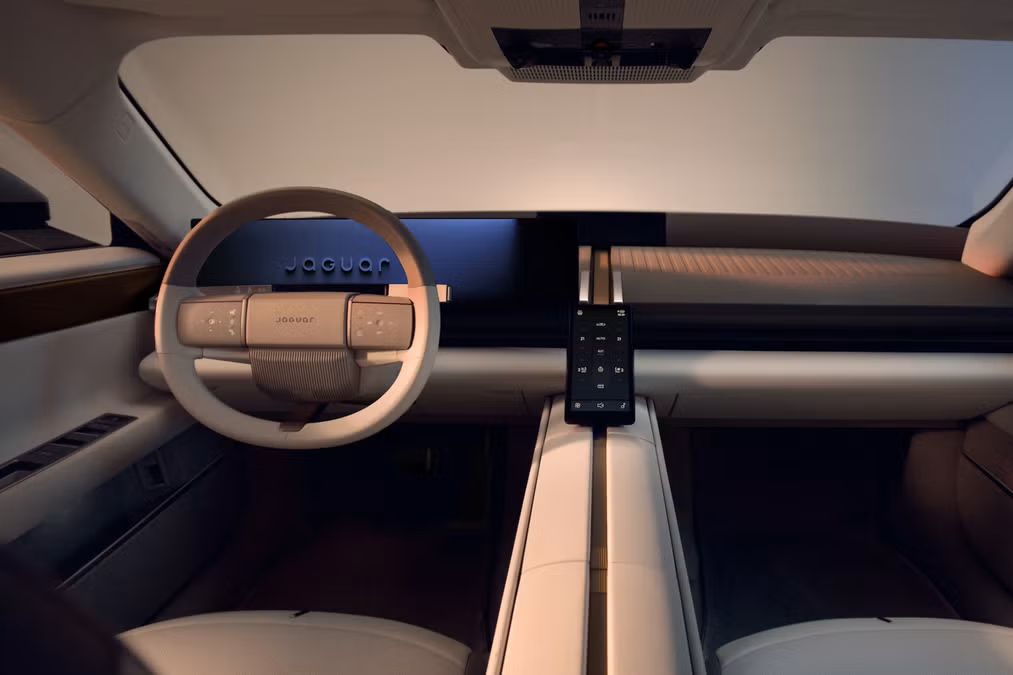
Jaguar Type 01 Interior: Travertine stone, a full-length brass spine, and zero rear visibility: Jaguar just made the most radical cabin statement from a mass-market automaker in decades.
Jaguar has done something genuinely strange with the Type 01’s interior, and that strangeness is precisely the point. This isn’t a luxury car cabin that whispers money through soft-touch materials and ambient lighting. This is a design statement that openly rejects everything the industry settled on as “premium” thirty years ago and never questioned again. The most arresting detail isn’t leather or wood veneer or the usual suspects of automotive refinement. It’s travertine stone integrated into the dashboard, a material that suggests a sculptural installation in a gallery rather than the cockpit of a vehicle most people will finance at 5.9 percent interest.
The decision to run a full-length brass spine down the center of the cabin, a structural and aesthetic spine that divides the space, reads as a deliberate rejection of ergonomic consensus. This isn’t about maximizing storage or passenger comfort. It’s architecture masquerading as automotive design. The brass oxidizes and develops patina over time, meaning your car’s interior literally ages in visible, tactile ways. That’s a commitment to imperfection and organic change that sits in direct opposition to the sealed, climate-controlled, paint-protected sterility of modern luxury cabins. You’re not just buying a finished product; you’re buying into a process.
It’s impractical in the way meaningful design often is. Jaguar could have maximized rear comfort, legroom, and classic luxury appointments, instead, the Jaguar Type 01 interior chose provocation and honesty. The travertine, the patina, the missing rear window: these aren’t oversights or cost-cutting measures. They’re a manifesto written in materials and negative space, insisting that cars deserve better than what the industry quietly agreed to three decades ago and never reconsidered.