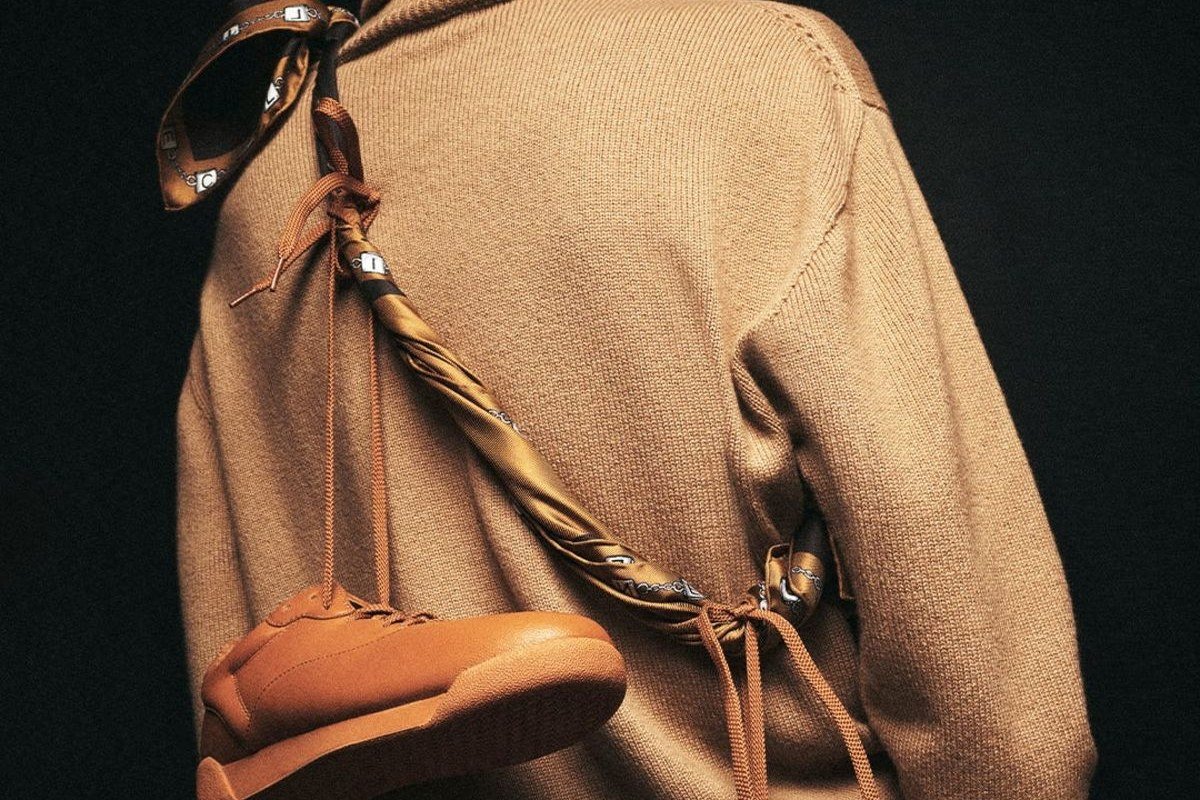
There’s a particular swagger that arrives when a heritage luxury brand decides to get serious about sneakers, and it’s not the calculated cool of a celebrity collab or the safe nostalgia of a logo swap. Celine’s new take on the Reebok Freestyle Lo exists in that rarer space where two distinct DNA strands don’t fight each other but instead create something that feels inevitable in hindsight. The shoe itself carries the unmistakable silhouette of the 1982 original, that compact leather court profile with the minimal ankle collar and clean lacing that defined an era before sneaker design became maximalist theater. But Celine’s hand is visible in the refinement, the material choices, the proportional restraint that suggests this isn’t a museum piece dressed up for the mall.
The collaboration lands at a moment when luxury fashion has largely moved past the irony phase of sportswear appropriation. High-end labels aren’t reaching for ’80s and ’90s references to wink at hypebeasts or signal casual credibility anymore. Instead, there’s an actual technical and aesthetic dialogue happening. Celine brings a perspective shaped by decades of studying how materials age, how proportion creates presence, and how a shoe can signal confidence through understatement rather than volume. Applied to the Freestyle Lo’s already economical form, that philosophy produces something that reads clean rather than retro, refined without becoming precious. The leather work, the finishing details, the way the profile sits on the foot, all of it suggests a piece designed to live in actual rotation, not to mark a specific moment on your shelf.
What makes this different from the standard luxury brand sneaker grab is the shoe’s own history. The Freestyle wasn’t a technical basketball innovation or a cultural artifact waiting for ironic resurrection. It was a genuinely functional court shoe that succeeded on its own terms, and the Celine Reebok Freestyle Lo honors that lineage by refusing to overcomplicate it. The result is a collaboration that doesn’t need a moment to justify itself, because it’s already designed for a lifetime.