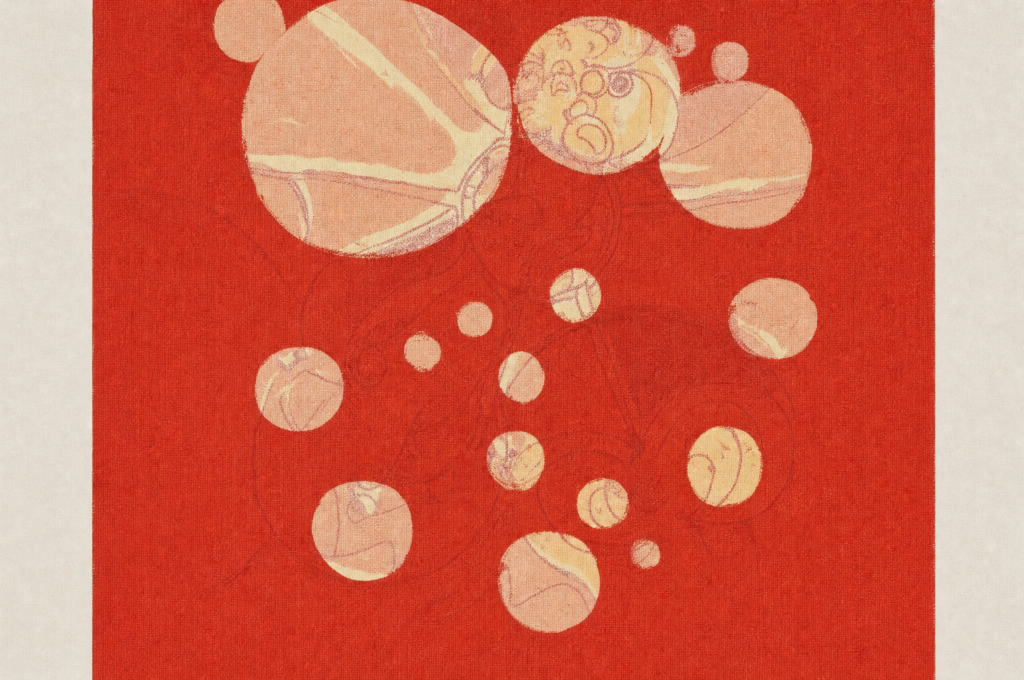
Layered, fragmented works turn personal and political history into something physically navigable.
A Practice Built on Tension and Transformation
Arghavan Khosravi returns to Uffner & Liu with What Remains, a deeply considered exhibition exploring identity, displacement, and the complexities of diasporic experience.
Marking her third solo presentation with the gallery, the show reflects a clear evolution in her practice — one that moves beyond painting into something more sculptural, architectural, and psychologically layered.
Canvases That Refuse to Stay Flat
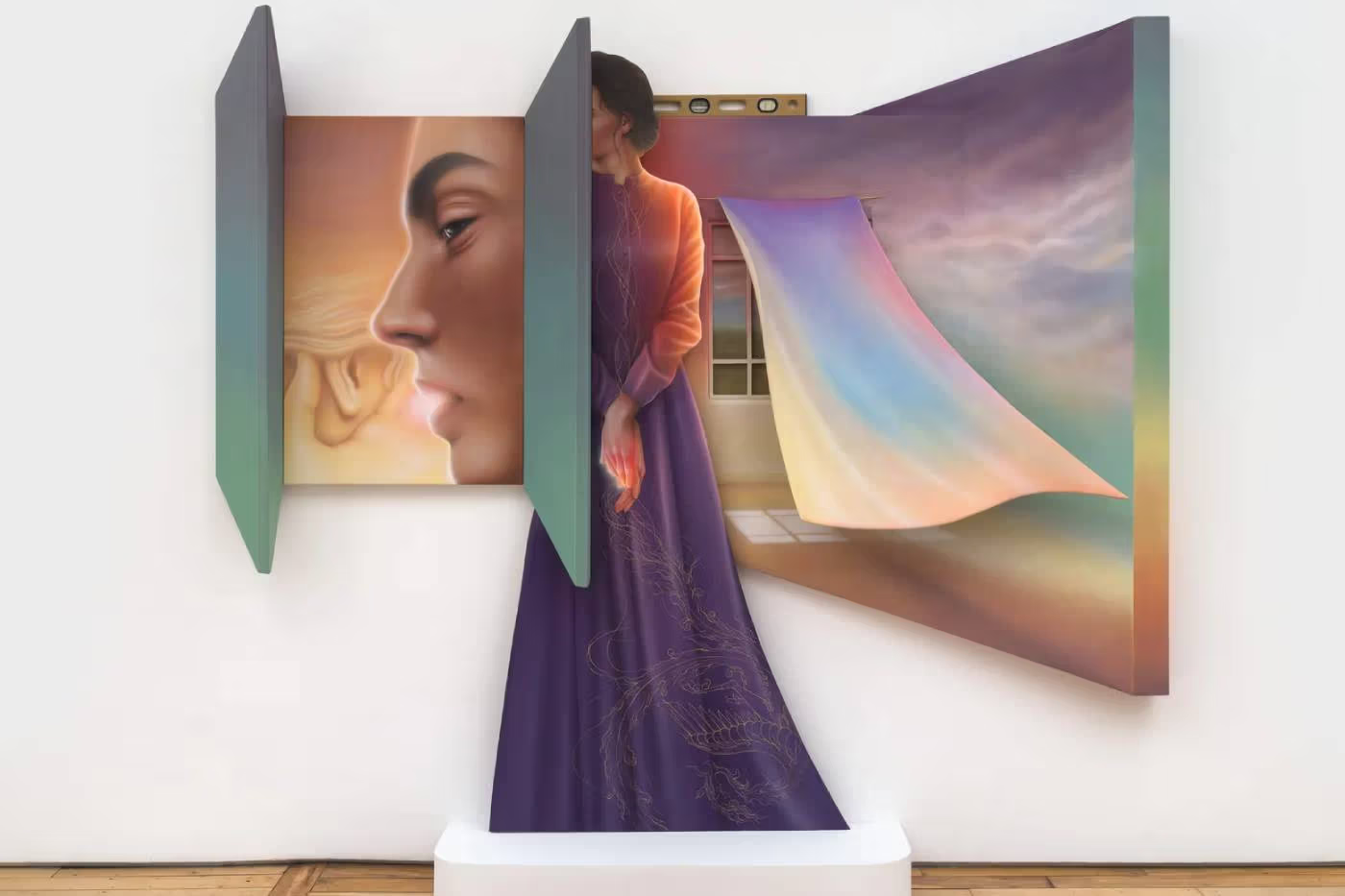
At the core of the exhibition are multi-paneled works that blur the line between painting and object.
Hinged surfaces, segmented compositions, and suspended elements create pieces that feel in motion, as if they could shift or reconfigure at any moment. These structures challenge the idea of a single, fixed perspective, instead offering fragmented viewpoints that mirror the instability of memory and identity.
Reworking Tradition Through the Altar Series
A standout within the show is Khosravi’s new Altar Series.
Drawing from the format of medieval European altarpieces, the works adopt their intimate scale and physical construction — including shutters and compartmentalized panels. But instead of reinforcing religious narratives, Khosravi disrupts them.
Through interruptions like cords, divisions, and obstructed imagery, the pieces resist resolution, replacing certainty with tension and open-ended meaning.
Materials That Carry Meaning
Khosravi’s work is as much about material as it is about image.
In pieces like “Suspended,” she combines acrylic, wood, leather cord, and plexiglass to build layered portraits that feel both delicate and constrained. Larger works such as “The Whisper” and “Bearing” extend this approach, using scale and structure to amplify themes of instability and pressure — including imagery of figures physically supporting fragile architectural forms.
A Visual Language of Diaspora
Across the exhibition, references to Persian miniature painting merge with surrealist and contemporary visual strategies. This fusion creates a distinct language that reflects diasporic identity itself — something hybrid, constantly shifting, and resistant to simplification.
On View Now in New York
What Remains is on view in New York through July 2, 2026. Rather than offering clear answers, Khosravi’s work invites viewers into a space of ambiguity — where history, identity, and memory are not fixed, but continuously reconstructed.