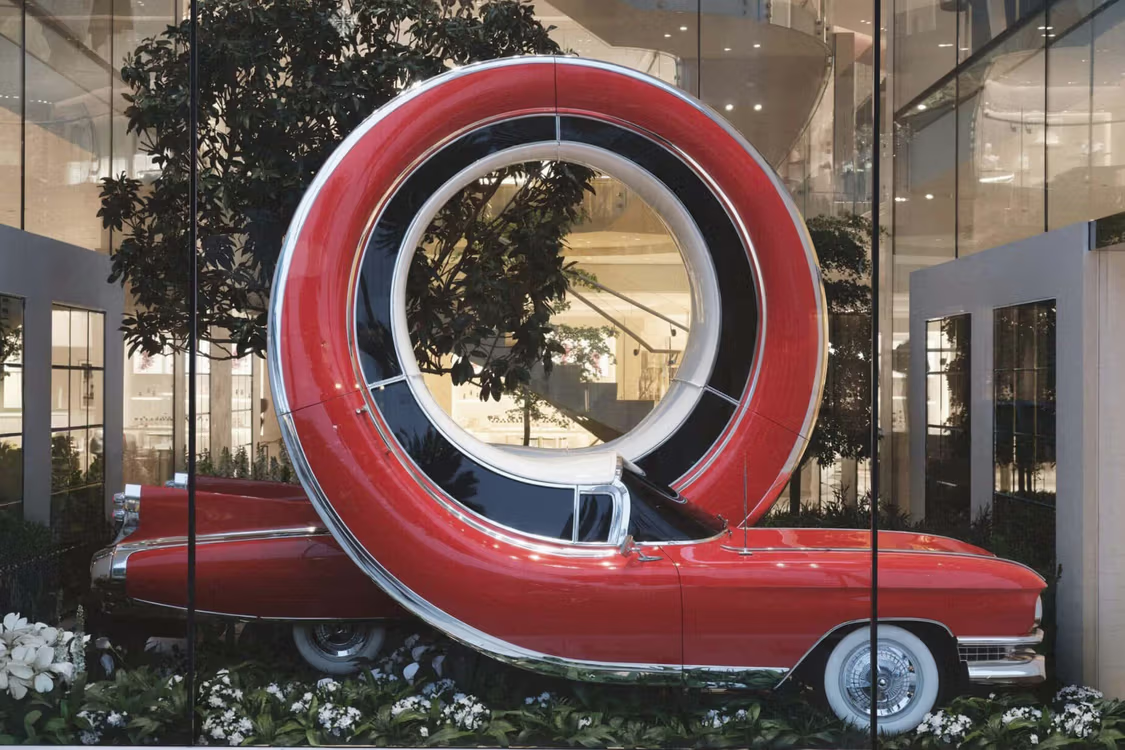
A playful collision of city infrastructure and luxury retail turns Dior flagships into sculptural street dreams.
A Dual-City Takeover of Dior Flagships
Alex Chinneck brings his surreal architectural language to Dior, transforming the brand’s U.S. flagships into immersive sculptural environments.
Installed across House of Dior New York and House of Dior Beverly Hills, the works reinterpret everyday urban infrastructure through distorted, playful forms.
City Streets Reimagined as Sculptural Language
In New York, Chinneck’s installations twist familiar city elements into surreal compositions.
Traffic lights bloom like metallic flowers, streetlamps bend into ribbon-like curves, and even a yellow taxi appears softened and melted against the façade — turning the storefront into a shifting urban tableau.
Each piece reworks recognizable street symbols into objects that feel unstable, fluid, and unexpectedly delicate.
A West Coast Translation of Car Culture
In Beverly Hills, the tone shifts toward Los Angeles’ relationship with glamour and mobility.
Car forms become sculptural loops, while mannequins and street fixtures are reimagined as cinematic fragments of the boulevard environment. The result reflects a city where transportation, performance, and image-making are tightly intertwined.
Celebrating Architecture, Fashion, and Play
The installations coincide with the anniversary of the Peter Marino-designed Dior flagships, reinforcing the idea of retail spaces as cultural stages rather than static stores.
By bending the logic of urban infrastructure, Chinneck reframes both cities as living sculptures — where fashion, architecture, and everyday life overlap in unexpected ways.
A Temporary Visual Disruption
On view now, the works act as temporary interruptions in otherwise familiar environments.
Rather than simply decorating storefronts, they transform them into surreal extensions of the city itself, blurring the boundary between public space and luxury display.