Yannick AlléNo Omakase Dubai: The three-Michelin-starred French chef plants his most surprising flag yet in the Gulf with a 14-sequence sushi experience led by master Ken Ishihata.
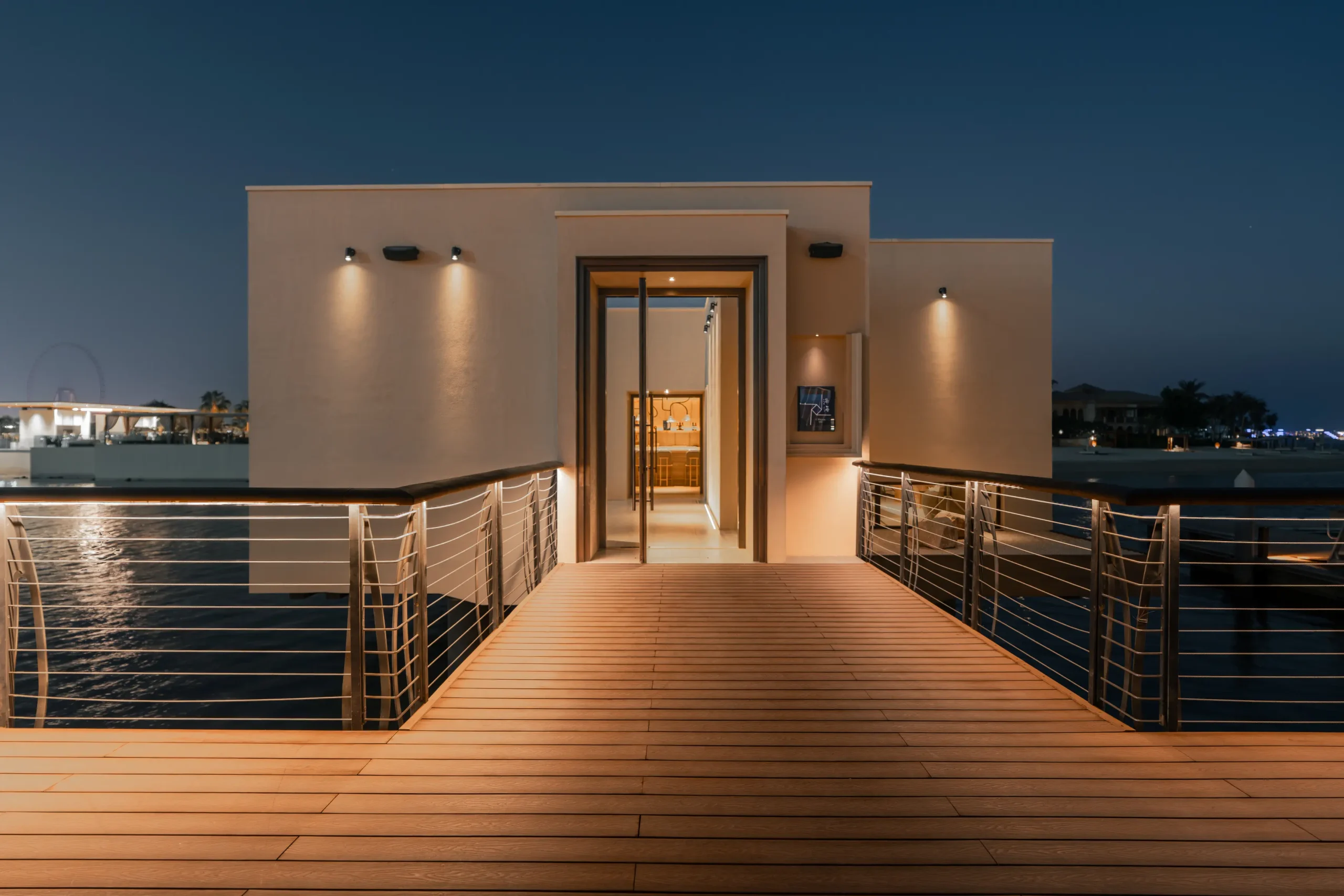
Yannick Alléno’s omakase concept has just opened at One&Only The Palm in Dubai. The three-Michelin-starred French chef, whose restaurant empire spans Paris, Monaco, and Osaka, is making an unconventional move with this Japanese fine dining debut. The opening marks a departure from Alléno’s traditional French fine dining legacy and signals the Gulf’s emergence as a destination serious enough to attract top-tier international culinary talent.
The omakase experience, led by sushi master Ken Ishihata, unfolds across 14 sequences divided into five movements. The restaurant’s philosophy centers on three pillars: aged fish, precisely calibrated rice, and knife technique executed with surgical precision. For a chef whose name has long been synonymous with classical French technique and haute cuisine, the decision to hand creative control of an entire concept to Japanese culinary principles represents a calculated bet on omakase’s growing cultural cachet among luxury diners worldwide.
This is not Alléno’s first venture into Japanese cuisine. He has already established omakase concepts in Paris, Monaco, and Osaka, each tailored to its local market while maintaining the core DNA of the chef’s vision. The Dubai outpost joins that growing network, arriving at a moment when the emirate’s fine dining scene is undergoing rapid transformation. The Palm development has become an anchor for high-end hospitality, and One&Only’s positioning as a ultra-luxury resort makes it the logical home for a chef of Alléno’s stature.
Yannick Alléno’s Omakase Expands Across Dubai
Alongside the omakase restaurant, Alléno has launched a second concept at the same resort called Casea 101, which takes an intentionally lighter approach. Positioned along the resort’s waterfront with an overwater terrace and an indoor-outdoor bar overlooking the marina, Casea 101 draws inspiration from the Italian Riviera. The menu prioritizes seafood towers, crudi (raw fish preparations), seasonal fish cooked over open flame, and fresh pizzas from an open kitchen. Operating daily from 12:30pm, the venue is designed to capture the full rhythm of resort dining: leisurely lunches, sunset cocktails, and dinner accompanied by resident music programming.
The dual opening reflects a common strategy among luxury chefs seeking to maximize their footprint in high-value markets. By offering both an ultra-premium omakase experience and a more accessible, socially oriented seafood restaurant, Alléno covers multiple dayparts and price points. The contrast also allows the chef to demonstrate range: precision and restraint in one room, abundance and conviviality in another.
The Broader Dubai Dining Moment
Alléno’s arrival comes amid a broader rush of international culinary names descending on the UAE. According to The National, the dining scene across Dubai, Abu Dhabi, and Ras Al Khaimah is expanding rapidly. Saadiyat Grove in Abu Dhabi is positioning itself as a major culinary hub, attracting globally recognized chefs including David Chang’s Momofuku and Alain Ducasse. Paris Society, the Parisian nightlife brand, is extending its footprint across the region with concepts like Anzu, a Mediterranean beach club opening at Al Hamra Boardwalk in Ras Al Khaimah. Raspoutine, another Parisian nightlife import, has introduced a Mediterranean-French concept at voco Dubai with a menu featuring sea bream crudo with chilli oil and citrus, king crab salad, capellini with lemon butter and caviar, and turbot with caviar sauce. The early-evening aperitivo menu starts at Dh42 (approximately $11.40), with a three-course dining experience priced at Dh300 per person. Raspoutine operates Tuesday through Saturday from 5pm.
Traditional regional dining is also claiming territory. Naranj Cafe, a Syrian-Levantine restaurant already established in Syria, Lebanon, Kuwait, and Saudi Arabia, has opened a 170-seat Dubai venue. The menu showcases traditional Syrian cooking including kebbeh labanieh (kibbeh simmered in yoghurt sauce), lamb shank with bulgur, and charcoal-grilled kebabs. The space includes a live kitchen, dedicated family dining area, outdoor terrace with shisha service, and desserts ranging from baklava cheesecake to Syrian ice cream with spun sugar. Naranj Cafe operates daily from 12:30pm to 3am.
Traditional regional dining is also claiming territory. Naranj Cafe, a Syrian-Levantine restaurant already established in Syria, Lebanon, Kuwait, and Saudi Arabia, has opened a 170-seat Dubai venue. The menu showcases traditional Syrian cooking including kebbeh labanieh and lamb shank with bulgur, joining Yannick Alléno’s omakase and other international arrivals reshaping the emirate’s culinary landscape into one of the world’s most dynamic fine dining destinations.
Sources: thenationalnews.com