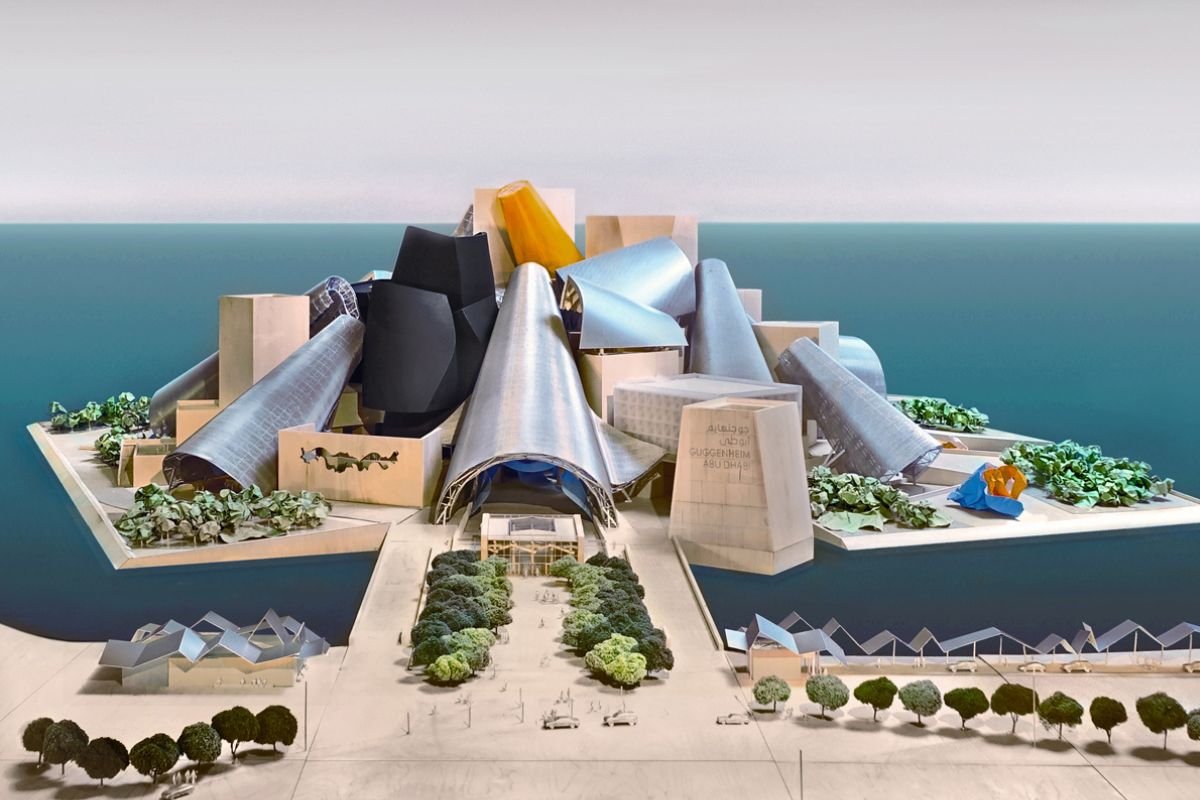
After two decades of false starts and delays, Frank Gehry’s masterpiece opens December 11.
December 11 is no longer theoretical. After nearly twenty years of delays, budget revisions, and construction setbacks that became industry shorthand for architectural hubris, the Guggenheim Abu Dhabi has locked in an opening date. Frank Gehry’s spiraling titanium structure, designed to anchor the Saadiyat Island cultural district, will actually open to the public in a matter of weeks.
The project had become a kind of punchline in design circles. Announced in 2006, the museum was supposed to open in 2013, then 2017, then 2021. Each delay felt less like a scheduling hiccup and more like a referendum on whether the thing would ever materialize at all. The cost ballooned. The timeline stretched. Meanwhile, comparable institutions opened and closed, museums reinvented themselves, and the contemporary art world moved on without it. To architecture nerds, it was a monument to the gap between ambition and execution.
What arrives in December is, by any measure, significant. Gehry’s design mirrors and responds to the desert and coastline around it, a 421,000-square-foot complex that treats the building itself as part of the collection. The Guggenheim’s global footprint has calcified somewhat; a major new museum from one of the world’s most ambitious architects is genuinely rare now. That it’s happening in Abu Dhabi, not New York or London or Los Angeles, is itself a statement about where capital and cultural confidence have shifted.
Whether the building lives up to the mythology it has acquired through its extended gestation is another question entirely. Two decades of wait means the expectations have warped into something almost impossible to meet. But at least, finally, people will be able to see it in person instead of arguing about renderings online.