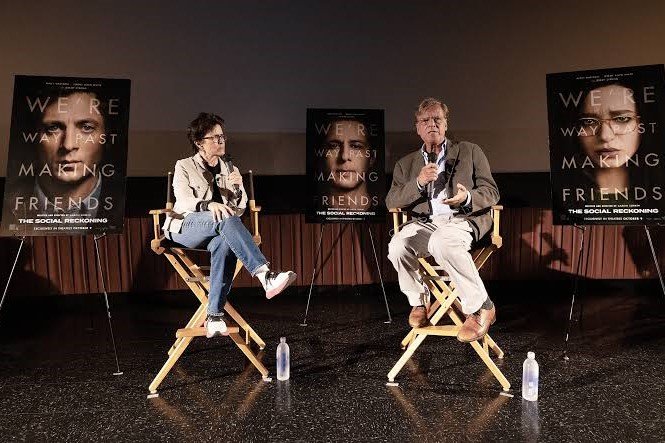
The Social Reckoning: The screenwriter behind The Social Network assembles an all-star cast to dissect tech power and ambition in his new film arriving October 9.
Aaron Sorkin is circling back to the digital age with ‘The Social Reckoning,’ a new ensemble drama that lands October 9. The writer who already mapped the moral chaos of Facebook’s founding is directing his sights on the broader machinery of tech influence with three of the industry’s most compelling actors in tow. Mikey Madison, Jeremy Allen White, and Jeremy Strong anchor what’s being positioned as Sorkin’s most ambitious exploration yet of power, ambition, and the cost of innovation in the modern era.
What distinguishes this project from Sorkin’s previous tech examination is its architectural scope. Rather than zeroing in on a single founding moment or company origin story, the film apparently constructs a more networked narrative, examining how power flows through Silicon Valley’s hierarchy and how individual ambition collides with systemic consequence. Sorkin’s signature style, those overlapping dialogues, the relentless intellectual sparring, the way characters think out loud at conversation speed, feels engineered for this material. The ensemble approach suggests less of a protagonist-driven drama and more a structural examination, the kind of interlocking narrative that allows multiple angles on the same moral problem. Madison, Allen White, and Strong are all actors who excel at playing characters caught between competing loyalties and personal conviction.
The timing matters too. We’re well past the era when tech founder worship felt inevitable, when Silicon Valley’s mythology could sustain itself on disruption rhetoric alone. A Sorkin film arriving now, populated with actors known for their capacity to excavate contradiction and moral ambiguity, signals that the conversation has shifted. Whether ‘The Social Reckoning’ functions as satire, tragedy, or cautionary anatomy remains to be seen, but the combination of writer, director, and cast suggests this won’t be a simple morality play. It’s positioned instead as something closer to a reckoning in the truest sense, a moment of honest accounting with no easy answers waiting in the margins.