Roy Lichtenstein Like New: A sprawling retrospective spanning five decades shows how Lichtenstein turned comic strips and advertising into the defining visual language of American pop.
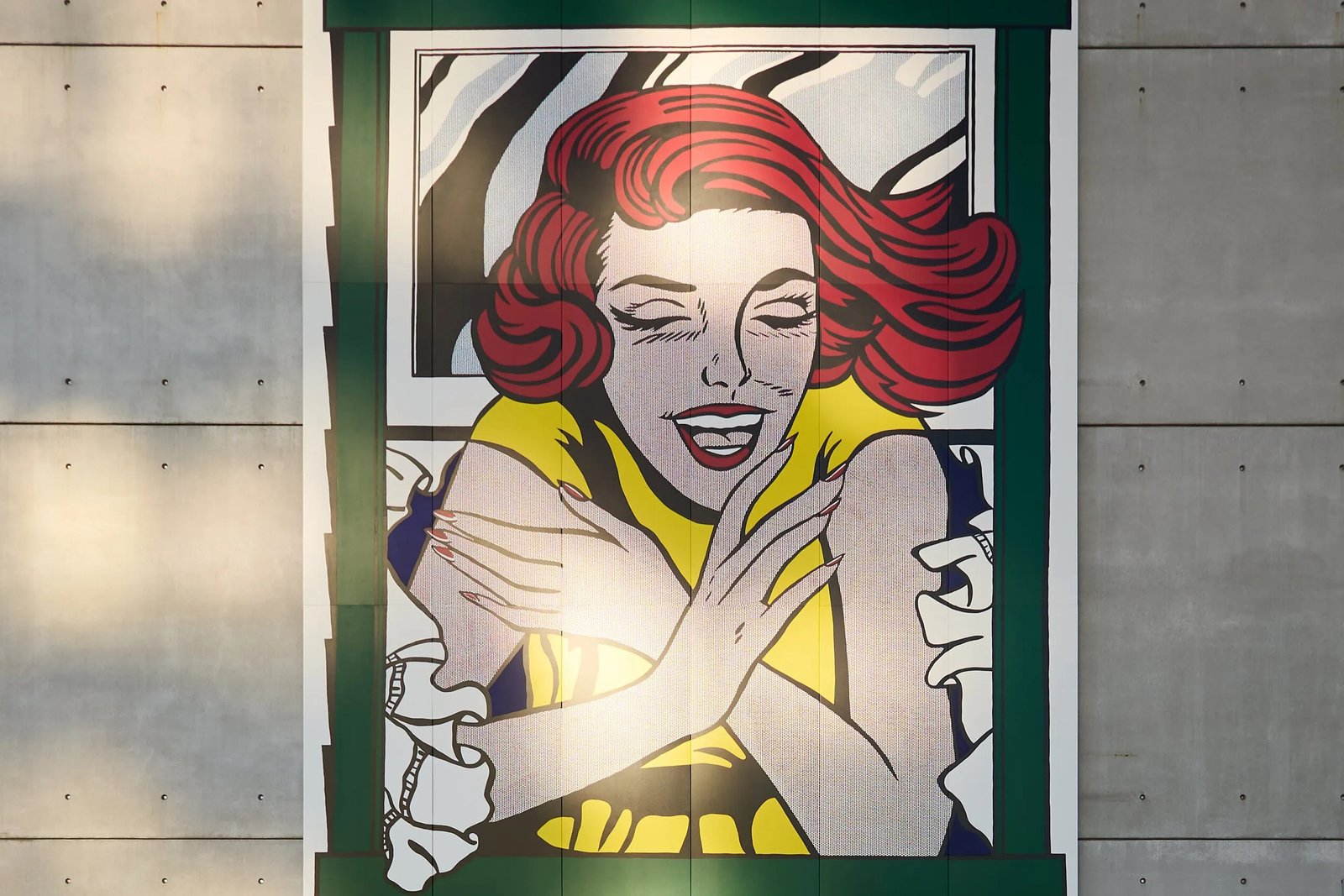
When Roy Lichtenstein began painting blown-up panels from Batman comics and Coca-Cola ads in the early 1960s, the art establishment almost universally rejected him. Critics called his work commercial, cheap, a bastardization of high culture. The artist doubled down anyway, methodically enlarging Ben Day dots, isolating speech bubbles, flattening perspective until the line between fine art and mass reproduction dissolved entirely. On October 11, the Whitney Museum opens “Roy Lichtenstein: Like New,” a 130-work retrospective that traces this unlikely ascent from outsider to pop royalty across fifty years of practice, from his early modernist abstractions in the 1940s through the formal experiments of his final decade.
The exhibition spans the full arc of Lichtenstein’s output, beginning before he became synonymous with primary colors and mechanical precision. Early paintings reveal a different artist entirely, gestural, expressionist, wrestling with abstraction in ways indistinguishable from his contemporaries. The real pivot arrives with works like “Whaam!” and “Drowning Girl,” where Lichtenstein lifted imagery directly from pulp sources and magnified them to monumental scale, complete with mechanical halftone patterns that mimicked industrial printing. These weren’t ironic critiques of consumer culture so much as genuine celebrations of its visual vernacular. By removing the original context, the narrative, the product, the brand, and isolating pure graphic design, Lichtenstein elevated commercial art into something genuinely new. What felt like appropriation was actually a profound act of translation, converting the visual language everyone saw daily into gallery-sanctioned high art.
The Whitney’s retrospective doesn’t stop there. Lichtenstein spent his later career exploring how Roy Lichtenstein: Like New demonstrates the enduring power of appropriation as artistic method, proving that the most radical gestures often masquerade as the most accessible ones.