The Gilded Age Season 4: Julian Fellowes’ lavishly costumed drama returns November 1 to untangle a season of cliffhangers involving marriage, betrayal, and the arrival of John D. Rockefeller himself.
The Gilded Age Season 4 is back on HBO Max starting November 1, and the period drama is arriving with a pile of unresolved tension that makes the Season 3 finale look like a prelude to actual chaos. For anyone who’s been holding their breath waiting to find out whether Bertha and George Russell stay married, whether Larry and Marian finally make their storybook union official, or how Oscar van Rhijn’s lavender marriage with Enid Winterton reshapes the social landscape, Season 4 is ready to detonate all of it.
The Gilded Age Season 4: Marriage, Money, and Social Collapse in the Gilded World
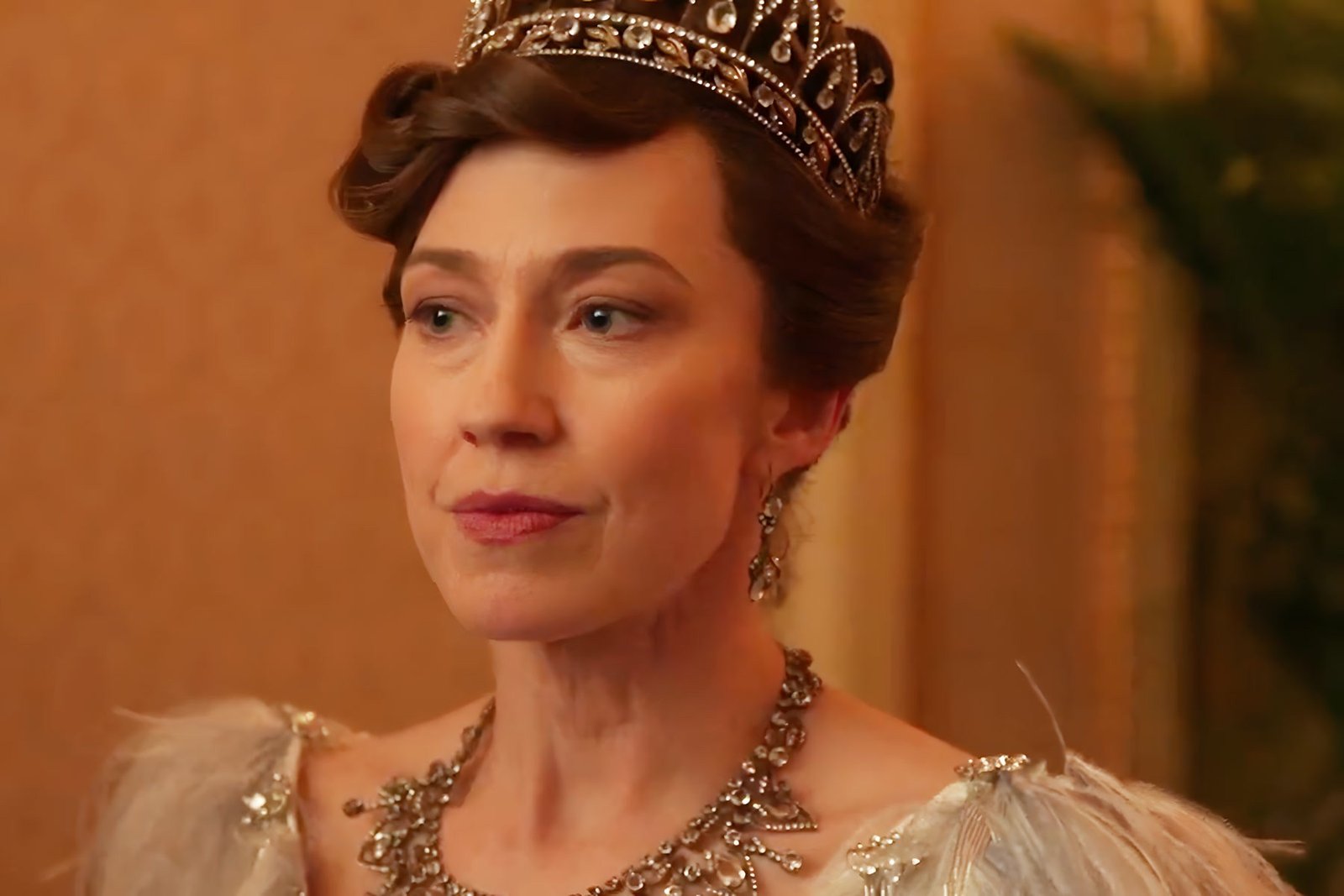
The Russell household sits at the center of everything that makes this drama work. Carrie Coon’s Bertha and Morgan Spector’s George have already weathered enough conflict to sink most marriages, but Season 4 opens with their relationship hanging by a thread. The question isn’t whether they’re unhappy; it’s whether the marriage survives. Simultaneously, Louisa Jacobson’s Marian Brook and Harry Richardson’s Larry Russell have been circling each other with the kind of romantic tension that’s kept fans invested since the show’s beginning. Season 4 promises to either deliver on that chemistry or deliberately destroy it, and either outcome has the potential to upend the entire social structure these characters inhabit.
Then there’s the arrival of John D. Rockefeller, played by Neal Huff, which signals something bigger than typical interpersonal drama. Rockefeller’s presence in George Russell’s world isn’t just another layer of competition; it’s the collision between old money ambitions and something genuinely powerful enough to dwarf them. George has built his fortune through cunning and calculation, but Rockefeller is Rockefeller. That power imbalance creates the kind of pressure that cracks foundations.
Christine Baranski’s Agnes van Rhijn, meanwhile, has spent three seasons as the social arbiter of this world. Season 4 forces her to reckon with the possibility that her status might not survive the season intact. For a character whose entire identity is built on social supremacy, that’s not just a storyline; it’s an existential crisis unfolding in front of a room full of society matrons.
Fashion as the Real Language of Power
What keeps The Gilded Age from feeling like prestige television homework is the fact that every social maneuver, every alliance shift, and every power play gets translated into costume. This show has earned its reputation as television’s best-dressed drama through consistent, meticulous work in the wardrobe department. The clothes don’t just sit on characters; they argue, negotiate, and declare intent. A wrong color in the wrong season becomes a social statement. A hemline carries political weight. The fabrics alone communicate whether a character is ascending or in freefall.
Season 4 arrives during a moment when the fashion on the show matters more than ever. These characters are facing the possibility of genuine social collapse, and that’s the kind of pressure that sends everyone shopping. The clothes will tell the story of who’s fighting to maintain their position and who’s already accepted defeat.
Blake Ritson’s Oscar van Rhijn and Kelley Curran’s Enid Winterton represent something newer in the Gilded Age world: a marriage of convenience that’s openly acknowledged and structurally sound. Their lavender marriage isn’t a secret; it’s a solution. How that arrangement influences the social machinery around them, and whether it becomes a template for how others navigate their own impossible situations, creates another layer of narrative tension that works because it’s grounded in period-accurate social reality while feeling utterly contemporary.
HBO’s Quiet Return to Form
According to TV Guide, The Gilded Age Season 4 represents a significant return for HBO after what the outlet describes as relative quiet following the Skydance acquisition of Warner Bros. Discovery in early October. The show arrives as November’s big new debut, arriving alongside returning seasons of other HBO properties and streaming premieres like the Anthony Bourdain biopic Tony and the Brazilian drama series City of God: The Fight Rages On. For HBO Max’s calendar, The Gilded Age is the tentpole that matters, the show that justifies another subscription month for viewers who’ve already invested three seasons into these characters and their world.
What makes Season 4 worth the wait isn’t simply that there are loose threads to resolve. It’s that the show understands how to use those threads to construct an entirely new social order. By the end of the season, Gilded Age New York will look different. Who survives with their power intact, who gets relegated to the margins, and who discovers that the rules they’ve lived by were always more fragile than they believed will determine everything that comes next. That’s the game the show is playing, and November 1 is when the actual stakes arrive.