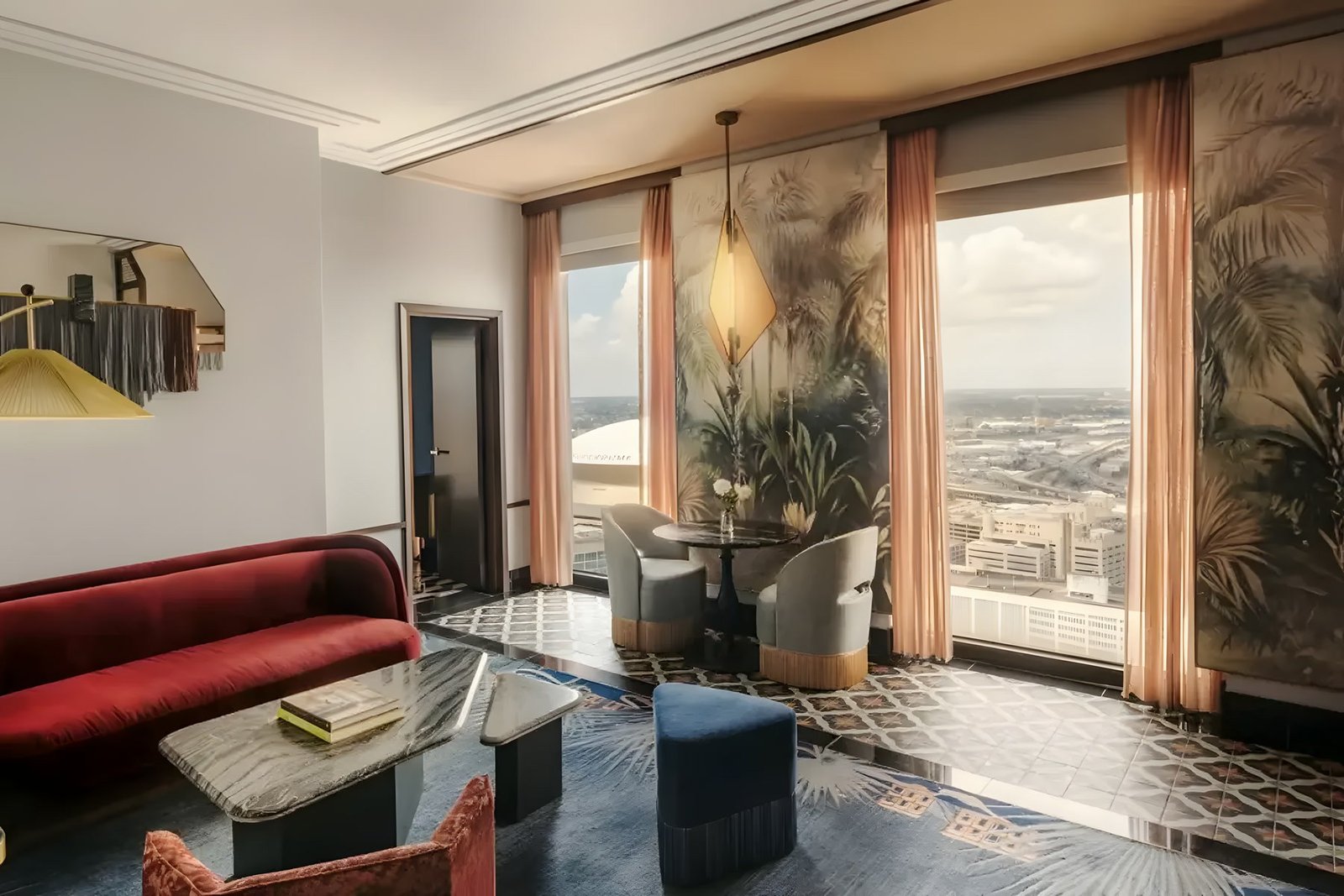
Fairmont New Orleans: The Rockwell Group transforms a Creole skyscraper into the city’s most anticipated luxury hotel, complete with Emeril Lagasse restaurants and a grand ballroom built for galas.
New Orleans finally has a big hotel that matches its design ambitions. The Fairmont New Orleans, which opened this November at 1010 Common Street in the historic Bank of New Orleans building, represents a significant shift in how the city approaches luxury hospitality. For years, the Big Easy has been home to an array of small, stylish boutique properties, but large-scale hotels capable of delivering both architectural sophistication and culinary weight have remained elusive. That gap is now closed.
The Rockwell Group, the same firm responsible for the revamped W New York at Union Square, took charge of the transformation. The design strategy centers on a dialogue between New Orleans’ vital cultural identity and its natural landscape. That philosophy extends through the entire property, from public spaces down to the 250 guest rooms. The result reads less like a corporate tower retrofit and more like a building that understands the city it occupies.
Fairmont New Orleans Culinary Vision and Emeril Lagasse’s Command
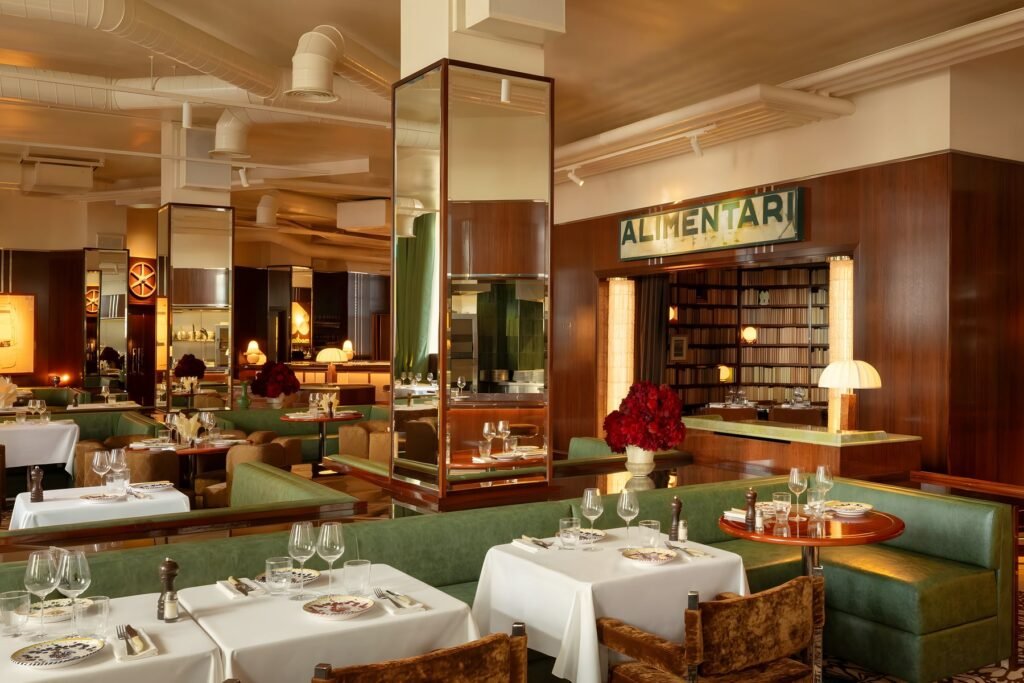
Executive oversight of the food and beverage program falls to chef Emeril Lagasse, whose name carries significant weight in New Orleans dining circles. Rather than create a single showcase restaurant, Lagasse has shaped multiple dining venues that collectively express the property’s connection to local culture. The most prominent is the 1970s-inspired Delmonico Steakhouse, a nod to the steakhouse tradition that runs deep in the city’s restaurant DNA. The retro aesthetic doesn’t read as nostalgic pastiche but instead as a deliberate design choice that anchors the dining experience in a specific moment in American luxury.
Beyond the main steakhouse, the restaurants and bars at Fairmont New Orleans operate under Lagasse’s culinary direction, meaning consistency and quality extend across all beverage and dining touchpoints. For a property of this scale, that kind of unified vision from a recognized chef elevates the entire operation beyond what typical hotel food service delivers.
The Grand Ballroom and Event Infrastructure
One of the most visually striking spaces in the hotel is the grand ballroom, which harnesses local materials and architectural details to create something genuinely distinctive. The ceiling features locally sourced cypress wood, a material choice that grounds the room in Louisiana’s natural heritage. Suspended from above are vintage Italianite chandeliers, which create a sense of European elegance without erasing the room’s regional character.
The scale and design of the ballroom position it as a venue for the kind of events New Orleans social calendars demand: lavish galas, society balls, and major celebrations. For a city with deep traditions of formal entertaining, this space represents serious infrastructure. The combination of cypress wood overhead and vintage Italian fixtures creates a sophisticated backdrop that works equally well for black-tie functions and major conferences.
Architecture and Location
Occupying a 31-story historic building in the Central Business District, the Fairmont New Orleans sits at a significant address in the city’s urban geography. The Bank of New Orleans structure carries architectural weight and commercial prestige, qualities that translated into the hotel’s positioning. That the Rockwell Group chose to honor the building’s existing architectural language rather than impose a completely new design philosophy explains why the property reads as both contemporary and rooted in place.
The location at Common Street places the hotel within walking distance of the French Quarter, the warehouse district, and the central business corridor, making it functionally central to how visitors and business travelers actually navigate New Orleans. That proximity matters more than marketing often acknowledges; a hotel’s usefulness to its guests is often a bigger factor in its success than any single amenity.
The opening of Fairmont New Orleans in November marks a meaningful moment for the city’s luxury hotel market. It signals that New Orleans can now compete for guests who expect both cultural authenticity and design sophistication from a major property. The combination of Rockwell Group architecture, Emeril Lagasse’s culinary involvement, and the historic building’s inherent character creates something that doesn’t try to be Las Vegas or Miami. Instead, it works as an expression of what luxury means in a specific place with a specific history.