The British provocateur trades standup for cartoon cats, proving his brand of comedy doesn’t need a mic.
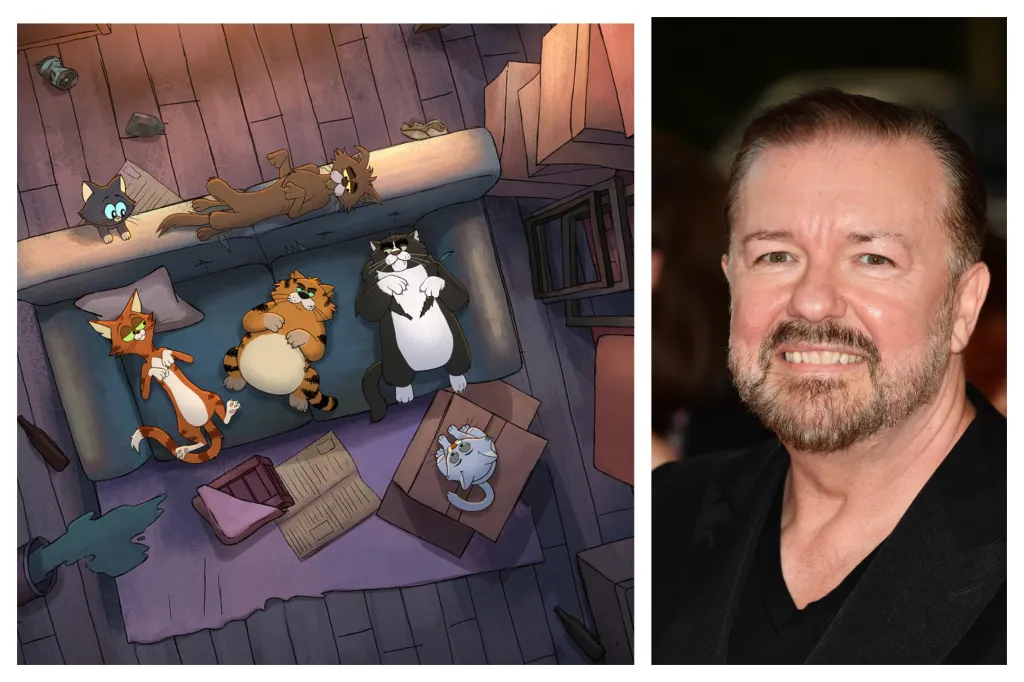
Ricky Gervais is bringing his particular brand of controlled chaos to animation. The British comedian’s new series “Alley Cats” arrives on Netflix August 7, marking his first major foray into the animated space. It’s a move that feels both inevitable and slightly unhinged, which is precisely on brand.
For decades, Gervais has built his reputation on material that’s deliberately abrasive, often controversial, and unapologetically crude. Standup stages and talk show appearances have been his weapon of choice, where the physicality of his delivery and the immediate crowd reaction are part of the act. Animation removes that live element entirely, replacing audience feedback with comedic timing against cartoon backgrounds and character reactions. The medium strips away his biggest asset, his real-time ability to read a room and adjust, yet simultaneously frees him from venue restrictions and the constant threat of getting booed off stage.
The question isn’t whether Gervais can make animation work; it’s whether audiences actually want his particular flavor of humor divorced from the human element. Animated comedy has proven it can handle edge and darkness (see “Big Mouth,” “F is for Family”), but there’s a difference between writers crafting provocative material and one person’s extended point of view carried across an entire series. “Alley Cats” will likely appeal to his existing fanbase while potentially alienating anyone who already finds him tiresome. For Netflix, it’s a calculated bet on proven controversy as a streaming draw.