Rem Koolhaas Global Antiquity: One of contemporary art’s most ambitious cross-civilizational surveys opens in Milan with architecture’s defining visionary orchestrating 150 artifacts across continents and centuries.
Rem Koolhaas doesn’t curate. He stages. When Fondazione Prada opens the Rem Koolhaas exhibition “Global Antiquity” on November 5 in Milan, the Rotterdam architect will have orchestrated something rarer than a traditional show: a spatial argument about how objects from different cultures, eras, and civilizations can breathe together in a single room. The show spans 1,700 years and pulls pieces from across the globe, but this isn’t anthropology cosplaying as contemporary art. This is Koolhaas treating artifacts like a typology problem, the way he once treated shopping malls or skyscrapers. The space becomes the curation.
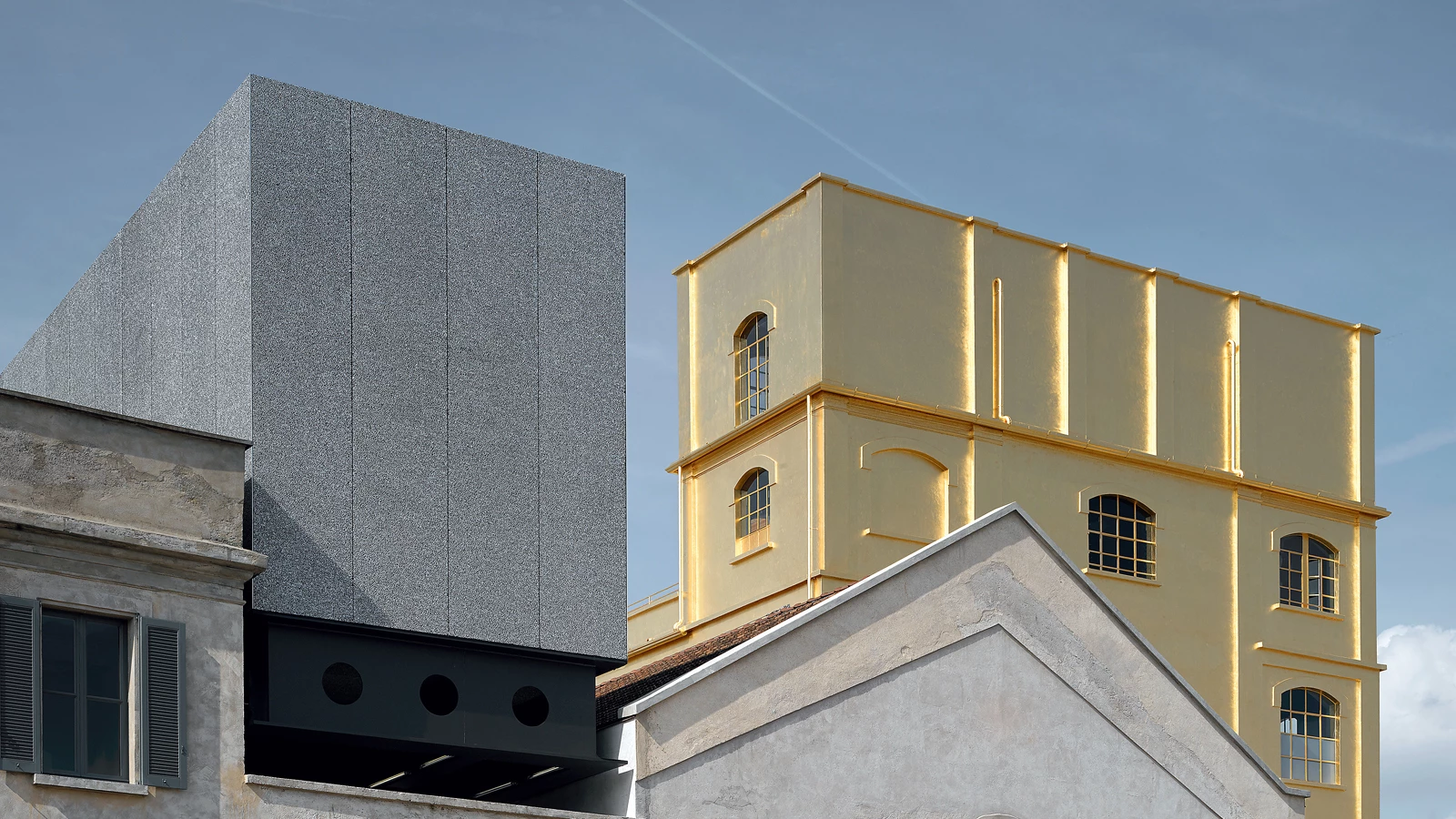
Koolhaas has spent five decades making architecture that doesn’t defer to art. His buildings compete with art. The Guggenheim in New York, the CCTV headquarters in Beijing, the Dutch Parliament extension, they occupy space aggressively, refusing to be neutral containers. At Fondazione Prada, he applies that same philosophy to 150 objects that span multiple civilizations. Instead of the white-cube neutrality that typically frames ancient work, visitors encounter a set design in the truest sense: artifacts positioned within a deliberately composed visual argument. The architecture itself becomes another layer of meaning, not a disappearing act. This is what separates Koolhaas from curators who treat space as hospitality. His environments demand attention independent of what they hold.
Milan’s design-obsessed audience has always understood that the container shapes the content. A Prada store isn’t simply retail; it’s a statement about luxury, geometry, and control. Fondazione Prada operates in that same register, which is why pairing Koolhaas with 1,700 years of global antiquity makes cultural sense rather than gimmickry. The show asks viewers to see continuities and ruptures across civilizations without the crutch of chronological order or geographical sorting. A Greek vessel, a Persian ceramic, a pre-Columbian textile, an Egyptian fragment, they coexist not because they’re museum-safe but because Koolhaas has designed their relationship. That’s the exhibition. Not the objects alone. The objects plus the space that commands how you see them.
Milan’s design-obsessed audience has always understood that the container shapes the content. A Prada store isn’t simply retail; it’s a statement about luxury, geometry, and control. Fondazione Prada operates in that same register, which is why pairing Rem Koolhaas and Global Antiquity makes cultural sense rather than gimmickry. The show asks viewers to see continuities and ruptures across civilizations, proving that Koolhaas’s architectural philosophy transcends building and enters the realm of how we experience history itself.