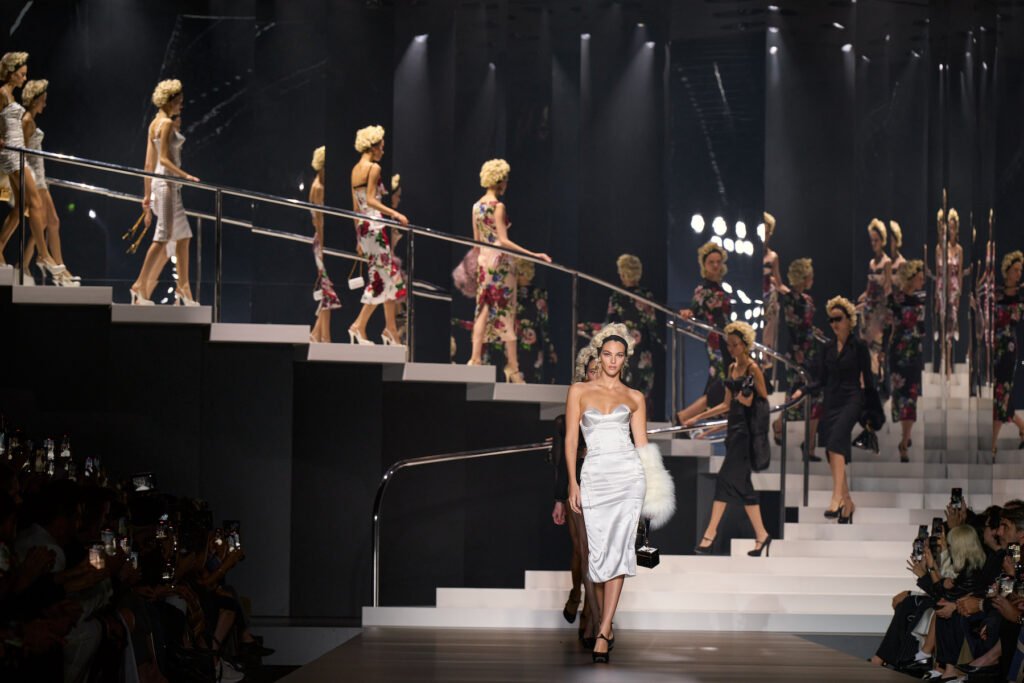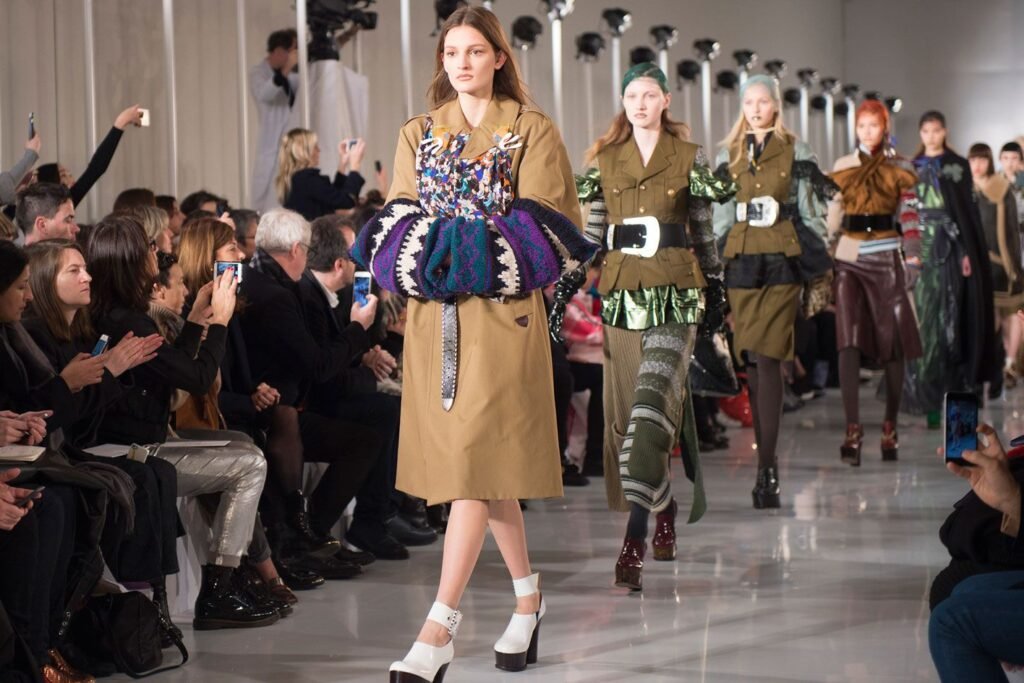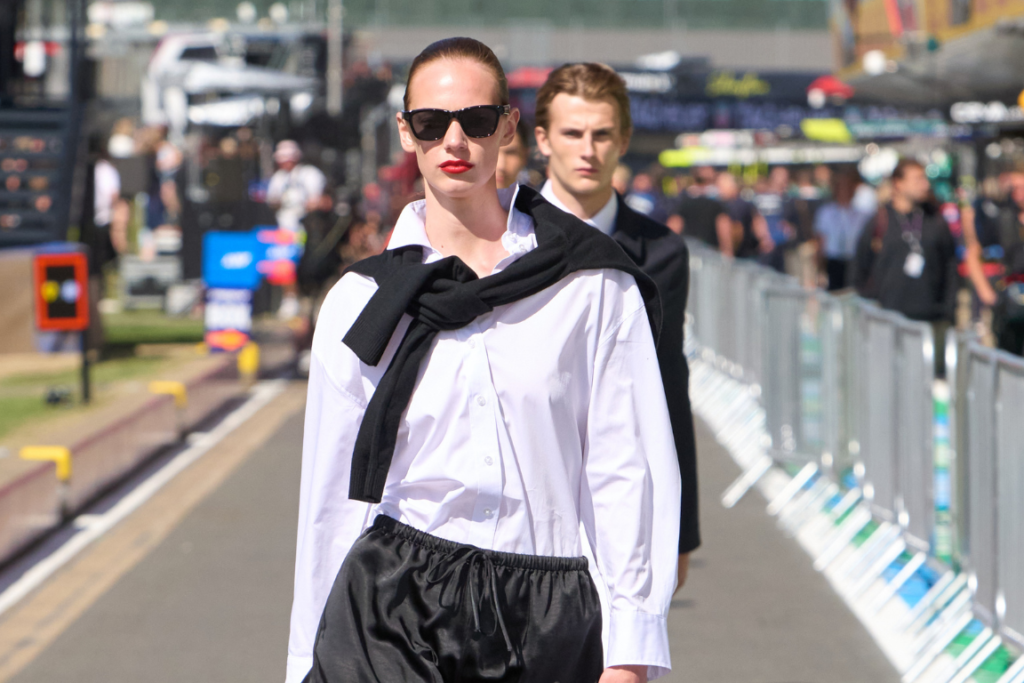
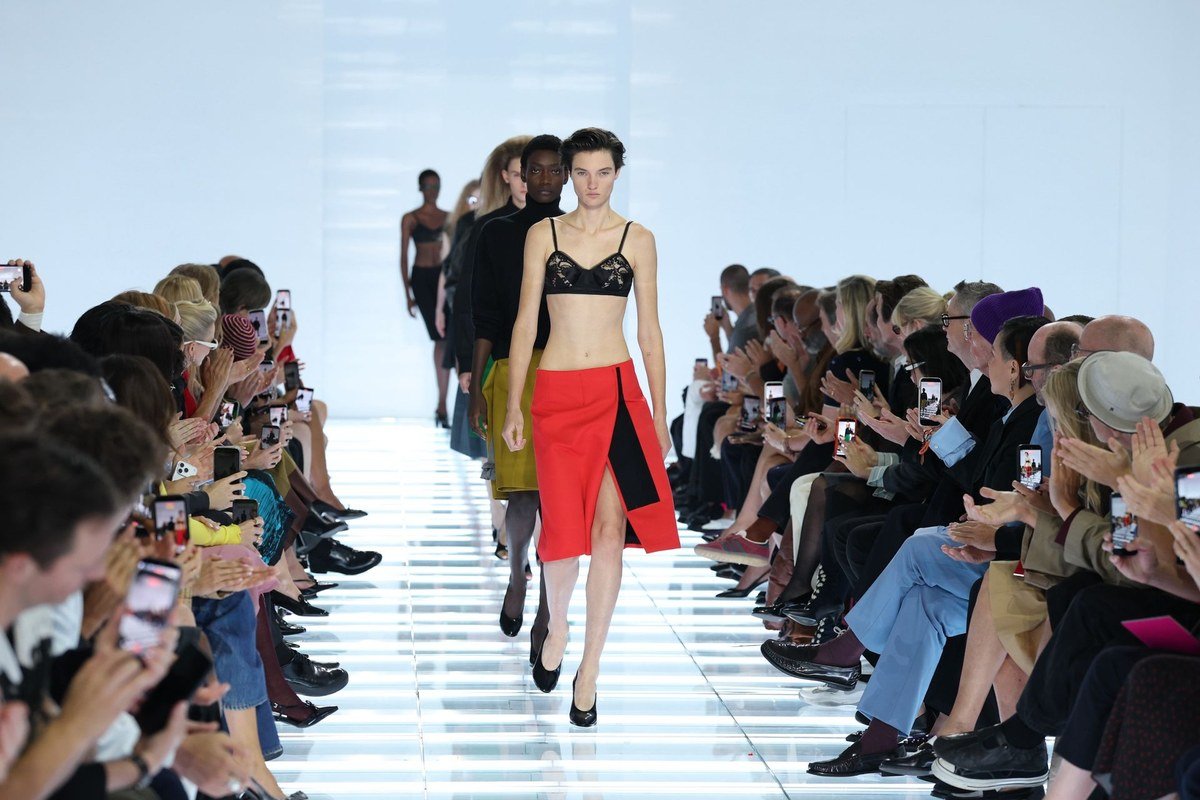
Prada kicked off Milan Fashion Week’s spring-summer 2027 calendar with a collection that refused to play by the usual rules of fashion week theatre. Rather than scatter ideas across silhouettes, textures, and material studies, Miuccia Prada and creative director Raf Simons built the entire presentation around one foundational piece: the skirt. Every model that crossed the runway wore one, but never the same one twice. The decision was deliberate, almost confrontational in its simplicity, and it immediately established the tempo for how the industry would think about construction and proportion for the season ahead.
The constraint became the creative engine. By removing the pressure to juggle multiple garment categories, Prada could drill deeper into what a skirt actually is: its relationship to the body, its dialogue with light, the geometry of its movement. The collection explored waistlines that redefined silhouette, lengths that challenged convention, and volumes that ranged from second-skin tight to architecturally expansive. Simons and Prada weaponized limitation as a statement about editorial clarity in an era when collections routinely feel like unfiltered mood boards. The message was sharp and loaded: fashion in 2027 doesn’t need to be maximal to be powerful.
What most observers missed beneath the visual clarity was the implicit challenge to contemporary luxury. While houses across Milan and Paris typically lead with novelty, trend signals, and the new for its own sake, Prada SS27 opened with what amounts to a philosophical argument about depth over breadth. A single garment explored across dozens of iterations feels almost retro in its discipline, yet it reads as radically contemporary precisely because it demands that viewers really look. That constraint, not novelty, is what defines fashion’s future.