Hyundai Ioniq 3: The Korean automaker’s smallest EV arrives in Paris with a radical visual reset that signals the end of Hyundai’s design compromise era.
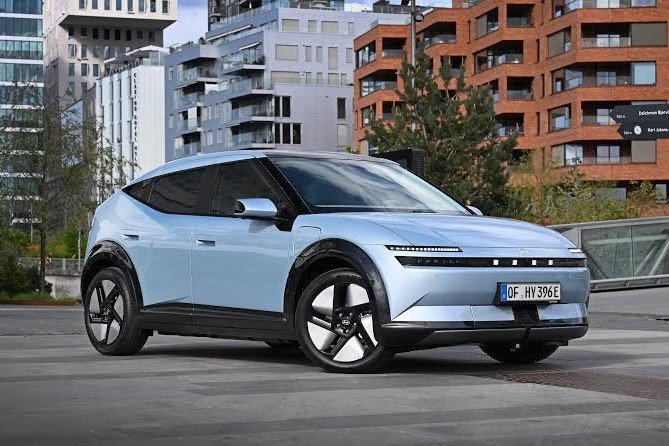
Hyundai just dropped its design gauntlet at the Paris Auto Show, and it’s smaller than you’d expect. The Ioniq 3, the brand’s entry-level electric vehicle, doesn’t look like a budget play or a scaled-down compromise. Instead, it represents something larger: a complete visual reboot that Hyundai is calling “Art of Steel,” a design language that strips away the awkward hedging that’s long defined the brand’s lineup and replaces it with something genuinely forward.
The Ioniq 3 is compact, but the design thinking behind it is anything but. Rather than following the now-tired playbook of oversizing proportions or adding fake vents to seem meaner, Hyundai went minimal and sculptural. The body panels read as taut, almost tensioned, with clean surfaces that create depth through geometry rather than busy detailing. It’s a move toward restraint that feels almost German in its discipline, except the proportions are distinctly Hyundai’s own: shorter overhangs, a wider stance relative to height, and a grille design (or lack thereof) that actually acknowledges this car doesn’t need to breathe like an internal combustion engine.
What most people will miss is that this isn’t just about the Ioniq 3 itself. Hyundai is explicitly positioning this as the template for how the entire brand will look going forward. The “Art of Steel” language is modular, meaning it can scale up and down across sedans, SUVs, and crossovers without losing coherence. That’s genuinely difficult to execute, and it’s why most brands either dilute their identity across segments or lean too hard into one aesthetic. Hyundai is betting it can thread that needle by committing to a philosophy rather than a specific visual gimmick. The timing matters too. With the EV market consolidating and premium brands like Mercedes and BMW already owning the “elegant minimalism” lane, Hyundai’s move feels like a strategic pivot to own a genuinely distinct position in the affordable EV space without apologizing for the price point.
What most people will miss is that this isn’t just about the Hyundai Ioniq 3 itself. The brand is explicitly positioning this as the template for how the entire lineup will look going forward, with “Art of Steel” designed to scale across sedans, SUVs, and crossovers without losing coherence. That’s genuinely difficult to execute, and it’s why most brands either dilute their identity across segments or lean too hard into one aesthetic. The Hyundai Ioniq 3 represents a philosophy rather than a specific visual gimmick, and with the EV market consolidating and premium brands competing aggressively, this move could reshape how entry-level electric vehicles are perceived.